Trump's 'Golden Age of America' Rhetoric Meets Harsh Economic Facts
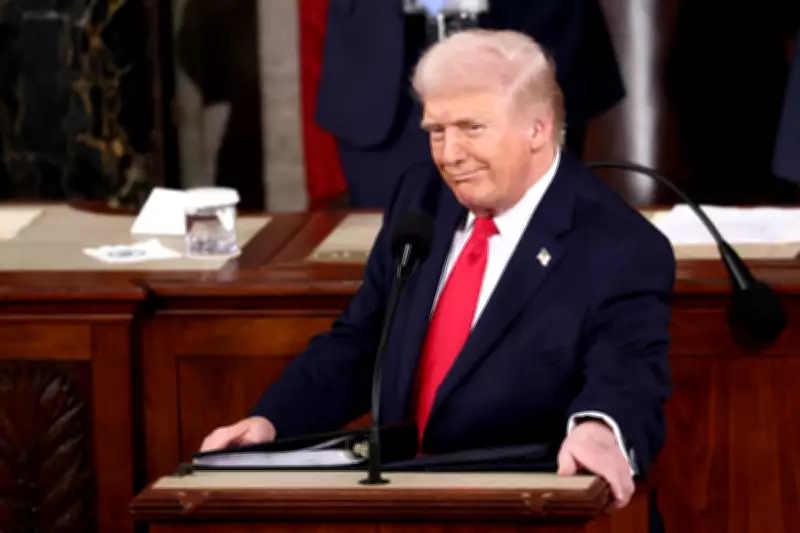
In his first State of the Union address of his second term, President Donald Trump proclaimed a "turnaround for the ages," insisting that "our nation is back – bigger, better, richer and stronger than ever before." He hailed plummeting inflation and rising incomes, positioning himself as the architect of an economic revival. However, a closer examination of the data reveals significant gaps between presidential pronouncements and the lived experiences of ordinary Americans.
Polling Disconnect and Economic Indicators
Despite Trump's bullish assertions, polls consistently show many Americans remain unimpressed with his economic stewardship. The facts present a nuanced landscape: while inflation has decreased to 2.4 percent recently, down from 3 percent in Joe Biden's final year, economic growth has simultaneously slowed. Job creation in 2025 fell dramatically short of predictions, with only 181,000 positions added versus an anticipated 584,000. Unemployment has also edged up slightly to 4.3 percent, compared to 4.1 percent when Biden left office.
Scrutinising Price Claims on Everyday Goods
Trump attempted to personalise his economic narrative by citing specific price drops for everyday groceries. He claimed egg prices have fallen by 60 percent since he took office, but this overlooks the context of an all-time high average of $8 per dozen last year due to avian flu outbreaks affecting supply. As commercial operations regained control, prices naturally corrected. Similarly, his statement that beef prices are "starting to come down significantly" conflicts with data showing a 15 percent increase over the past twelve months, with ground beef hitting a record high since 2020.

Fuel Prices and Employment Figures Under the Microscope
The president's assertion that gasoline is "below $2.30 a gallon in most states" does not align with reports from the American Automobile Association, which places the national average at $2.95 per gallon. Only a handful of service stations, predominantly in Oklahoma and Texas, are offering petrol below $2. Meanwhile, Trump's boast that "more Americans are working today than at any time in our country's history" requires context: while 158 million people are employed, the working-age population percentage has actually dipped slightly since his inauguration, from 60.1 percent to 59.8 percent.
Investment Claims and Tariff Controversies
One of the most eye-catching statements involved Trump claiming to have secured "$18 trillion pouring in from all over the globe" in commitments. This figure starkly contrasts with his own White House tracker, which cites approximately $9.7 trillion in new investment since January of last year. The address also heavily featured his "powerful country-saving tariffs," despite a recent Supreme Court ruling striking them down. Notably absent was any mention of Harvard University research indicating these tariffs contributed 0.92 percent to overall US consumer price inflation last year.
The Salesmanship of Presidential Politics
Critics argue that Trump's approach resembles that of a high-pressure salesman, more focused on selling an image than engaging with complex realities. His rhetoric—filled with superlatives like "bigger, better, richer and stronger"—echoes the persuasive techniques of estate agents rather than substantive policy discussion. As the midterm elections approach, this style is likely to intensify, with campaign speeches further amplifying these claims. The fundamental question remains: will voters be swayed by the pitch, or will the structural survey of economic data prove more persuasive in the voting booth?