Trump Unveils $300M White House Ballroom Plans Amid Controversy
Trump's $300M White House Ballroom Plan Revealed

Former President Donald Trump has unveiled fresh renderings for his proposed $300 million 'Big, Beautiful Ballroom', part of what he describes as a 'magnificent new East Wing' at the White House. The plans, shared on his Truth Social platform, depict a grand ballroom viewed from the Treasury Building across the street, marking a significant architectural ambition for the historic residence.

Architectural Vision and Design Details

Trump criticised the existing East Wing as 'very small, dilapidated and rebuilt many times', asserting that his new design would replace it with a structure that presidents have desired for over 150 years. The rendering features a wall replicating the North Facade of the White House, with Trump emphasising that 'this space will serve our country well for, hopefully, centuries into the future'.

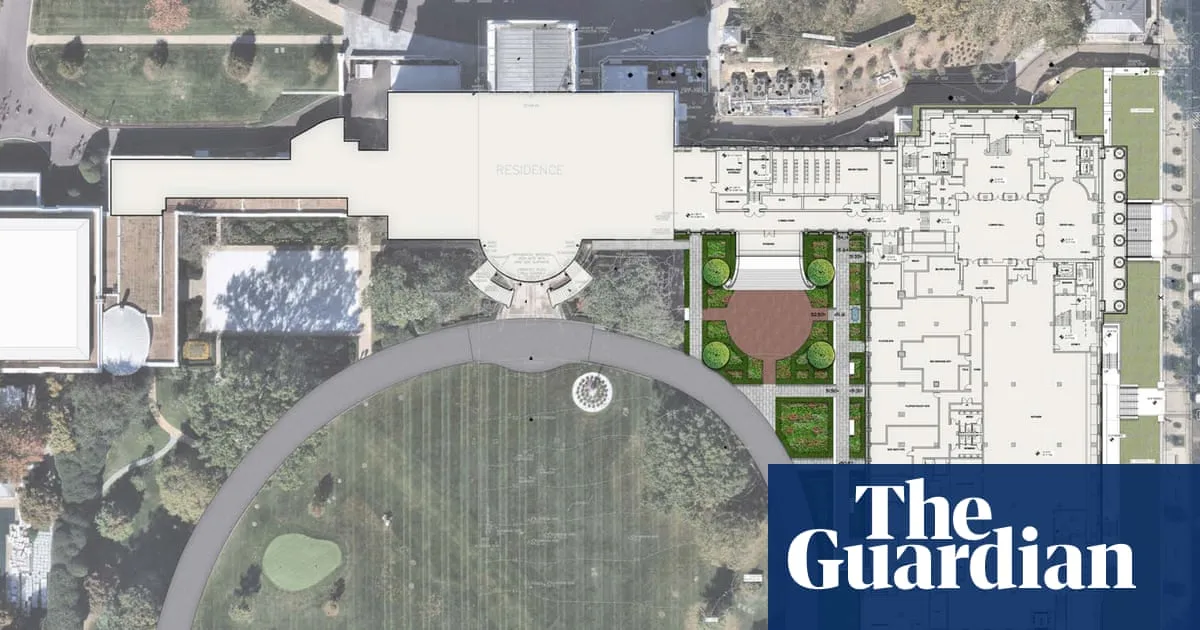
Architect Shalom Baranes, leading the project after taking over from James McCrery in November, presented detailed plans at a National Capital Planning Commission (NCPC) meeting. The current design involves rebuilding the East Colonnade as a two-story structure instead of its original single level, allowing guests to enter the ballroom through the historic East Room.

Balancing Symmetry and Scale

To address concerns that the two-story East Colonnade might make the White House appear lopsided, Baranes disclosed considerations for a one-story extension to the West Wing. This addition, aimed at restoring 'symmetry around the central pavilion', would affect the West Colonnade area, which currently houses the White House briefing room and reporters' offices. Baranes clarified that any expansion would be limited to the colonnade, ruling out a two-story Oval Office.

The ballroom itself is planned to span 22,000 square feet, accommodating up to 1,000 seated guests for dinner. The overall new structure, including East Wing offices for the first lady's staff, would form part of an 89,000 square foot two-story building. However, the project's cost has reportedly inflated to around $400 million, with rumours suggesting Trump initially sought an even larger ballroom.

Controversy and Criticism

The project has faced significant backlash, primarily over transparency and funding. Critics highlight that the White House was not initially open about plans to demolish the East Wing, which dates back to 1902 and was reconstructed in 1942 under President Franklin D. Roosevelt. Additionally, the ballroom is entirely funded by donors, including companies with business before the U.S. government, raising ethical concerns.

Ahead of the NCPC meeting, protesters from groups like Common Cause gathered outside, holding signs such as 'corruption never looked so tacky'. Inside, NCPC Chairman Will Scharf, Trump's handpicked leader, warned attendees against disruptions, acknowledging the 'passionate comments on both sides'. Scharf, who quipped about quitting nicotine, reiterated that NCPC does not oversee demolitions, which allowed the East Wing to be torn down in October without government oversight.

Regulatory and Legal Hurdles

The National Trust for Historic Preservation has sued over the ballroom project, with a federal judge requiring plans to be submitted to the NCPC and the Commission of Fine Arts by the end of 2025. Scharf indicated that the recent presentation might satisfy this requirement, though more formalised plans are expected later.

Committee members expressed reservations about the project's scale and segmented approval process. Phil Mendelson, chairman of the D.C. City Council, voiced concerns that the addition could 'overwhelm the original historic building' and preferred viewing the project holistically, rather than in pieces. Linda Argo, appointed by Washington, D.C.'s Democratic Mayor Muriel Bowser, also noted 'some concerns about the size and scale'.

Political and Practical Implications

Scharf defended the project, pointing to practical needs such as hosting dignitaries like King Charles, who might otherwise be 'hosted in a tent on the South Lawn with port-a-potties'—a scenario he deemed 'not a good look for the United States of America'. The White House aims to fast-track construction for completion by 2028, Trump's last full year in office if re-elected.

As debates continue, the ballroom project underscores broader tensions between presidential legacy ambitions, historic preservation, and public accountability in government-funded renovations.