Trump's Lavish Vision for America's 250th Anniversary Sparks Outcry
As the United States approaches its 250th anniversary in 2026, former President Donald Trump has unveiled a series of extravagant proposals to mark the semiquincentennial, drawing both fascination and fierce criticism. His plans, which include a monumental golden arch, commemorative coins featuring his likeness, and even cage fights on the White House lawn, reflect a stark departure from traditional celebrations and have ignited debates over taste, history, and public space.
The Independence Arch: A Gilded Monument to Ambition
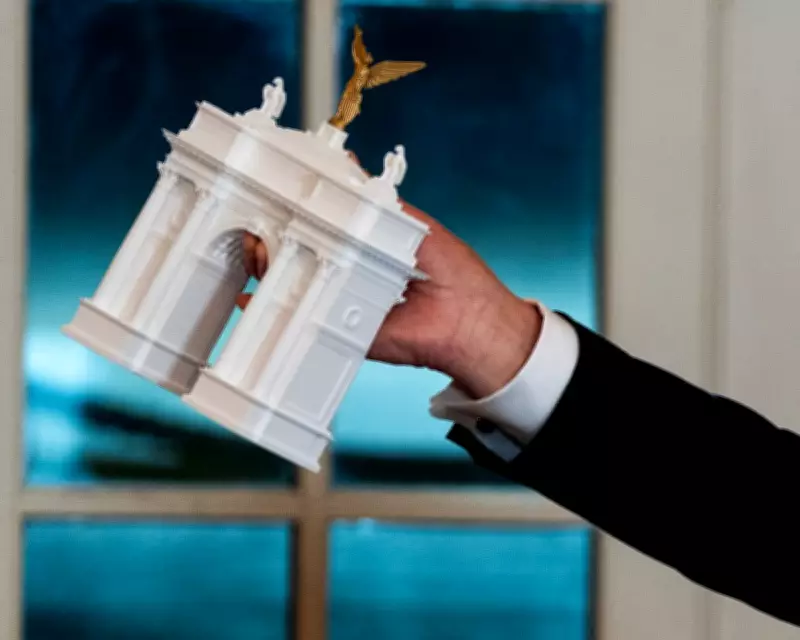
At the heart of Trump's vision is the so-called "Independence Arch," originally dubbed the "Arc de Trump." This proposed structure, modeled on the ancient Arch of Titus in Rome, would stand 250 feet tall—a foot for each year of American history—and be adorned with gilding and statuary. Trump has promoted three design variants on his Truth Social platform, with the most opulent version likely favored due to his penchant for bling. Architectural critics have derided it as an example of "regional car dealership rococo," while experts warn it could disrupt the historic landscape of Washington D.C., particularly near the Lincoln Memorial.
Trump has boasted that this arch would surpass the 164-foot Arc de Triomphe in Paris, aligning with a historical trend where authoritarian figures have used grandiose architecture to project power. For instance, Adolf Hitler and architect Albert Speer once planned a 328-foot arch for Berlin. Trump's arch, if built, would serve as a physical manifestation of his desire to imprint a legacy of spectacle and dominance on the nation's capital.

Controversial Celebrations: Coins, Cage Fights, and Cultural Clashes
Beyond the arch, Trump's anniversary ideas include minting $1 coins with his face, which would contravene an 1866 law prohibiting living persons on U.S. currency. Additionally, he has floated hosting an Ultimate Fighting Championship event in a temporary arena on the White House grounds, a notion that critics argue trivializes the presidency and public decorum. These proposals underscore a broader pattern of Trump challenging norms and embracing provocative stunts to capture attention.
Another contentious aspect involves plans to redevelop the Kennedy Center, a modernist landmark designed by Edward Durell Stone in 1971. Trump's approach mirrors his typical disregard for expert opinion, claiming a "silent majority" supports his changes. However, heritage organizations like Docomomo US have pushed back, emphasizing the center's architectural significance and the need for transparent public stewardship. Liz Waytkus, executive director of Docomomo US, has called for adherence to regulatory processes, asserting that such sites belong to the public and must not be treated as private assets.
A Backward-Looking Outlook Versus Progressive Ideals
Trump's anniversary plans contrast sharply with past celebrations, such as the 1976 bicentennial, which highlighted progress and modernity through the opening of the National Air and Space Museum. In that era, despite political turmoil, America looked forward with a focus on technological achievement. Today, Trump's emphasis on classical styles and historical re-enactments suggests a retreat into nostalgia, reinforced by his mandates for "traditional" federal architecture that critics say stifle innovation and progressive values.
By co-opting historical symbols like triumphal arches, Trump positions himself as a modern-day Roman emperor, seeking to control public narratives and spaces. Yet, as heritage advocates rally against his proposals, they remind us of the impermanence of such grand gestures. In the spirit of ancient Rome, where whispers of "memento mori"—remember you are mortal—accompanied triumphs, these controversies highlight that all things, including political legacies, must eventually pass.