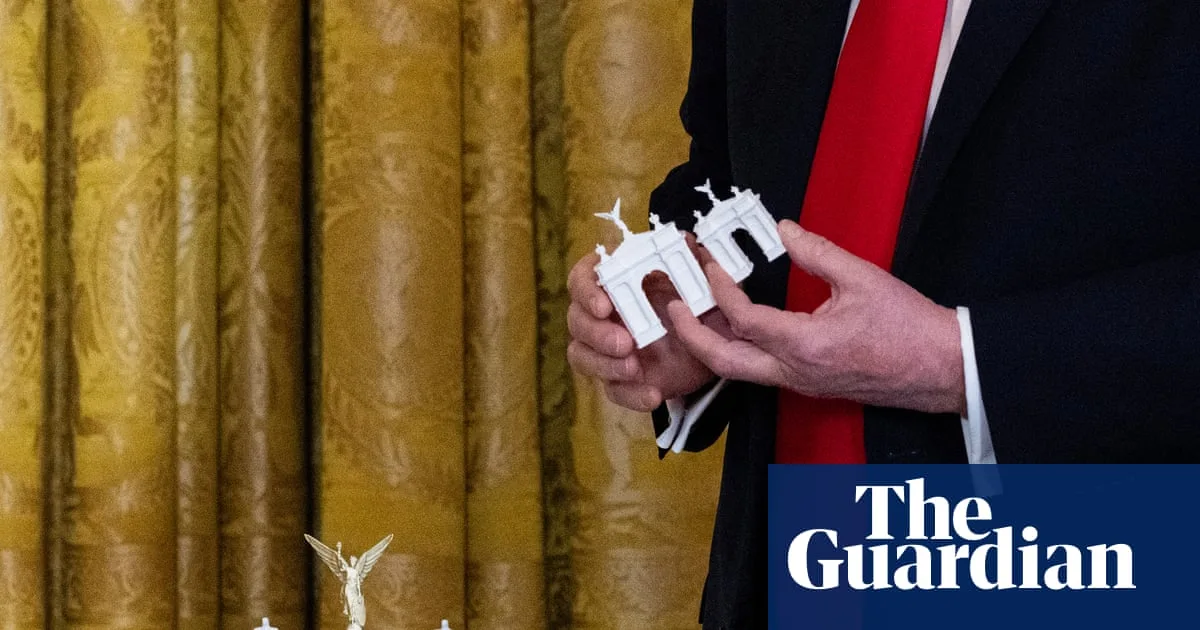
In a bold move that could dramatically reshape the iconic skyline of the United States capital, former President Donald Trump is reportedly advancing plans to construct a colossal 250-foot arch in Washington DC. This proposed structure, named the Independence Arch, is designed to significantly overshadow the revered 100-foot Lincoln Memorial and even exceed the height of Paris's famous 164-foot Arc de Triomphe.
A Monumental Ambition for the Nation's Capital
According to a detailed report from the Washington Post, Trump has set his sights on a specific plot of land near the Memorial Bridge over the Potomac River. The site, which falls under the jurisdiction of the US National Park Service, is situated between the Lincoln Memorial and Arlington National Cemetery. This location has raised immediate concerns among preservationists and architectural critics, who argue that such a large-scale celebratory monument could disrupt the solemn and historic corridor dedicated to national remembrance.
Scaling Up from Modest Beginnings
The concept for an arch in Washington DC did not originate with such grandiose dimensions. Initially, art critic Catesby Leigh proposed a temporary, 60-foot arch to commemorate the 250th anniversary of the US Declaration of Independence in a 2024 essay. This more modest idea was reportedly brought to Trump's attention by allies within his administration. However, the former president has opted for a permanent design that is more than four times larger, funded by leftover donations from the $400 million White House ballroom project.
Leigh, who initially supported a smaller arch, expressed alarm at the scale of Trump's vision. "I don't think an arch that large belongs there," he told the Post, suggesting alternative locations such as Barney Circle in south-east Washington DC, which overlooks the Anacostia River. "There's nothing around it competing with it," he added, highlighting potential aesthetic conflicts with existing memorials.
Architectural and Thematic Concerns
The proposed arch's placement has sparked a heated debate about its appropriateness. John Haigh, chairperson of Benedictine College's architecture program, described the area as "a very somber corridor," noting that introducing a triumphal arch could be thematically jarring. The site lies within the sightline of Arlington National Cemetery, the Memorial Bridge—symbolic of peace after the Civil War—and the Lincoln Memorial, potentially obstructing pedestrian views and altering the relationship between these sacred spaces.
Despite these concerns, Trump has moved forward with the project, reportedly retaining architect Nicolas Leo Charbonneau, who enthusiastically posted on social media in September: "America needs a triumphal arch!" alongside a rendering. The former president has considered more modest designs, including versions standing 165 feet and 123 feet high, which he shared at a dinner in 2025. However, he ultimately decided on the 250-foot height to mirror the 250th anniversary of American independence, famously stating at the dinner, "250 for 250 makes the most sense."
Broader Context and Historical Precedents
This ambitious proposal is part of a broader pattern of large-scale construction projects under Trump's purview. He is already overseeing the addition of a new East Wing to the White House, featuring an 89,000-square-foot ballroom that surpasses the building's 55,000-square-foot footprint. The arch plan also aligns with Trump's public comments, as he told Politico in December that he hoped to begin construction within two months and later posted images of potential designs, including one with gold gilding, on his Truth Social platform.
The Post noted that Washington DC is unusual among major global cities for lacking a triumphal arch to commemorate national achievements. To oversee the project, Trump has appointed Atlanta philanthropist and developer Rodney Mims Cook Jr, president of the National Monuments Foundation, to the Commission of Fine Arts. At a White House Christmas reception, Trump reportedly told guests, "The one that people know mostly is the Arc de Triomphe in Paris, France. And we're gonna top it by, I think, a lot," underscoring his competitive vision for American monuments.
As plans progress, the Independence Arch project continues to stir controversy, balancing aspirations for national celebration against the preservation of historical integrity and architectural harmony in one of the world's most symbolically charged urban landscapes.