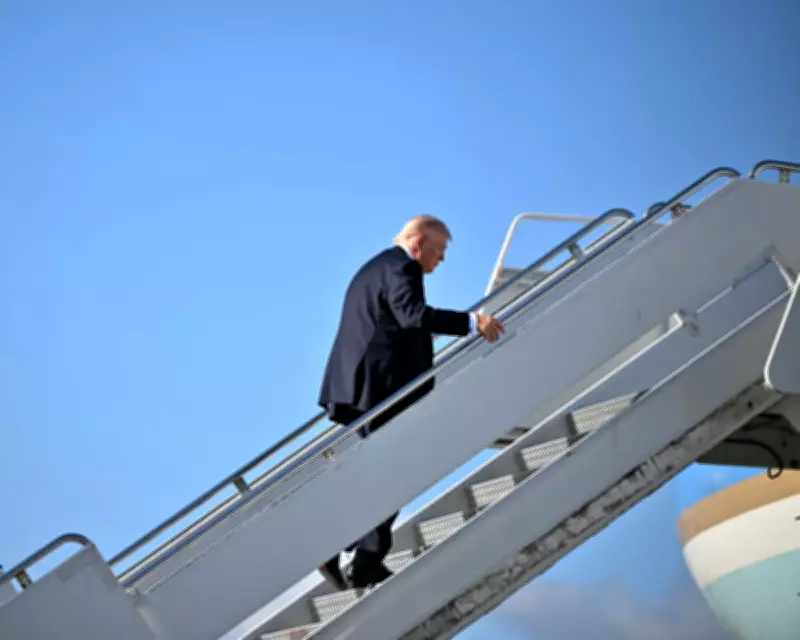
Former US President Donald Trump has once again made headlines by controversially linking a major military operation against Iran to his persistent and unsubstantiated claims regarding the 2020 presidential election loss. In a recent social media post, Trump suggested that Tehran's government had interfered in the US elections, drawing a direct connection to the ongoing conflict in the Middle East.
Congressional Division Over Iran Strikes
Republican senators have staunchly defended Trump's decision to launch a war against Iran, while Democrats have expressed significant concerns. Although some Democrats acknowledged the elimination of senior Iranian leadership, they argued that the case for such a massive attack should have been presented transparently to the American public and Congress beforehand.
Trump's Willingness to Engage with Iran
Amidst the escalating violence, Trump stated on Sunday that he is open to speaking with the remaining members of Iran's regime. This announcement followed the confirmed assassination of Ayatollah Ali Khamenei, Iran's supreme leader, by US forces on Saturday afternoon. The conflict has now entered a second day of intense bombing and missile counterattacks, causing widespread regional instability and economic tremors globally.

Casualties and Military Details
The US Central Command has confirmed that three American service members have been killed in action during the military operations against Iran. These mark the first confirmed fatalities since the strikes commenced on Saturday. The operation has involved coordinated efforts between the US and Israel, targeting Iranian cities with the aim of overthrowing the regime.
Political Reactions and Allegations
Allies of the Trump administration, including Republican senators Tom Cotton and Lindsey Graham, have reinforced the messaging around the strikes, defending them as necessary actions. In contrast, Democrats have labeled the attack a "war of choice" that lacked proper congressional approval and demanded answers from the administration.
This incident represents the second military operation under Trump where he has alluded to allegations concerning the 2020 election outcome. Previously, in January, he made similar comments following the Delta Force operation involving Venezuela's president, Nicolás Maduro.
Global and Domestic Implications
The attack has caught US allies and foes off-guard, highlighting new geopolitical rules. Reports indicate that one G7 defence minister was unaware of the military action while grounded in Dubai as bombs fell. Domestically, the Iranian community in Los Angeles has voiced mixed reactions, with some describing the attack as a liberation rather than an invasion.
Additionally, despite Trump's earlier decision to sever ties with Anthropic and its AI tools, the US military reportedly used the Claude AI model to inform the attack on Iran. This juxtaposition underscores the complex interplay between policy announcements and operational realities.
Broader Political Context
As the conflict deepens, national Democrats are closely monitoring the Texas Senate primary to gauge voter sentiment, weighing anti-Maga rage against populist crusades. Meanwhile, human rights concerns have emerged, with critics highlighting the relocation of pregnant, unaccompanied immigrant children to a single facility in Texas to avoid providing abortion services.
The situation continues to evolve, with Trump's remarks adding a layer of political controversy to an already volatile military engagement in the Middle East.