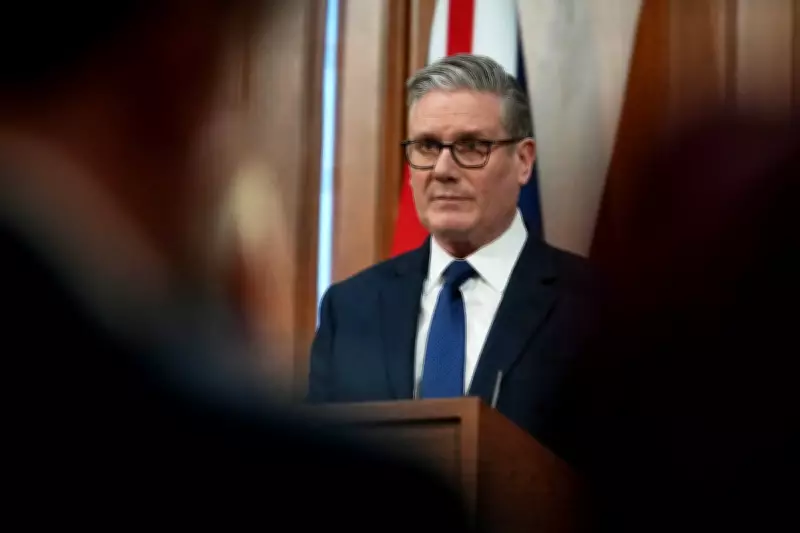
Prime Minister Sir Keir Starmer has moved to calm mounting economic fears in the United Kingdom, asserting the nation is "well-placed to weather" the financial storm triggered by the ongoing conflict with Iran. His reassurances come as former US President Donald Trump claims Tehran has requested a ceasefire, but only on the condition that the vital Strait of Hormuz is reopened for international shipping.
Starmer's Economic Reassurance Amid Crisis
Addressing the nation from Downing Street, Sir Keir acknowledged the Middle East crisis will profoundly "affect the future of our country." Households are already grappling with sharply higher fuel costs, with the prospect of significant energy bill hikes looming later this year. The Prime Minister sought to project stability, stating he was not prepared to let the British people relive the severe energy shocks of the 1970s.
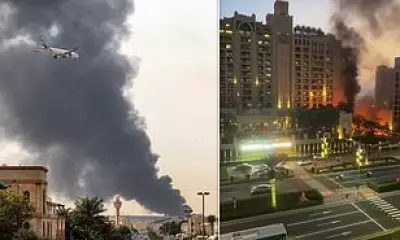
"I know that this is causing huge concern," Sir Keir said. "People turn on their televisions, they look at their screens, they see explosions, infrastructure blown up, aggressive rhetoric. They worry that the UK will be dragged into this. We won’t." He emphasised a long-term governmental plan to emerge from the crisis as a "stronger and more secure nation."

Trump's Ceasefire Ultimatum on Hormuz
On his Truth Social platform, Donald Trump declared that Iran had requested a ceasefire. However, he stated the United States "will consider" it only "when Hormuz Strait is open, free, and clear." Until that condition is met, he vowed aggressive military action, adding, "we are blasting Iran into oblivion or, as they say, back to the stone ages."
This marks a shift from Trump's earlier position, where he indicated a willingness to end military operations without the strait reopening, telling allies like the UK to "go get your own oil" in protest at their lack of support for the US-Israeli bombing campaign. Tehran has consistently denied Trump's recent series of claims regarding negotiations.
UK Leads Diplomatic Push for Strait Reopening
The United Kingdom is spearheading a critical diplomatic initiative to reopen the Strait of Hormuz, a chokepoint for global oil and gas exports which Iran has effectively closed. Sir Keir admitted that restoring the normal flow of international trade through the waterway "will not be easy."
Foreign Secretary Yvette Cooper is set to host an international meeting on Thursday to "assess all viable diplomatic and political measures" to achieve this goal. The meeting follows a statement of willingness from 35 countries to contribute to efforts ensuring safe passage for shipping. Subsequently, military planners will consider how to make the strait "accessible and safe" post-conflict, though this is not expected to involve deploying Royal Navy warships for policing duties.
Economic Impact and Government Response
The conflict's economic toll is already stark. The RAC reported the average price of a litre of diesel at UK forecourts reached 184.2p on Wednesday, a staggering 29% increase since the war began on February 28. Petrol prices have risen 16% to 153.7p per litre. In response, the AA advised drivers to reduce speed by 10% to improve fuel efficiency.
While fuel duty is frozen until September, with the scheduled rise under review, Chancellor Rachel Reeves emphasised fiscal caution. She warned that promising to alleviate every price increase would be dishonest and counterproductive, potentially "pushing up inflation, interest rates and taxes in the future."
Broader Strategic and Military Context
Amid the economic and diplomatic efforts, military activity continues. Overnight, RAF Regiment gunners successfully shot down more than ten Iranian drones. UK Typhoon and F-35 jets, alongside Wildcat helicopters, persist in defensive missions across bases in Cyprus, Jordan, Bahrain, Qatar, and the United Arab Emirates. The UK currently has approximately 1,000 military personnel deployed across the Middle East region.

Sir Keir also signalled that Britain would pursue closer ties with the European Union in the wake of the oil crisis, as transatlantic relationships face strain from Trump's repeated criticism of allies refusing to join military action. The former US president told The Telegraph he is considering pulling America out of NATO in response to this perceived lack of support. Sir Keir responded by vowing to continue acting in the British national interest "whatever the pressure on me and others, whatever the noise."