

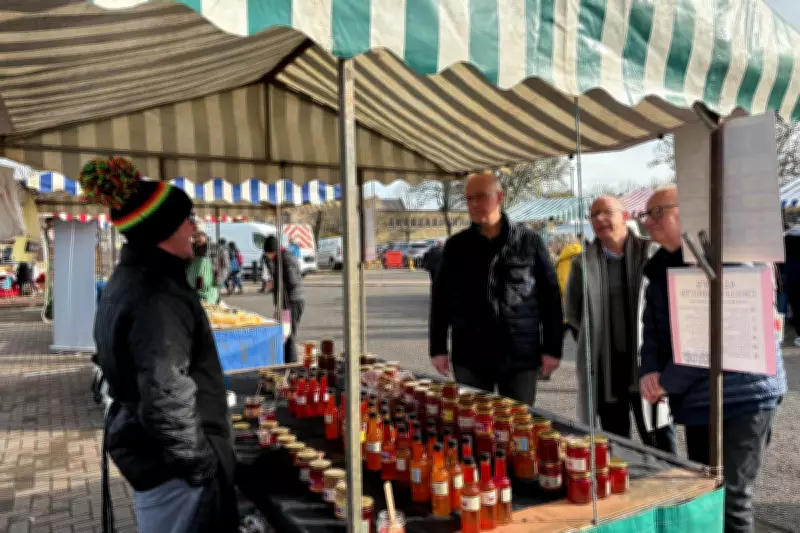
First Minister John Swinney has asserted that the Scottish National Party (SNP) is the sole political force actively campaigning to secure victory in the upcoming Holyrood election, positioning independence as a beacon of hope for Scotland's future. Speaking at the conclusion of the first full week of campaigning, Swinney emphasised his commitment to offering citizens a "fresh start" through sovereignty, which he believes will harness Scotland's energy resources to alleviate household bills and benefit the populace directly.
Campaign Trail Momentum in Perth
During a visit to a farmers market in Perth, where he was accompanied by local candidate Jim Fairlie, Swinney declared that the SNP is campaigning "all out" to achieve an overall majority in the May election. He highlighted that the party's message is resonating strongly with voters across the nation, particularly on key issues such as improving the National Health Service and tackling the ongoing cost-of-living crisis.
Key Messages Striking a Chord
In an interview with the Press Association, Swinney elaborated on the SNP's platform, stating, "The public are responding positively to our key messages about delivering improvements to the NHS, where we're reducing long waits for treatment, just as I promised, and offering support for cost-of-living challenges." He further argued that independence would enable Scotland to utilise its "enormous energy wealth" to reduce bills and ensure economic benefits are retained within the country.

Swinney added, "The SNP campaign is the only one working to win this election with a majority that can start making the improvements people need, by strengthening the NHS and addressing cost-of-living issues." He also criticised rival parties, claiming that Labour has "given up the pretence" of seeking a majority and accusing both Labour and Reform of having "nothing to say" on the energy crisis affecting households.
Political Rivalry and Accusations
The First Minister repeated allegations that Scottish Labour leader Anas Sarwar aims to form a coalition with Reform to assume the first minister role, a claim both parties deny. Swinney warned that an SNP majority would prevent the "politics of Nigel Farage" from gaining influence in Scotland, positioning his party as the only one with a "serious plan" for the nation's future.
Opposition Responses and Criticisms
Scottish Conservative deputy leader Rachael Hamilton countered Swinney's assertions, arguing that the election should focus on cost-of-living concerns rather than independence. She cautioned, "If the SNP get a majority, Swinney will use it as a mandate to break up the United Kingdom. This is not some distant threat; the danger is very real." Hamilton urged voters to support the Scottish Conservatives to prevent an SNP majority, referencing past elections in 2016 and 2021 as examples of successful opposition.
Scottish Labour deputy leader Dame Jackie Baillie criticised Swinney's approach, describing his "arrogance as breathtaking." She emphasised, "This election is our first real chance in nearly 20 years to change the Scottish government. Scottish Labour is determined to get rid of this tired and complacent SNP government and deliver a better future for Scotland." Baillie called on voters to reject Reform and elect a Labour government focused on improving public services and affordability.
As the Holyrood election campaign intensifies, Swinney's push for independence as a solution to Scotland's challenges continues to dominate political discourse, setting the stage for a contentious battle at the polls in May.






