President Donald Trump has robustly dismissed mounting criticism from prominent conservative media figures regarding his ongoing military campaign against Iran, asserting that he remains the authentic voice of the MAGA movement. This defiance comes amid concerning polling data and vocal opposition from influential voices within his traditional support base.
Conservative Media Figures Voice Strong Opposition
Leading conservative commentators have expressed significant reservations about Operation Epic Fury. Megyn Kelly, the talk radio host and former Fox News star, articulated "serious doubts" about the airstrikes, questioning whether the objectives justified the loss of American service members' lives. On her SiriusXM show, Kelly stated she did not believe the fallen troops died for the United States, suggesting the conflict felt more like "Israel's war."
Meanwhile, Tucker Carlson has labeled the bombing campaign as "absolutely disgusting and evil." Further dissent came from Erik Prince, the mercenary magnate and notable Trump donor, who indicated he was "not happy about the whole thing." These critiques represent a notable fracture within the conservative media landscape traditionally aligned with the president.

Trump's Unwavering Stance and Claim of Base Support
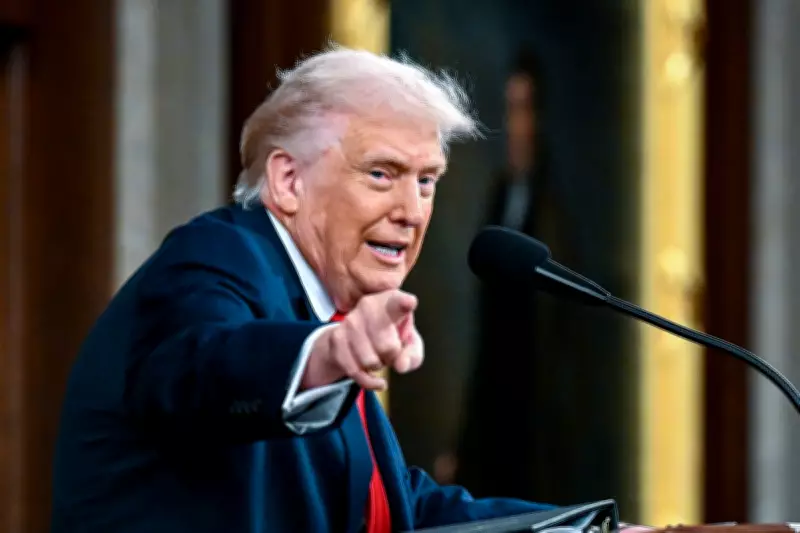
In an exclusive interview with the independent Washington D.C. newsletter The Inner Circle, President Trump countered this criticism head-on. He emphasized his primary duty to prevent Iran from obtaining nuclear weapons, framing the military action as a necessary detour for national and global security.
Directly addressing his critics, Trump declared, "I think that MAGA is Trump — MAGA’s not the other two. MAGA wants to see our country thrive and be safe. And MAGA loves what I’m doing — every aspect of it." He downplayed Kelly's past opposition, noting, "They always come back," suggesting such criticism was transient and inconsequential to his core support.
Dire Polling Numbers and Military Realities
The president's confidence contrasts sharply with recent public opinion surveys. Polling indicates only one in four Americans supports Operation Epic Fury. Even among Republican voters, a significant 23 percent believe Trump is too willing to employ military force. The human cost of the conflict is also mounting, with six U.S. service members confirmed killed in Iranian reprisal strikes as of Monday evening.
Trump has maintained an ambiguous stance on future escalation, refusing to rule out deploying "boots on the ground" while offering conflicting timelines and strategic goals for the operation. This ambiguity has fueled further debate about the campaign's direction and ultimate objectives.
Kelly's Detailed Critique and Call for Scrutiny
Elaborating on her position, Megyn Kelly, a former Trump supporter and campaigner, argued that unwavering support does not equate to unquestioning acceptance of military engagement. "I support the president. I voted for the president. I campaigned for the president. But that doesn't mean... you have to accept another Middle East war without questions," she asserted.
Kelly defended the right to scrutinize the administration's rationale, stating, "There is nothing unpatriotic, or unsupportive of one's conservatism, to say 'I would like to be better convinced that this is worth the sacrifice of American blood and treasure.'" Her comments underscore a growing demand for clarity and justification within conservative circles regarding the ongoing conflict.
The president's claims about the success of prior actions also face scrutiny. Trump previously asserted that his initial attack on Iran in June 2025 had "completely and totally obliterated" the nation's nuclear program, a claim reportedly at odds with subsequent U.S. intelligence assessments. This discrepancy adds another layer of complexity to the current debate over strategy and transparency.