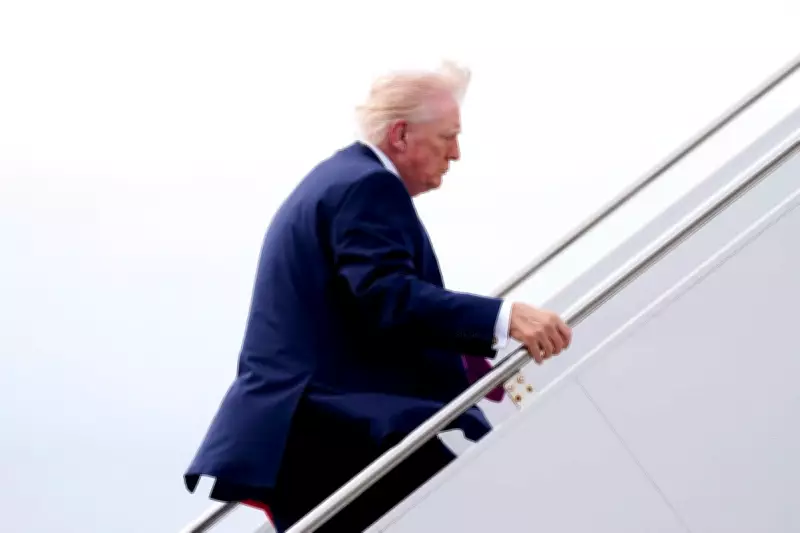
President Donald Trump's approval rating has fallen to a new second-term low, with a top pollster warning of "profound problems" emerging within his Republican base. The decline comes amid the ongoing war with Iran and a resulting spike in gas prices, which are reshaping the political landscape as the 2026 midterm season approaches.
Polling Data Reveals Steep Decline
As of Monday, President Trump's average approval rating stood at 39.9%, according to composite measures from polling expert Nate Silver. This marks a nearly 5% drop this month alone, with his net approval rating hitting -16.7%. The share of Americans who strongly disapprove of Trump reached a second-term high of 46.7%, while only 22% hold a strongly favorable view of the president.
Economic and Inflation Concerns Deepen
The polling data shows even more troubling figures on specific issues. Trump's net approval on handling the economy is at -21.3%, and the differential regarding inflation stands at -32.7%. These numbers are particularly concerning for the Trump movement, given that the president won the 2024 election partly by campaigning against record Biden-era inflation.

Iran Conflict and Gas Prices Drive Discontent
Nate Silver attributes the president's dismal approval rating primarily to the ongoing war with Iran and the resulting surge in gas prices. "Obviously, gas prices are a big factor," Silver wrote in an accompanying note. "But Trump has profound problems. There are signs of erosion among his base."
The White House has attempted to play down the oil price spike, but political analysts suggest this will be a significant liability for Republicans heading into the 2026 midterms, which are expected to be defined by affordability issues.
Other Polls Confirm Troubling Trend
Silver's findings are corroborated by other recent polls. A Reuters/Ipsos poll released last week placed Trump's overall approval at just 36%. The same poll found that 46% of respondents believe the Iran conflict will make the United States less safe going forward, while only 26% believe it will enhance American security.
Separately, a Fox News poll from last week revealed that 59% of Americans disapprove of Trump's performance as commander in chief. Support for his agenda has dropped to 41%, down from 49% a year ago.
Military Threats and Diplomatic Stalemate
President Trump has threatened to launch major attacks against vital Iranian energy infrastructure, including the strategic Kharg Island, unless Tehran reaches a deal with Washington to end the war. Despite Trump's confident statements about negotiation prospects, Iranian leadership reiterated on Monday that the country hasn't held any direct talks with the U.S. since the conflict began last month.
Republican Allies Express Doubts
Even among Republican allies, questions are emerging about the war strategy. Steve Bannon, a former top Trump campaign and White House adviser, has called on Arab nations to deploy troops in Iran instead of the United States. This comes amid speculation that the administration is preparing for a ground invasion to open the Strait of Hormuz, a crucial oil shipping lane.
"The Israelis are playing games with us, the Arabs are playing games with us, the Europeans are playing games," Bannon said during a recent podcast episode. "And what are we doing? Sending troops over there."
Senator James Lankford of Oklahoma has stated he would not rule out supporting a U.S. ground deployment in Iran, but emphasized the need for clear objectives. "We've got to be able to know what the objectives are," he told NBC's Meet the Press on Sunday.
Political Implications for 2026 and Beyond
The polling data suggests warning signs not just for President Trump but for the larger Republican movement. With 2028 presidential aspirants reportedly beginning to distance themselves from Trump, and questions emerging about the effect of his age, the political landscape appears increasingly uncertain. Congressional Republicans now face a challenging midterm season where economic concerns and the ongoing conflict could define voter sentiment.