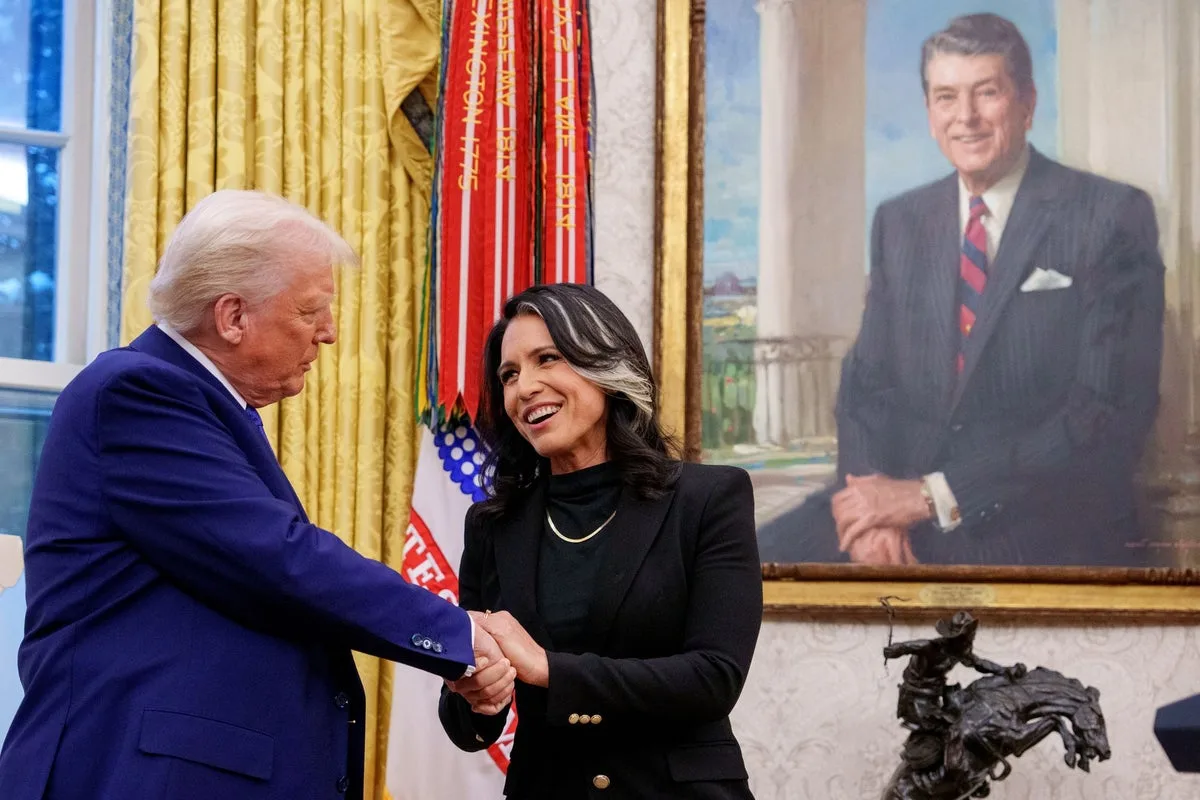
Trump Was Poised to Dismiss Tulsi Gabbard Until Roger Stone Intervened
President Donald Trump was on the verge of firing Tulsi Gabbard, his Director of National Intelligence, but a last-minute intervention by his longtime ally Roger Stone prevented her dismissal, according to a new report. The president had grown increasingly frustrated with Gabbard following her congressional testimony in March, where she stopped short of fully endorsing a war with Iran.
Gabbard's Testimony Sparks Presidential Ire
Sources told Axios that Trump's frustration mounted after Gabbard's appearance before Congress on March 18, during which she refrained from giving a complete endorsement to military action against Iran. Just one day prior, Joe Kent, Gabbard's counterterrorism director and former chief of staff, resigned in protest against the war, claiming Trump had been misled into launching attacks.
Soon after the testimony, Trump reportedly scolded Gabbard and questioned her loyalty, though some insiders downplayed the remarks as sarcastic or friendly in nature. The Guardian reported that Trump subsequently began consulting his advisers about whether to replace Gabbard, signaling her position was in serious jeopardy.
Roger Stone Steps In to Save Gabbard
When polled by Trump, Cabinet officials expressed support for Gabbard, but it was Roger Stone, a veteran GOP strategist and close friend of the president, who ultimately swayed the decision. A source told Axios, "Roger sealed the deal. He saved Tulsi." Stone reportedly presented Trump with four key reasons to retain Gabbard: her loyalty, her lack of intention to resign, the potential media firestorm from firing her, and her overall value to the administration.
Stone confirmed his intervention in a Thursday post on X, stating, "Fortunately, I acted in time." He declined further comment when contacted by Axios, but his actions highlight the ongoing influence he wields within Trump's inner circle.
Internal Discord and Political Fallout
The situation exposed deeper divisions within the MAGA coalition over the Iran war. Far-right activist Laura Loomer, who has close ties to Trump, allegedly tried to persuade the president that Gabbard was on the brink of resigning, aiming to get her preemptively fired. This led to a heated, expletive-laden public spat between Stone and Loomer on social media.
Loomer criticized Gabbard's behavior as "despicable" and accused her of refusing to condemn Joe Kent's criticisms of Trump. She also suggested Stone's defense of Gabbard might be financially motivated, a claim Stone denied, stating he has no financial ties to Gabbard and would likely support Vice President JD Vance in the 2028 presidential race.
Broader Context and Public Opinion
The controversy reflects a wider split among prominent right-wing figures regarding the Iran conflict. Influential media personalities like Tucker Carlson, Megyn Kelly, and Alex Jones have publicly opposed the war, with Carlson calling it "disgusting and evil" and urging officials to block large-scale attacks on Iranian civilians. Conversely, figures such as Sean Hannity and Ben Shapiro have backed the war, while Loomer has advocated for more aggressive actions against the Iranian regime.
Recent polling indicates that most Americans are against the Middle East conflict. A YouGov survey released earlier this week found that 53 percent of Americans oppose the Iran war, compared to 34 percent in favor. This public sentiment adds pressure on the administration as it navigates internal disagreements and external criticism.
In the past six weeks, Trump has already fired two Cabinet officials: Homeland Security Secretary Kristi Noem and Attorney General Pam Bondi, making Gabbard's near-dismissal part of a broader pattern of administrative turmoil. Despite the internal discord, a National Intelligence spokesperson affirmed that Gabbard "remains committed to fulfilling the responsibilities the President placed in her," and White House Press Secretary Karoline Leavitt stated that Trump believes Gabbard is doing an excellent job.