Tony Blair's 'Messianic' Persona Under Scrutiny in Channel 4 Documentary
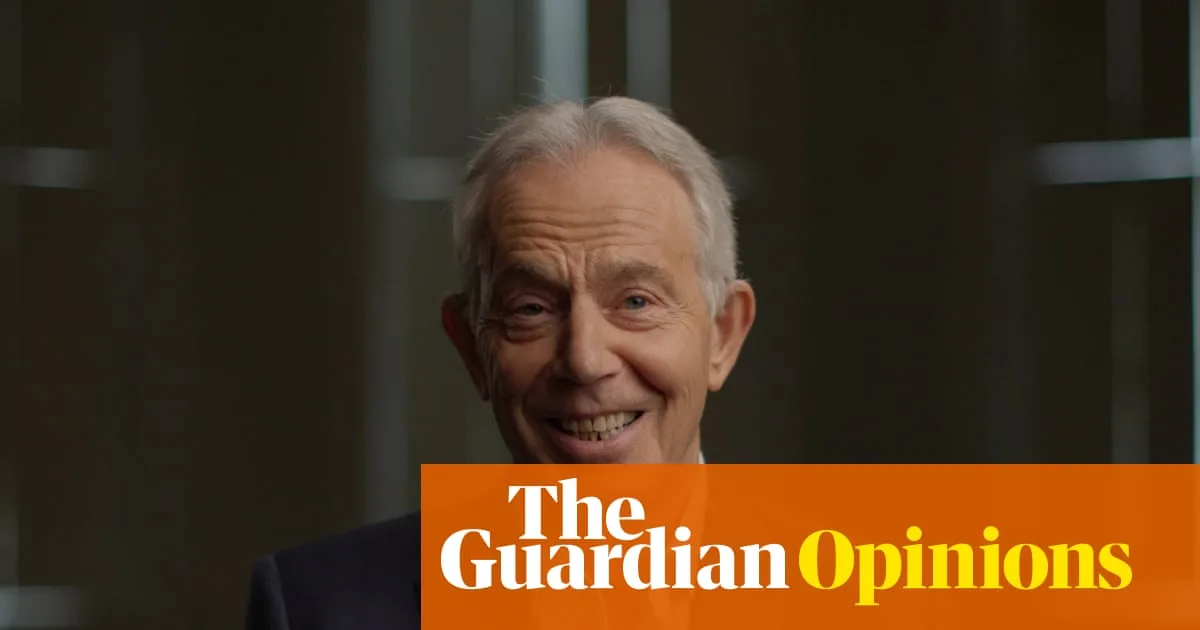
A new three-part documentary series on Channel 4, titled The Tony Blair Story, offers a compelling and often humorous exploration of the former prime minister's career, focusing particularly on his perceived delusions of grandeur. Directed by Michael Waldman, the series has sparked debate over whether it merely confirms existing prejudices or provides genuinely insightful television.
Blair's Self-Reflection and Political Identity
One of the most revealing moments occurs near the end of the documentary, when Blair is asked to introspect about his own personality. Breaking the fourth wall, he expresses incredulity at the request, questioning the value of such an exercise when he would only offer a politician's answer. When reminded that he is no longer in office, Blair responds with stark honesty: You're always a politician. This exchange highlights the enduring nature of his political identity, even years after leaving Downing Street.
Nostalgia and Historical Footage
The documentary serves as a nostalgic trip back to the late 1990s and early 2000s, featuring archival footage that vividly recalls the era. Viewers are treated to scenes of Robin Cook at John Smith's funeral, Max Hastings describing Blair's henchmen as absolutely ruthless bastards, and Jack Straw in a black velvet jacket reminiscent of a character from Death on the Nile. These moments underscore how quickly out-of-office politicians fade from public memory, yet they evoke a specific nostalgia for the political battles of the past.
The 'Jesus Complex' and Criticisms from Peers
A recurring theme throughout the series is the accusation that Blair suffered from a messianic complex. Jonathan Powell recalls Mo Mowlam stating that Tony succeeded because he thought he was fucking Jesus. Similarly, author Robert Harris notes that after Kosovo, Blair thought he could walk on water. This motif is woven into the narrative, suggesting that Blair's self-perception bordered on delusional grandeur.
Jeremy Corbyn adds to this critique, describing Blair as a man in denial who got himself into a messianic trench over Iraq. However, the documentary subtly questions the authority of such assessments, noting that Corbyn's own political defeats might undermine his credibility. The series also touches on the broader accusation that Blair's emotional intelligence often outweighed his intellectual capabilities, a point made by critics who may not themselves be considered intellectual giants.
Family Dynamics and Political Rivalries
While the documentary avoids a deep relitigation of the Iraq War, it delves into the voyeuristic aspects of Blair's family life. His children, including baby Leo—now a strapping 25-year-old—and siblings Kathryn and Euan, offer sensible reflections on their father. Cherie Blair emerges as a formidable force, speaking with a candid, unfiltered honesty. When asked if she felt sorry for Gordon Brown after Blair snatched the Labour leadership, she appears astounded, highlighting the brutal realities of political rivalry.
Cherie's account reveals that she urged her husband to consider a different successor when Brown's turn came, underscoring the persistent unwillingness of observers to acknowledge the viciousness of political competition. This familial insight adds a personal dimension to the political narrative, humanizing figures often seen through a purely partisan lens.
Financial Criticisms and International Perspectives
The documentary also addresses the perennial criticism of Blair's financial dealings, suggesting that the UK remains wilfully babyish about money. It challenges the feigned shock over his expensive suits or post-premiership earnings, comparing his situation to figures like Jacinda Ardern on the global speaker circuit. This segment invites viewers to reconsider societal attitudes toward wealth and ambition in politics.
Internationally, the series features Bill Clinton, who expresses sympathy for Blair's divided loyalties between the US and Europe ahead of the Iraq War. Clinton carefully chooses his words, conceding that Blair was in a pickle. Blair himself defends his decision to support George W. Bush as pragmatism rather than subservience, arguing that the UK, as a small country with a middle-sized economy, must align with larger powers like the US.
Legacy and Ongoing Influence
The irony of Blair's assessment is that he is often accused of his own delusional overreach. When prodded by Waldman, Blair claims that in his role as head of the Tony Blair Institute for Global Change, he may wield more power now than he did as prime minister. His recent appointment to a transitional authority for post-conflict Gaza, alongside Jared Kushner, prompts dark humor about the region's suffering.
Ultimately, the documentary evokes nostalgia not for Blair himself—shots of the Gallagher brothers at Downing Street remain cringe-worthy—but for an era of political optimism that seems unattainable today. It recalls a time when the nation's spirits matched the energy of a leader famously captured sprinting up airplane stairs, symbolizing a bygone age of dynamic leadership.