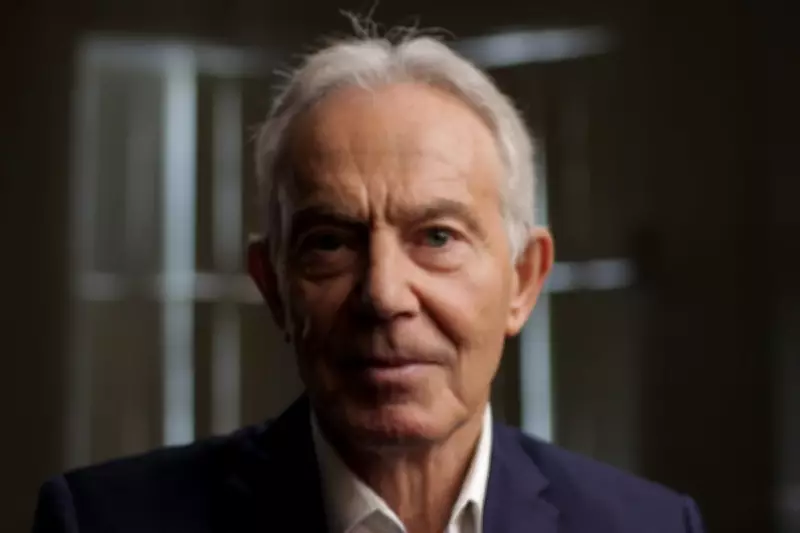
Channel 4's Tony Blair Documentary Fails to Capture Political Complexity
A new three-part Channel 4 documentary series examining the life and career of former Prime Minister Tony Blair has been criticised for presenting a lopsided and overly simplistic narrative that fails to do justice to the complexity of his premiership, particularly regarding the Iraq war.
Rise and Fall Narrative Overshadows Nuanced Analysis
The Tony Blair Story, which aired on Tuesday evening, follows a conventional three-act structure titled "Who Are You?", "Iraq", and "The Loss of Power." The documentary charts Blair's journey from his childhood in Scotland through Oxford University, his election as MP for Sedgefield in 1983, his pivotal partnership with Gordon Brown, and his eventual ascent to Labour Party leadership in 1994 before the landslide 1997 election victory.
Author Robert Harris describes Blair as "the Labour equivalent of Margaret Thatcher" during this period of radical transformation. However, critics argue the documentary becomes too focused on Blair's eventual political decline, rushing through significant achievements to reach the Iraq war narrative.

Iraq War Coverage Lacks Depth and Context
The documentary's central failing, according to reviewers, is its treatment of the Iraq conflict. While the series dedicates substantial time to this controversial chapter of Blair's premiership, it fails to provide adequate context or explore the war's complex geopolitical dimensions. The Iraq segment feels simultaneously overlong yet superficial, existing in the shadow of more comprehensive examinations like the BBC's acclaimed Once Upon a Time in Iraq series.
Blair himself appears in extensive interviews throughout the documentary, remaining characteristically unapologetic about his decision to support the Iraq invasion. "History goes on a long time," he offers as justification, while former communications director Alastair Campbell observes that Blair will likely "go to his grave genuinely thinking it was the right thing to do."
Significant Omissions and Structural Flaws
The documentary's linear narrative approach means important aspects of Blair's legacy receive inadequate attention. Major foreign policy achievements in Northern Ireland and Kosovo are briefly mentioned, while domestic accomplishments including economic growth, environmental legislation, and equality reforms are largely overlooked.
Notable absences include interviews with key figures like Gordon Brown and George W. Bush, both frequently discussed but not participating directly. The documentary also lacks perspectives from important Labour figures like John Prescott and Robin Cook, who died before filming, potentially contributing to what some critics describe as a sycophantic tendency in certain segments.
Access to Blair's Inner Circle Provides Limited Insight
The series does benefit from unprecedented access to Blair's immediate family, including his wife Cherie and three of his children—Euan, Kathryn, and Leo. International perspectives come from figures like Bill Clinton and Condoleezza Rice, while key Blair administration voices including Alastair Campbell, Jonathan Powell, and Peter Mandelson offer their assessments.
Despite this access, the documentary shows little interest in psychological analysis of its subject. Blair himself repeatedly states "I'm not into psychoanalysis," and director Michael Waldman's narration concludes somewhat unimaginatively that Blair "provokes a kaleidoscopic range of opinions."
Missed Opportunities for More Focused Storytelling
Reviewers suggest the documentary might have been more successful had it focused on a narrower aspect of Blair's story—either his formative years and the development of New Labour ideology, or his post-premiership activities and continued influence on global politics. Instead, The Tony Blair Story attempts to cover too much ground, resulting in a narrative that feels rushed and perfunctory in places.

The series ultimately presents Blair as a consistent figure throughout his political career—"the opposite of a chameleon" in Waldman's words—someone who sought to change the world rather than adapt to it. However, by taking what might be described as a "third way" in documentary making, focusing more on delivery than motivation, the series fails to provide the nuanced examination that such a complex political figure deserves.