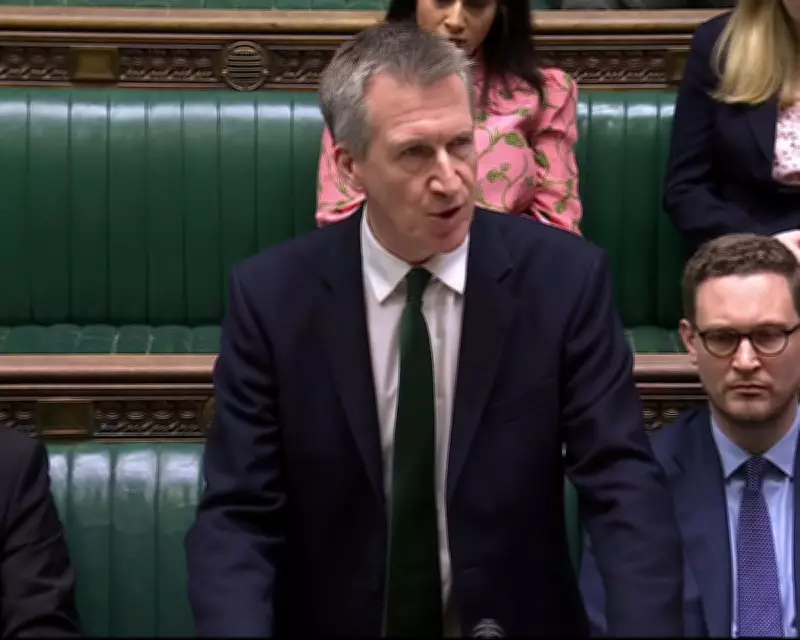
Security Minister Dan Jarvis has issued a stark warning that threats against female Members of Parliament are having a profound chilling effect on talented women considering a career in public life. Jarvis emphasised that these threats, which disproportionately target women and ethnic minority representatives, are actively discouraging individuals from standing for public office.
Unprecedented Volume of Threats Against Elected Representatives
Jarvis highlighted an unprecedented surge in threats directed at elected officials, encompassing a range of serious incidents including physical assaults, property vandalism, stalking, and a relentless blizzard of online abuse. He specifically noted that women and ethnic minority representatives report the highest volumes of abuse, which often includes overtly sexualised and racially charged threats.
"This has a chilling effect on who feels able to stand for public office," Jarvis told MPs in the House of Commons, underscoring the detrimental impact on democratic participation.
New Security Measures Announced Ahead of Local Elections
In response to this escalating threat landscape, the government has announced a series of new security measures ahead of the upcoming local elections in May. A key appointment is Deputy Chief Constable Chris Balmer from Cambridgeshire Police, who will serve as the National Police Chiefs' Council lead for defending democracy.
Further initiatives include the creation of a new, dedicated threat assessment centre. Modelled on an existing system for MPs, this centre will be staffed by a specialist team based within counter-terrorism policing. Their primary role will be to monitor and respond to threats against local councillors and election candidates.
Additionally, a protective security scheme currently operational in England will be extended to cover representatives in the Welsh and Scottish governments, ensuring a more uniform level of protection across the United Kingdom.
MPs Share Personal Experiences of Abuse and Violence
The ministerial update on the work of the government's Defending Democracy taskforce prompted several MPs to share their own harrowing experiences. The debate took place against a poignant backdrop, with references made to wall-mounted shields dedicated to Jo Cox and Sir David Amess, two MPs who were murdered in 2016 and 2021 respectively.
Labour MP Chris Webb, who won a by-election in 2024, revealed he has faced a constant barrage of threats and death threats from far-right elements in his constituency, a trend he described as "a real concern." He thanked Jarvis for making contact after a recent incident at a jobs fair in his constituency, which resulted in a man being charged with a public order offence.
New Green Party MP Hannah Spencer was present in the Commons chamber, having recently required police escort after being targeted during clashes at an anti-far-right event in Manchester.
Liberal Democrat MP Al Pinkerton recounted a direct physical attack during the 2019 general election, stating, "I was physically attacked, or at least an attempt was made to physically attack me, when a beer glass was thrown at my head."
Cross-Party Consensus Breaks Down Over Extremism Debate
The announcements were made against a backdrop of varying confidence levels among MPs regarding existing protective measures. However, the cross-party consensus fractured during the debate when Shadow Security Minister Katie Lam used her response to criticise the government's recent action plans on social cohesion and hate crime.
Lam asserted that while violence against politicians can originate from various groups, "the single biggest extremist threat to our country remains the threat of extremist Islamist violence," linking it to sectarian politics.
This statement drew immediate condemnation from Labour MP Dawn Butler, who called Lam "a disgrace" and later urged her to correct the record, arguing, "there's a far greater threat from the far-right than there is from Islam."
The debate also saw criticism directed at Reform UK over its campaign tactics, with one social media advert targeting Scottish Labour leader Anas Sarwar being described as racist.
The collective testimony and political discord underscore the severe and growing challenges facing elected officials in the UK, with the new security measures representing a critical, though contested, step towards safeguarding democratic processes and those who serve within them.