
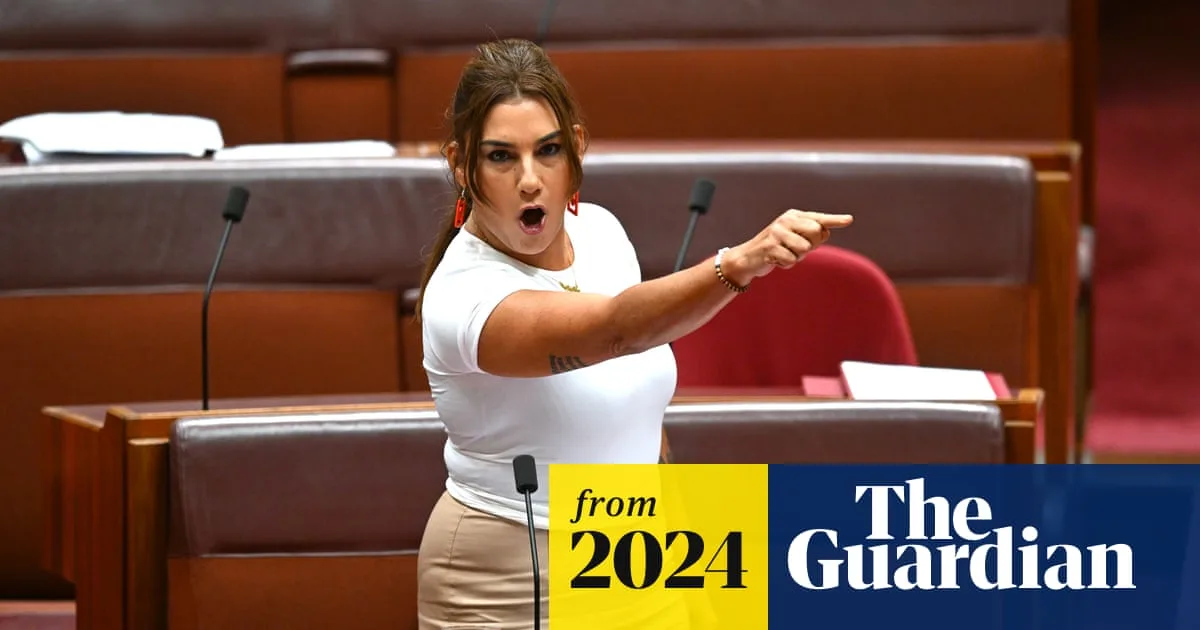
Independent senator Lidia Thorpe has been suspended from the Senate after appearing to throw paper at One Nation leader Pauline Hanson during a tense parliamentary debate. The suspension, moved by government Senate leader Penny Wong, was approved 46-11, with only the Greens opposing. The rule used is an archaic and rarely invoked chamber regulation.
Wong cited “multiple instances” of Thorpe making “inappropriate and sometimes abusive comments” towards other senators, including recent offensive gestures and swearing. She said Thorpe’s behaviour “would not be tolerated in any workplace”. The suspension runs from Wednesday night until the end of Thursday, the last scheduled sitting day of the year.
The incident occurred after Hanson attempted to have former Labor senator Fatima Payman investigated over a citizenship issue. Thorpe ripped up a paper copy of Hanson’s motion and threw it in her direction, with some pieces appearing to hit Hanson. She then left the chamber holding up her middle finger.
Coalition Senate leader Simon Birmingham described the suspension as a “line in the sand” moment, accusing Thorpe of crossing a line. Greens senator Larissa Waters argued the response was disproportionate and noted the debate had “racially charged overtones”. Hanson said she was “pleased” with the suspension, claiming Thorpe’s aggression had been a “downfall of this chamber”.




