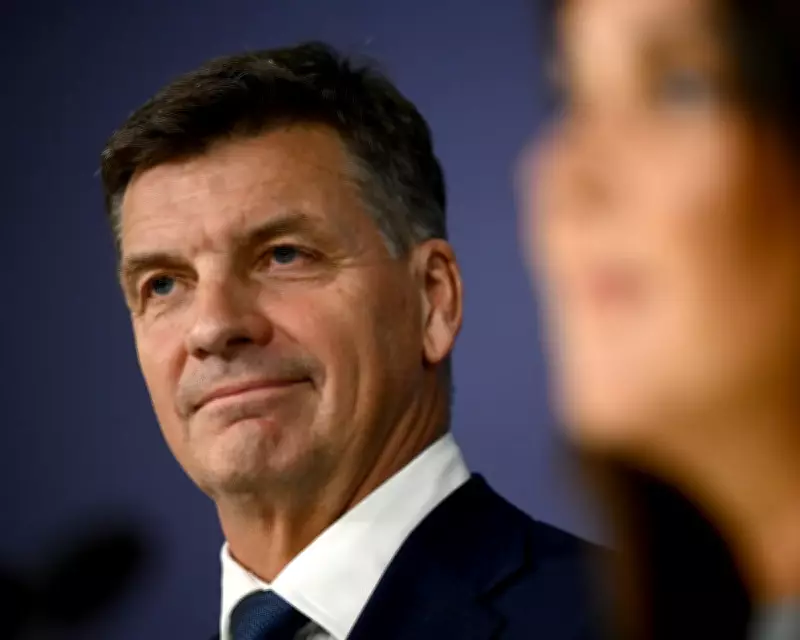
Newly elected Liberal leader Angus Taylor has formally unveiled his shadow ministry, a critical step in his nascent leadership following delicate negotiations with Coalition partners the Nationals. The announcement, made on Tuesday afternoon, comes as Taylor confronts what many describe as an existential crisis for the Liberal Party, deemed increasingly irrelevant by a shifting electorate.
A Frontbench Built for Internal and External Battles
While Angus Taylor declared his new frontbench would vigorously "take the fight to Labor," political analysts suggest his most immediate and formidable battle is for the very survival of the Liberal Party itself. With the next federal election just over two years away, the party faces a monumental challenge to regain competitiveness, a reality underscored by Taylor's strategic appointments.
Key Economic Appointments Signal Pugnacious Stance
In a move highlighting the party's defensive posture, Taylor appointed the fiercely combative Tim Wilson to the pivotal role of shadow treasurer. He is joined by the uncompromising Claire Chandler, who takes on the finance portfolio. These selections of staunch ideological diehards to key economic roles suggest a hardline approach to opposing the Labor government's fiscal agenda.

Taylor's ministry also functions as a reward for loyal supporters. Andrew Hastie was given industry and sovereign capability, Jonno Duniam assumes home affairs and immigration, and Jacinta Nampijinpa Price takes on skills and training. Furthermore, strong parliamentary performers were elevated, with James Paterson moving to defence and Aaron Violi appointed to science, technology and the digital economy.
Papering Over Cracks and Mending Coalition Fences
In an attempt to heal the deep internal rifts that plagued his predecessor Sussan Ley's leadership, Taylor retained some of her backers, most notably Ted O'Brien, who shifts to the foreign affairs portfolio. Crucially, Taylor successfully smoothed over relations with the Nationals, restoring frontbenchers like Bridget McKenzie and Ross Cadell to prominent roles. This reconciliation follows the very public blowup between Ley and Nationals leader David Littleproud, an event that precipitated the end of her tenure.
Policy Vacuum and Electoral Disconnect
Despite the new lineup, Taylor, appearing alongside deputy leader Jane Hume, indicated no rush to announce detailed new policies. Instead, he fell back on broad principles concerning tax reform and immigration. This vagueness may prove problematic, particularly with younger voters the party desperately needs to win back.
Shadow Treasurer Tim Wilson immediately dismissed Labor's considerations of adjusting the capital gains discount to address housing affordability, labelling it a new "housing tax." This stance risks further alienating a generation locked out of the property market. On immigration, Taylor offered little beyond a commitment to policies that "protect Australia's way of life" and reduce overseas arrivals, leaving a significant policy vacuum.
The Syria Repatriation Issue: A Political Gift?
The Coalition has seized on the sensitive issue of the potential repatriation of a group of Australian women and children from Syria, wives and families of Islamic State fighters. Taylor has vehemently opposed their return, insisting they must be "blocked at every turn," despite the legal reality that as Australian citizens, the government cannot legally prevent their entry if they arrange their own passage.
This position overlooks the historical precedent set by both sides of politics; the former Morrison government repatriated children in 2019, and the current Labor government brought home women and children in 2022. The issue, however, provides a potent, if contentious, political attack line for the Opposition.

The Road Ahead: An Immense Challenge
The first major test for Taylor and his remade team will be the return of parliament in the coming weeks. The Labor government, holding a commanding 94 seats, awaits with anticipation. For the Liberals to not only survive but mount a credible challenge, an immense amount of hard graft lies ahead. The true scale of the task facing Angus Taylor—to rebuild a fractured party, develop compelling policies, and reconnect with a disillusioned electorate—may be even greater than he has yet fully grasped. The battle for the life of the Liberal Party has well and truly begun.