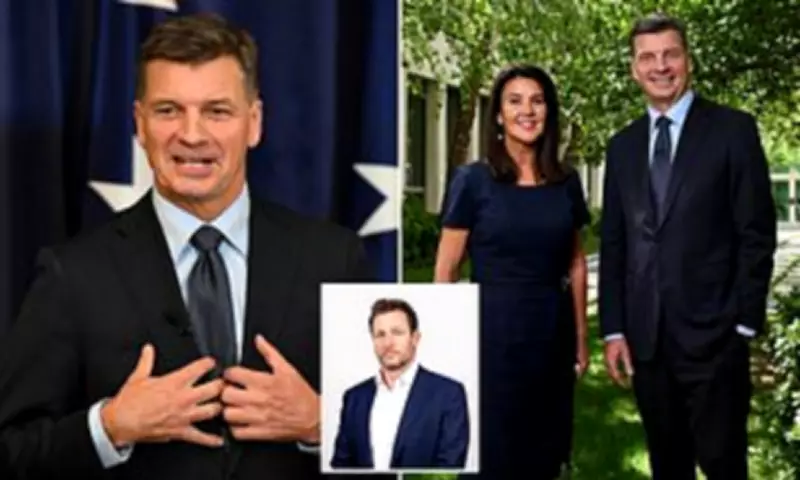
Angus Taylor's inaugural shadow ministry did not require perfection, but it demanded coherence and alignment with the brand he is striving to establish. The new Opposition Leader is focused on restoring the Liberal Party's reputation as superior economic managers, and he has attempted to tailor his team toward this objective. However, the lineup reveals several strategic errors alongside notable strengths.
Strategic Appointments and Key Roles
The shadow ministry features three standout decisions: Tim Wilson as shadow treasurer, James Paterson returning to a national security portfolio, and Claire Chandler, a 35-year-old Tasmanian senator, assuming the shadow finance portfolio. Wilson, who reclaimed the metropolitan seat of Goldstein from teal independents, brings experience as a former chair of the House economics committee. While Ted O'Brien possesses stronger economic credentials on paper, Wilson excels as a communicator, notably dismantling Bill Shorten's franking credits proposal in the 2019 election. He must now articulate an alternative economic vision that resonates with voters, a challenging task requiring robust support.
Claire Chandler's Critical Role
Chandler, as shadow finance minister, will play a pivotal role in ensuring Wilson's policy proposals are fiscally sound. Her background at Deloitte provides valuable expertise, though her primary responsibility will be to translate economic scripts into credible plans. In opposition, without departmental resources, this function becomes even more crucial. Chandler has already highlighted generational debt concerns, but her effectiveness will hinge on detailed policy scrutiny.

James Paterson's National Security Focus
Senator Paterson's assignment to national security leverages his extensive experience in this domain, a traditional Coalition strength. In the aftermath of the Bondi tragedy, public doubts about Labor's capabilities have intensified. Paterson's challenge is to critique Labor's failures while formulating a coherent policy framework for defence, immigration, and home affairs, avoiding the polarising rhetoric of One Nation. His media proficiency and error-free record position him well, but success depends on packaging criticisms into actionable alternatives.
Contradictions and Oversights
Despite these strengths, Taylor's ministry includes glaring contradictions. Andrew Hastie's appointment as shadow industry minister, with an added 'sovereign capability' title, undermines Taylor's economic modernisation agenda. Hastie has recently championed nostalgic policies like resuming car manufacturing, clashing with Taylor's focus on productivity and investment. Industry is a portfolio where oppositions must demonstrate governmental plausibility; Hastie's provocative stance risks alienating business and eroding economic credibility.
Leadership Dynamics and Risks
The triumvirate of Wilson, Chandler, and Paterson reflects generational change, with all under 50, but introduces leadership risks. A successful shadow treasurer like Wilson could emerge as a potential successor if Taylor falters, effectively providing a platform for rivalry. Taylor must closely monitor Wilson's announcements to maintain control. Wilson's advocacy for radical economic reforms will now face the test of implementation, requiring him to align rhetoric with policy substance.
Underutilized Talent and Missed Opportunities
Taylor's selections also fail to leverage available talent. Ted O'Brien's shift to foreign affairs wastes his economic training from the London School of Economics and business career, despite Taylor's prioritisation of economic competence. Dave Sharma, a former ambassador to Israel with sophisticated international expertise, has been relegated to a shadow assistant role, a clear oversight given national security synergies post-Bondi. Similarly, Simon Kennedy's background as a management consultant partner is underused in internal policy roles rather than a senior economic portfolio.

Implications and Future Challenges
These missteps are costly for a Liberal parliamentary team diminished by recent election losses, where quality talent is scarce. Taylor's pitch of seriousness is undermined by underutilising figures like Sharma and Kennedy, suggesting factional appeasement over merit-based selections. While oppositions can evolve, first impressions are lasting, and Taylor lacks political capital to waste on poor appointments that detract from his positive moves. Fixing these errors over time is possible, but immediate credibility hinges on coherent strategy and effective talent deployment.