Tarique Rahman Set to Become Bangladesh's New Prime Minister Following Historic Election Victory
Bangladesh is preparing to inaugurate Tarique Rahman as its new prime minister after his party secured a decisive mandate in the nation's first parliamentary election since the ousting of former leader Sheikh Hasina. The swearing-in ceremony, scheduled for Tuesday, marks a significant political transition following a period of interim governance led by Nobel laureate Muhammad Yunus.
Transition from Interim Leadership
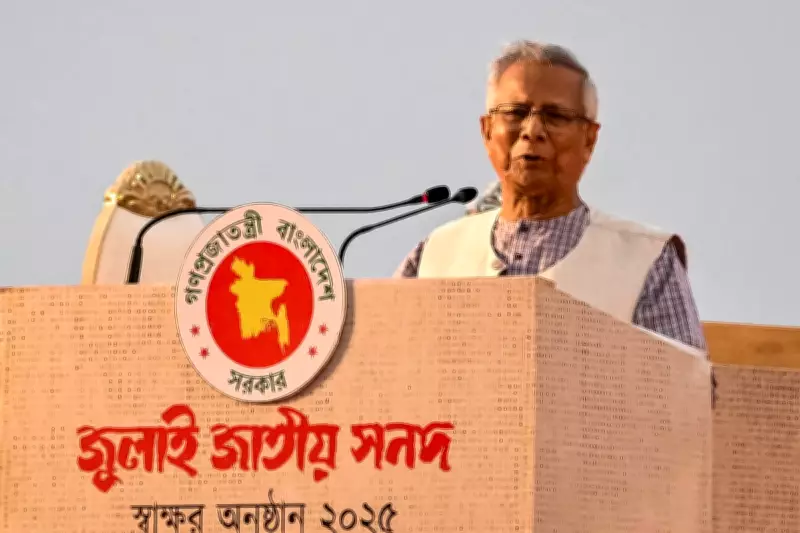
Muhammad Yunus, the 85-year-old Nobel Peace Prize winner, has formally stepped down as Bangladesh's interim leader after guiding the country for 18 months. Yunus returned from self-exile in August 2024 to assume leadership after bloody street protests toppled Sheikh Hasina's Awami League government, forcing her to flee to India.
In his farewell address, Yunus described the election as a celebration comparable to "a mega Eid" and characterized Hasina's removal as "a day of great liberation." He expressed hope that the democratic practices established during his tenure would continue, stating: "Today, the interim government is stepping down. But let the practice of democracy, freedom of speech, and fundamental rights that has begun not be halted."

Landslide Election Results
Tarique Rahman's Bangladeshi Nationalist Party achieved a commanding victory, securing 209 of the 300 parliamentary seats. The Islamist party Jamaat-e-Islami captured 68 seats, while Hasina's Awami League, which had won the previous four elections, was prohibited from participating in the contest.
The 60-year-old Rahman, son of late prime minister Khaleda Zia, returned from a 17-year self-exile in December and led his party to electoral success less than two months later. Following his victory, Rahman engaged in what were described as cordial discussions with political rivals, including Jamaat-e-Islami chief Shafiqur Rahman and National Citizen Party convener Nahid Islam.
Constitutional Reforms and Democratic Transition
Alongside electing a new government, Bangladeshi voters endorsed sweeping democratic reforms through a national referendum held concurrently with the parliamentary election. The referendum proposed substantial constitutional changes that formed a central component of Yunus's transition agenda.
Key proposals included establishing term limits for prime ministers, creating an upper house of parliament, strengthening presidential powers, and enhancing judicial independence. Reflecting on the transition period, Yunus remarked: "We didn't start from zero, we started from a deficit. Sweeping away the ruins, we rebuilt institutions and set the course for reforms."
Swearing-In Ceremony and International Presence
Breaking with longstanding tradition, the swearing-in ceremony will be conducted at the Parliament Complex rather than the presidential palace Bangabhaban. President Mohammed Shahabuddin will administer the oath to the new cabinet at 4pm local time on Tuesday.
The event will witness significant international participation, with several foreign leaders expected to attend. Confirmed attendees include Indian parliament speaker Om Birla, Pakistani planning minister Ahsan Iqbal, Sri Lankan health minister Nalinda Jayatiss, Bhutanese prime minister Tshering Topgay, and Maldivian president Mohamed Muizzu. British undersecretary of state Seema Malhotra is also anticipated to be present.
Challenges Ahead for New Government
In a Dhaka press briefing, Rahman outlined his administration's immediate priorities, emphasizing the need to address law and order concerns and stabilize a fragile economy. He acknowledged the challenging circumstances facing his incoming government, stating: "We are about to begin our journey in a situation marked by a fragile economy left behind by the authoritarian regime, weakened constitutional and statutory institutions and a deteriorating law and order situation."
The transition represents a historic moment for Bangladesh, marking the first change in government since Sheikh Hasina's ouster and the restoration of electoral democracy following a period of political turmoil and interim leadership.