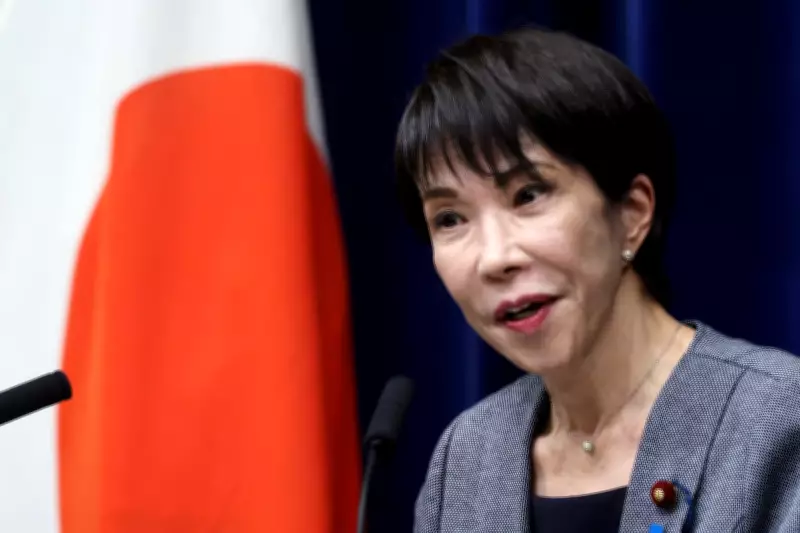
Japan's Prime Minister Sanae Takaichi Seeks to Consolidate Power in Sunday's Snap Election
Japan's Prime Minister Sanae Takaichi has called a snap election for Sunday, banking on her remarkable personal popularity to secure a stronger mandate. Known as a charismatic straight talker, Takaichi has cultivated an image that resonates with younger voters and breaks from the traditional mould of Japanese leadership.
Unconventional Appeal in a Conservative Landscape
Prime Minister Takaichi represents a departure from the elderly male leaders who have dominated Japanese politics for decades. Her popularity stems from a unique combination of hardline conservative policies and a relatable, playful public persona. She is an avid heavy metal fan, motorcycle enthusiast, and drummer who has even performed with visiting dignitaries.
"Work, work, work, work, work" became her signature phrase when describing her leadership philosophy, thrilling a nation that values dedication while making some uncomfortable in a country already known for overwork. This charismatic approach has made her exceptionally popular among younger generations, who affectionately use her nickname "Sana" and closely follow her fashion choices, stationery preferences, and favorite food—steamed pork buns.

From Middle-Class Roots to Political Power
Takaichi's background reflects her conservative values. Born in Nara, Japan's ancient capital, she was raised by parents who taught prewar moral values. Her mother served as a police officer while her father worked at a machinery manufacturer. As a child, she listened to her parents recite an 1890 imperial document praising paternalistic family values and government loyalty.
Despite admission to prestigious Tokyo schools, her conservative parents insisted she attend Kobe University while living at home—a common expectation for unmarried daughters in traditional families at the time. Her career path included an internship with a U.S. Democratic lawmaker in Denver during the late 1980s, followed by work as a television personality, author, and critic before entering politics.
Navigating Male-Dominated Politics
Takaichi's political journey has been marked by challenges in Japan's male-dominated system. First elected to Parliament in 1993 at age 32 despite parental opposition, she faced insults from voters who called her "a little girl" and questioned her readiness for office. She also confronted groundless allegations about her personal life and criticism—often from women—for her fashion choices including heels, flashy jewelry, and short skirts.
"I am who I am," Takaichi has stated. "The only way to prove myself is with the work I do." Her stance on gender issues has disappointed feminists, as she supports the imperial family's male-only succession, opposes same-sex marriage, and resists amending the 19th-century law requiring married couples to share a surname—a practice that typically pressures women to abandon their family names.
Continuing Abe's Legacy with a Rightward Shift
As a protégé of the late Prime Minister Shinzo Abe, Takaichi has embraced and expanded upon his nationalistic agenda. She defends Japanese wartime actions, advocates for increased military capability and spending, promotes patriotic education, and champions traditional family values. After Abe stepped down and endorsed her as "the star of the conservatives," Takaichi ran unsuccessfully for LDP leadership in 2021 and 2024 before finally securing the top position in October.
She has reappointed several of Abe's top advisers and is expected to push Japan further to the right on security, gender, and immigration policies if her Liberal Democratic Party makes significant gains in Sunday's election. Polls suggest the LDP, despite its deep-rooted problems, is poised for substantial parliamentary advances thanks largely to Takaichi's personal appeal.

A Workaholic Leader with Complex Dimensions
Takaichi's leadership style reflects both strict discipline and unexpected lightheartedness. She admits to disliking drinking parties and preferring study at home, though she made efforts to socialize more after her unsuccessful leadership bids. Analysis of her first three months in office revealed she spent most time "holed up" in the official residence or her office, with no dinner appointments with political or business leaders during her initial month.
Her strictness traces back to her mother, who once slapped her for complaining about work fatigue, scolding her for griping about a self-chosen path. Even after Takaichi became a government minister, her mother maintained this disciplinary approach. Yet colleagues also describe a playful side—she once sang her elementary school song with a local television executive upon discovering they attended the same school.
As Japan prepares for Sunday's crucial vote, Takaichi stands at a pivotal moment. Her unique blend of conservative ideology, personal charisma, and determination to work "like a horse" positions her to potentially reshape Japanese politics and extend the legacy of her mentor Shinzo Abe into new, more assertive territory.