SNP Leader Unveils Radical Cost-of-Living Measures in Election Manifesto
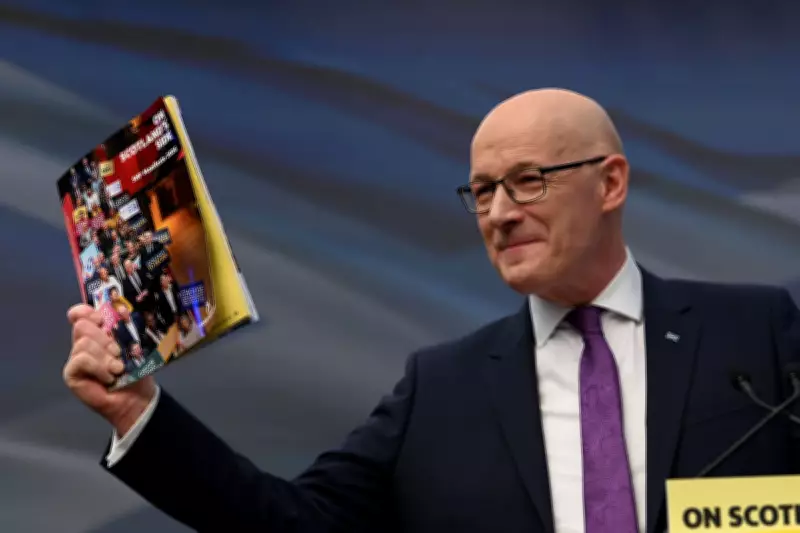
Scottish First Minister John Swinney has launched the SNP's manifesto for the Holyrood election on May 7, promising "bold action" to address the cost-of-living crisis through unprecedented food price caps. With exactly three weeks remaining until polling day, Swinney declared that rising household expenses represent the "defining issue of this election," while sharply criticising Westminster's handling of economic pressures.
Essential Food Items Targeted for Maximum Price Limits
In a significant policy announcement, Swinney revealed plans to establish maximum price controls on certain essential food items if the SNP secures a record fifth consecutive term. He argued that current financial strains are "impacting upon our nation's nutrition" and necessitate intervention. Although price-setting typically falls outside devolved powers, Swinney intends to utilise Holyrood's public health authority to implement these "fair food prices" on staples like bread, milk, cheese, eggs, rice, and chicken.
"These measures will focus on everyday items that constitute a decent diet," Swinney explained to supporters in Glasgow. "Our government is committed to reducing weekly shopping costs and putting more money directly into people's pockets."

Broader Manifesto Commitments on Transport, Health, and Economy
The manifesto extends beyond food pricing to include a £2 cap on bus fares across Scotland, representing a substantial reduction for many commuters. On healthcare, Swinney promised a major refocusing of NHS resources toward preventive measures and community-based care, aiming to reduce hospital admissions and rebalance the care system.
Economic growth features prominently, with pledges to establish a major projects office designed to "cut through bureaucracy and accelerate investment" in nationally significant initiatives. Swinney emphasised that this office would ensure swift decision-making and enable Scotland to seize critical investment opportunities in a competitive global landscape.
Independence Ambitions and Political Opposition
Swinney framed the election as crucial for Scotland's constitutional future, urging voters to support the SNP to "put Scotland's future in Scotland's hands" and secure a second independence referendum. He expressed confidence in winning such a vote, claiming independence could facilitate Scotland's return to the European Union and lower energy bills.
However, opposition parties dismissed the manifesto as unrealistic. Labour's deputy leader Jackie Baillie criticised "20 years of failure," citing unresolved pledges from previous SNP manifestos and highlighting issues in NHS performance, education, and infrastructure. Scottish Liberal Democrats deputy leader Wendy Chamberlain MP similarly described the document as a "snoozefest" produced by a party that has "run out of steam."
Polling Predictions and Electoral Context
The manifesto launch coincided with a Daily Telegraph poll suggesting the SNP could achieve a Holyrood majority, projecting 67 seats compared to 64 in 2021. Labour is forecast to secure 19 seats, followed by Reform UK with 17, while the Conservatives are predicted to drop to 10 seats. The Liberal Democrats and Greens are expected to gain slightly, with seven and nine seats respectively.
Swinney concluded his address by reaffirming his dedication to public service, stating, "My entire adult life has been spent in service of this country. Today, I offer to do more." The election on May 7 will ultimately determine whether his vision for Scotland, combining immediate economic relief with long-term constitutional change, resonates with voters across the nation.