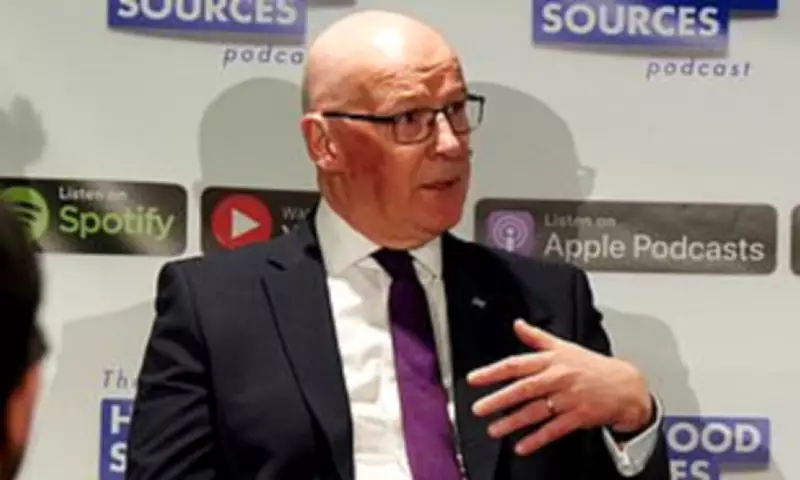
First Minister John Swinney has been labelled 'incoherent' by political opponents after asserting that ramping up expenditure on Scotland's benefits system is part of a strategic effort to ultimately cut spending. The controversy erupted during a recording of the Holyrood Sources podcast, where Swinney defended the rising welfare bill, projected to approach £10 billion per year by 2030, as a necessary step toward reducing long-term costs.
Welfare Spending Surge and Strategic Aims
Scotland's welfare expenditure is set to increase from £7.4 billion in 2026/27 to £9.2 billion by 2030/31, with disability payments accounting for 80% of this total. Holyrood currently spends £1 billion more annually on welfare than it receives from the Treasury, due to the SNP's creation of additional, more generous benefits. Despite this, Swinney argued that the goal is to provide financial support to help individuals secure employment and eradicate child poverty, thereby diminishing the future need for benefits.
When questioned on whether he views the increased welfare spending as a success or failure, Swinney responded, 'I don't view it that way. Welfare spending is a necessity for supporting people who experience vulnerability in our society. I don't think its increase is a necessity. If I could help to lift families out of poverty, if I could get people into sustainable employment, then I wouldn't have to contemplate that [black hole] scenario, because we would succeed in a strategic necessity for Scotland - to eradicate the number of families living in poverty.' He confirmed that the strategic aim is indeed to reduce the bill.

Political Backlash and Criticism
Scottish Tory leader Russell Findlay condemned Swinney's approach as 'economically illiterate and incoherent'. Findlay stated, 'This appears to be John Swinney finally conceding that the SNP's sky-high benefits bill is completely out of control. Following his tortured logic, he seems to say that it should actually rise further, and then at some point down the line, we're told to believe that, having spent all these billions of pounds suddenly, magically, it'll start coming down again. It's economically illiterate and incoherent, and the truth of the matter is that the benefits bill is already costing taxpayers too much. It's unfair, and it needs to be reined in.'
The criticism comes as SNP ministers recently missed legal targets on poverty reduction and are on track to miss them again by 2030, suggesting that higher benefit spending may continue indefinitely. Watchdogs have warned of a looming £5 billion black hole in the Holyrood budget by 2030, with £2 billion attributed to rising welfare costs, exacerbating concerns over spending plans outpacing income.
Other Party Leaders Weigh In
At the same event, other political figures voiced their perspectives. Scottish Labour leader Anas Sarwar appealed to voters for 'five years' to demonstrate his party's capabilities. Alex Cole-Hamilton, leader of the Scottish Liberal Democrats, declared he would 'rather resign' than support Swinney remaining as First Minister in post-election negotiations.
Reform UK Scotland leader Lord Malcolm Offord praised former First Minister Alex Salmond as 'brilliant' and downplayed the resignation of party press officer Amanda Crawford, who left mid-campaign citing job restrictions, as 'an internal staff matter'.
Scottish Greens co-leader Ross Greer dismissed Swinney's election strategy to secure an SNP majority for independence as a 'dead end'. Greer argued that this approach implies independence would be off the table if the SNP falls short, but he believes a combined majority of SNP and Green MSPs is equally valid. 'The strategy is a dead end. It would be catastrophic for the independence movement if we once again elect a pro-independence majority to the Parliament, but the SNP has robbed that majority of any democratic mandate,' Greer said.

Shift on Oil and Gas Policy
In a related development, Swinney appeared to soften his stance on new oil and gas drilling, citing the Iran war as altering the balance between climate concerns and energy security. He indicated that if importing oil and gas results in higher carbon emissions, 'my argument would be we should prefer domestic production over imported production'. However, the SNP Government, which lacks licensing authority, has previously advocated a presumption against new developments, highlighting ongoing policy tensions.