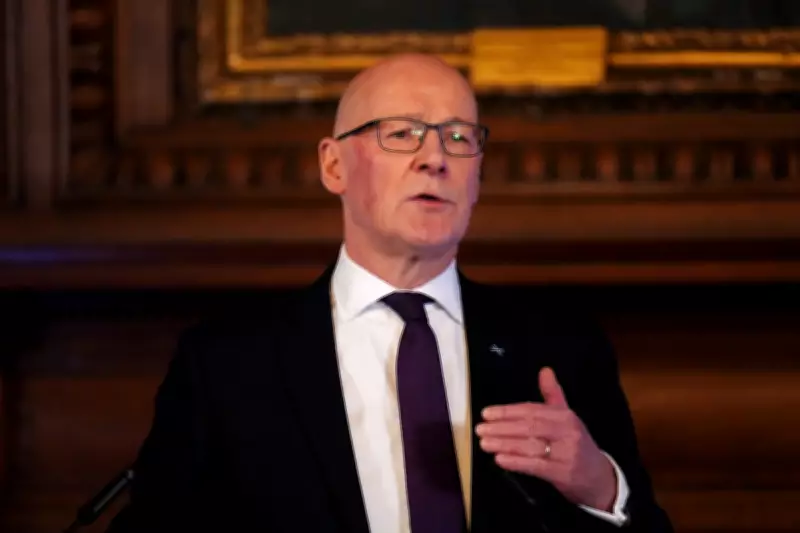
The reputation of the UK Government under Prime Minister Sir Keir Starmer has been left "in tatters" following the escalating scandal surrounding Lord Peter Mandelson's appointment as ambassador to the United States, according to Scotland's First Minister John Swinney. The controversy centres on Lord Mandelson's previously known relationship with the convicted paedophile financier Jeffrey Epstein, with new revelations prompting a Metropolitan Police investigation and forcing the Government to relinquish control of related documents to Parliament.
First Minister's Scathing Critique of Prime Minister's Judgment
Speaking to the Press Association on Thursday, John Swinney launched a blistering attack on Sir Keir Starmer's handling of the affair, describing the Prime Minister's decision-making as demonstrating "the most appalling lack of judgment." The Scottish First Minister emphasised that the connection between Lord Mandelson and Epstein "should have been a red flag at the time" of the diplomatic appointment, suggesting this oversight reveals fundamental flaws in the Government's vetting processes.
"I think that demonstrates a most shocking and appalling poor judgment by the Prime Minister and, as a consequence of that, I think the reputation of the Labour Government is in tatters," Mr Swinney stated unequivocally. He further argued that this episode would continue to "haunt the Prime Minister," particularly damaging the administration's credibility on the international stage where diplomatic appointments carry significant weight.

Police Investigation and Parliamentary Intervention
The crisis deepened this week when the Metropolitan Police confirmed it had launched an investigation into allegations of misconduct in public office. This followed the emergence of emails suggesting Lord Mandelson may have passed government information to Jeffrey Epstein during the 2008 financial crisis, raising serious questions about the former minister's conduct during his previous ministerial roles.
Facing mounting pressure from MPs across the political spectrum, including former deputy prime minister Angela Rayner, the Government was compelled to cede authority over the release of documents concerning Lord Mandelson to Parliament's Intelligence and Security Committee. This represents a significant concession, transferring oversight from executive control to parliamentary scrutiny amid concerns about transparency and accountability.
Scottish Government's Response and Cabinet Defence
In response to the growing controversy, Mr Swinney announced on Wednesday that Scotland's top civil servant had initiated an audit of the Scottish Government's historical dealings with Lord Mandelson. This review will examine interactions during his tenure as a minister under Tony Blair and Gordon Brown, as well as during his ambassadorial posting, ensuring Scotland's institutions maintain appropriate distance from the scandal.
Meanwhile, senior UK Cabinet minister Steve Reed offered a defence of the Prime Minister and chief of staff Morgan McSweeney, asserting they were "not at fault" having been "lied to" by Lord Mandelson about the nature of his relationship with Epstein. "You're only as good as the information you receive," Mr Reed commented, placing blame on vetting procedures that failed to adequately challenge Lord Mandelson's claims that his connection to the convicted sex offender was minimal.
The First Minister maintained that Sir Keir Starmer remains under "enormous pressure" regarding the Mandelson scandal, urging him to honour his commitment to full transparency through document publication. As investigations continue and political fallout spreads, this episode threatens to undermine public confidence in governmental appointments and oversight mechanisms at the highest levels of British politics.