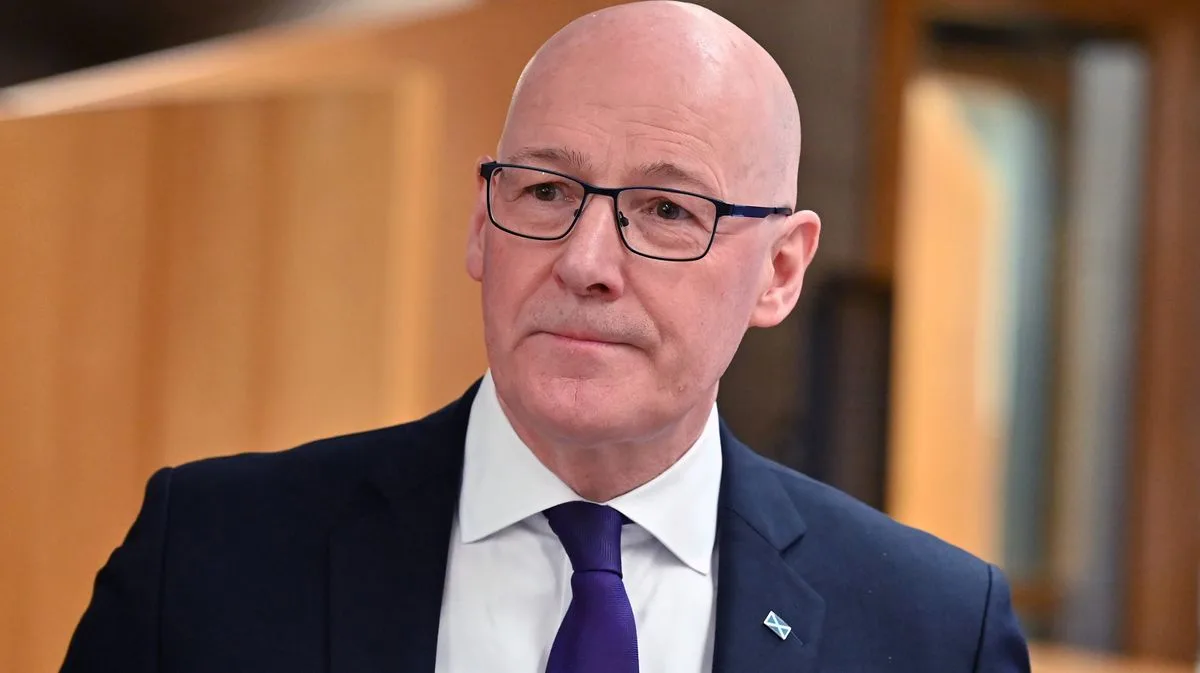
John Swinney Recalls Son's Birth on Day of Dunblane Tragedy 30 Years On
Swinney Reflects on Son's Birth Amid Dunblane Tragedy 30 Years Later

First Minister John Swinney Recalls Personal Contrast on 30th Anniversary of Dunblane Tragedy

First Minister John Swinney has reflected on the profound "contrast" he will "never, ever forget" between the birth of his son and the Dunblane tragedy, which occurred on the same day 30 years ago. Speaking on the anniversary of the deadliest mass shooting in UK history, Mr Swinney shared his personal memories of March 13, 1996, a date marked by both immense joy and unspeakable loss.

The Day of Devastation and New Life

On that fateful day, gunman Thomas Hamilton entered the gymnasium of Dunblane Primary School in Scotland and opened fire on a primary one class, murdering 16 children and their teacher, Gwen Mayor. The incident sent shockwaves across the nation and remains a pivotal moment in British history.

Mr Swinney recalled how he received a call at work informing him that his son Stuart would be born while he was employed at an insurance firm in Stirling, just a few miles from Dunblane. "I left the office and saw ambulances going up the motorway towards Stirling, and didn’t quite know what was going on," he said. "So that day my son was born, and I remember the preciousness of his birth into the world and how I felt as a father of a new child."

However, his joy was tempered by the unfolding tragedy. "But I couldn’t stop thinking about the fact that that very same day, some of my work colleagues had to come to terms with the loss of their child in this unspeakable tragedy," Mr Swinney added. "The contrast of how I felt about the arrival of my son in comparison to the devastation that was felt by people I knew who had lost their children, was a contrast that I’ll just never, ever forget."

Legacy of Gun Control and Ongoing Debates

In the aftermath of the massacre, Mr Swinney voted in favour of a ban on handguns in the House of Commons in 1997, a move that led to stricter firearms regulations in the UK. This week, Mick North, whose daughter Sophie was among the victims, has called for even tighter gun control laws and more rigorous background checks for firearms licensing.

When asked about whether further legislation is needed, Mr Swinney responded thoughtfully: "I have great respect and take very seriously what Mick North says in this debate and I think we’ve got to be open-minded about this question as to whether we have all of the regulations and the controls in place that we require to have. I think we’ve got to make sure that wherever any licence application is made, it is rigorously researched and checked, but we should be open-minded about whether any further control is required."

Currently, MPs are considering proposals to tighten shotgun licensing laws to align them with existing restrictions on rifles, reflecting ongoing efforts to prevent similar tragedies.

A Powerful Lesson from History

Mr Swinney emphasised the importance of learning from the past. "I look at what’s happened in the United Kingdom since Dunblane and I think we should be very proud that we took the action that we took and we honoured the suffering of the families who lost children and the death also of Gwen Mayor, their teacher, in order to make sure that others did not suffer in the way that the people of Dunblane suffered," he stated. "I think there’s a really powerful lesson for us all in that."

His reflections serve as a poignant reminder of the dual nature of March 13, 1996—a day of personal celebration overshadowed by national grief, yet one that spurred significant changes in UK gun policy. As the 30th anniversary passes, the memories of those lost continue to influence discussions on safety and regulation, ensuring their legacy endures in the pursuit of a safer society.




