
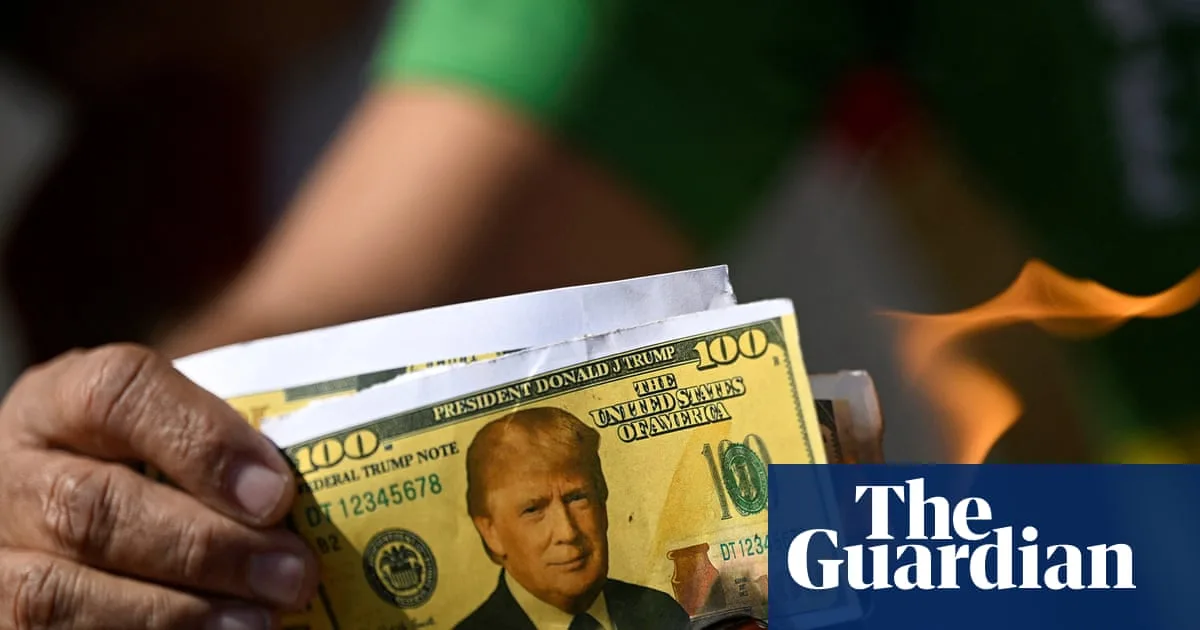
Donald Trump has unleashed a new wave of sweeping tariffs on imports from dozens of countries, with rates ranging from 10% to 50%, prompting fresh market falls and a scramble by world leaders to negotiate trade deals. The US president's latest move, which he sees as benefiting American exporters, is due to take effect on 7 August, offering a brief reprieve for negotiation after the White House delayed the original Friday deadline.
Stock markets tumbled on both sides of the Atlantic, with Europe's Stoxx 600 down nearly 2% and the UK's FTSE 100 off 0.8%. Wall Street also closed lower, with the Dow Jones and S&P 500 down more than 1% and the Nasdaq losing over 2%. The sell-off was exacerbated by weaker-than-expected US jobs figures.
Countries including India, Taiwan, South Africa and Switzerland face punitive rates of 25%, 20%, 30% and 39% respectively. Canada's Prime Minister Mark Carney expressed disappointment at the increase in US tariffs on Canadian goods from 25% to 35%, while South Africa's President Cyril Ramaphosa said he would negotiate "as strongly and as hard as we can" to reduce the 30% duty on his country's exports.
The world's poorest nations were hit hardest, with Syria facing a 41% levy, Laos and Myanmar 40%, Iraq 35%, and Libya 30%. Lesotho, which initially faced an existential 50% tariff on its textile industry, saw a reprieve to 15% after declaring a national state of disaster.
Switzerland, one of the highest-hit countries, saw the franc weaken to a six-week low. President Karin Keller-Sutter said she had spoken to Trump but no agreement was reached. Kathleen Brooks, research director at XTB, said: "The Swiss rate was a shock, and the Swiss government have said that they plan to keep negotiating with the US to secure a lower levy. Chocolatiers, watchmakers and pharma companies are all under threat."
The UK and the Falkland Islands were conspicuous as the only trading partners listed at a 10% rate, while the EU faces a 15% all-inclusive tariff. However, cars were excluded from the executive order and remain subject to a 27.5% tax. Pharmaceuticals were also absent from the list, despite the White House having agreed a 15% rate on Monday.




