Wes Streeting's Private Messages with Peter Mandelson Exposed
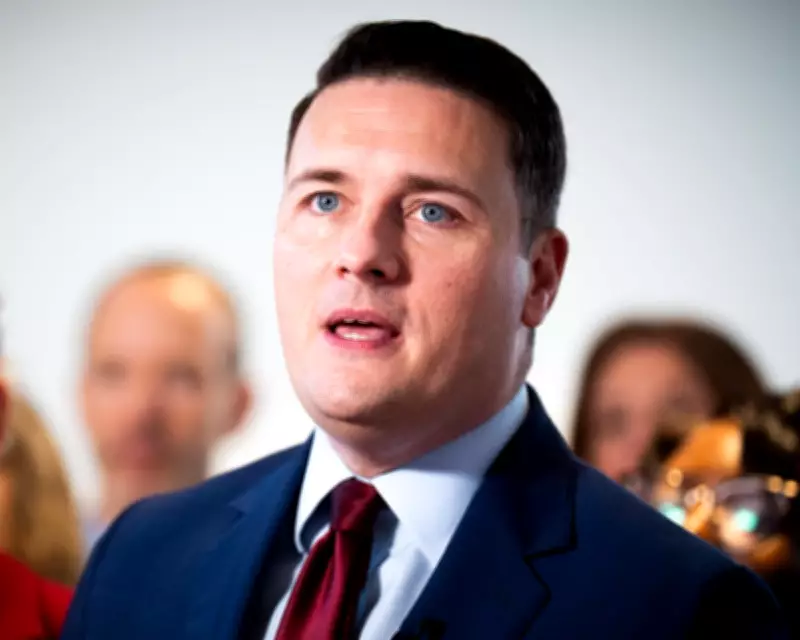
Health Secretary Wes Streeting has made public a series of private WhatsApp messages exchanged with former peer Peter Mandelson, in a move aimed at drawing a line under their relationship following a recent scandal. The messages, spanning from August 2024 to October of last year, reveal Streeting's candid concerns about his political future and the government's direction.
Election Fears and Leadership Ambitions
In the disclosed exchanges, Streeting expressed deep anxiety about his re-election prospects, telling Mandelson he feared being 'toast at the next election' in his Ilford North constituency. He highlighted a lack of clear messaging from Labour, stating, 'There isn't a clear answer to the question: why Labour?' This admission comes as Streeting, widely seen as a potential leadership contender if Keir Starmer steps down, navigates the fallout from the scandal involving Mandelson's appointment as an ambassador.
The messages also critiqued the government's economic policies, with Streeting agreeing with Mandelson's complaint about a 'lack of economic philosophy' and asserting that there was 'no growth strategy at all.' These comments underscore internal tensions within the Labour party as it faces mounting pressure, including calls from Scottish Labour leader Anas Sarwar for Starmer to resign ahead of the May Scottish parliamentary elections.

Scandal Fallout and Cabinet Support
The scandal has already led to the departure of Morgan McSweeney, Starmer's chief of staff, who had advised proceeding with Mandelson's appointment. Despite this, Streeting publicly backed the prime minister on Monday, joining the cabinet in an effort to quell speculation about Starmer's vulnerable position. He acknowledged, 'It has not been the best week for the government and that's not just Keir Starmer; that's all of us because we're a team... I want him to come through it.'
Allies of Streeting argue that publishing the messages demonstrates he has 'nothing to hide' regarding his association with Mandelson. The exchanges depict a familiar rapport, with some messages ending in a kiss and Streeting complimenting 'lovely photos' of Mandelson in a newspaper profile.
Key Exchanges on Policy and Recognition
Perhaps the most revealing discussions occurred in late March last year, following Matthew Doyle's resignation as Starmer's communications head. Streeting concurred with Mandelson's view that 'the government problems do not stem from comms,' leading to his election fears.
In a lengthy exchange last July, Streeting sought Mandelson's opinions on the UK formally recognising the state of Palestine. He argued that it would be 'politically impossible' for him to vote against such a move in parliament, noting his narrow victory in Ilford North by just 528 votes against a pro-Gaza independent in 2024. Streeting wrote, 'Morally, because Israel is committing war crimes before our eyes... Politically, a Commons vote will be engineered in September on recognition and we will lose it if we're not ahead of it.' He later expressed worries about a 'summer of angst' and potential ministerial resignations over the issue.
Streeting's Response and Future Plans
After sharing the messages, Streeting confirmed his intention to stand again in Ilford North at the next election, claiming he is now garnering 'a lot of support' from constituents who previously abstained or voted for other parties. He suggested that his earlier economic concerns had been 'proved wrong,' citing recent economic growth, falling interest rates, and progress toward inflation targets.

In an article for the Guardian, Streeting clarified his relationship with Mandelson, stating, 'I was not a 'close friend' of Peter Mandelson, but I am not going to wash my hands of my actual association with him either.' He explained that they dined together about once a year with others, and Mandelson offered advice, partly due to Streeting's partner having worked for him decades ago. Streeting denied influencing the decision to appoint Mandelson to the Washington role, framing it through the lens of diplomatic strategy. He added, 'We need to be honest about the fact that if women like Jess Phillips had been in that room when the decision was taken, Peter Mandelson would never have been sent to Washington.'
This publication of private communications marks a significant moment in British politics, highlighting the delicate balance between personal associations and public accountability in Westminster.