
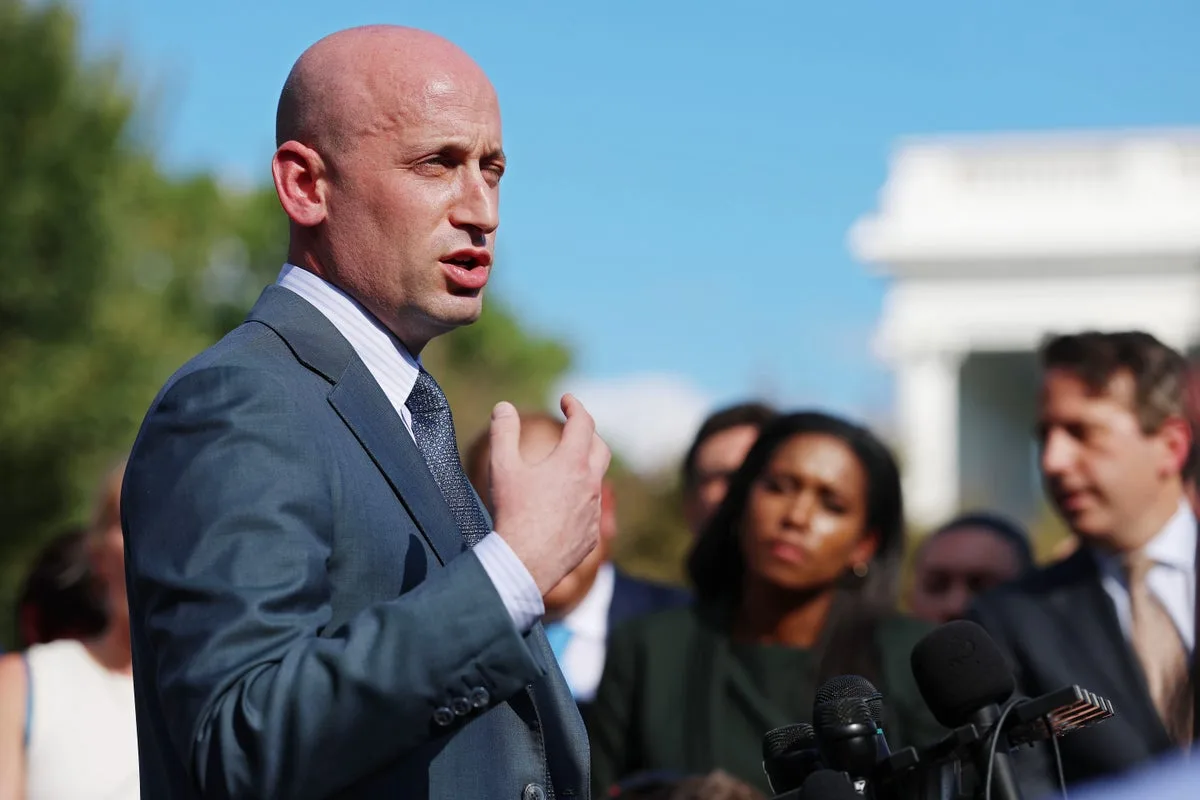
Stephen Miller, the White House deputy chief of staff and architect of the Trump administration’s immigration crackdown, has faced a barrage of criticism after posting a late-night rant on X. In his post, he blamed what he called a lack of technological innovation in the United States on immigration from the “underdeveloped world.”
Miller wrote: “A young man who watched the Wright brothers take flight lived to watch American astronauts stroll on the moon. So why doesn’t the modern world look like our ancestors imagined it? Because America (and the West) spent subsequent generations engaged in a vast, consuming project of self-loathing, self-denigration and the redistribution of our national resources to the states and peoples of the undeveloped world.”
The remarks drew swift fact-checking online, with critics highlighting the central role immigrants have played in American innovation. Journalist Mehdi Hasan noted that Dr. Farouk El-Baz, an Egyptian-American, contributed to NASA’s Apollo programme, alongside German immigrant Wernher von Braun. Another user pointed out that Apple, Google, and Nvidia were founded by immigrants or children of immigrants.
Former Obama speechwriter Jon Favreau took to social media to remind Miller that his own family were Jewish immigrants who fled persecution in Europe. “You’re only here because America decided to welcome your family when they were refugees fleeing poverty and violence – the same time the Wright brothers took flight,” Favreau wrote. He urged Miller to take responsibility for the modern world not matching his ancestors’ visions.
The backlash comes two weeks after Miller’s cousin, Alisa Kasmer, publicly condemned his immigration policies. Kasmer told The New Republic that Miller was seeking to dismantle the very system that allowed their family to prosper in the United States. “We’re Jewish — we grew up knowing how hated we were just for existing,” she said. “Now he’s trying to take away the exact thing that his own family benefited from.”
Miller’s comments also prompted comparisons to his own ancestry. His previous post on the same subject, in which he lamented that the U.S. did not “keep going and never open our borders to the entire third world,” was met with accusations of hypocrisy given his family’s refugee origins.




