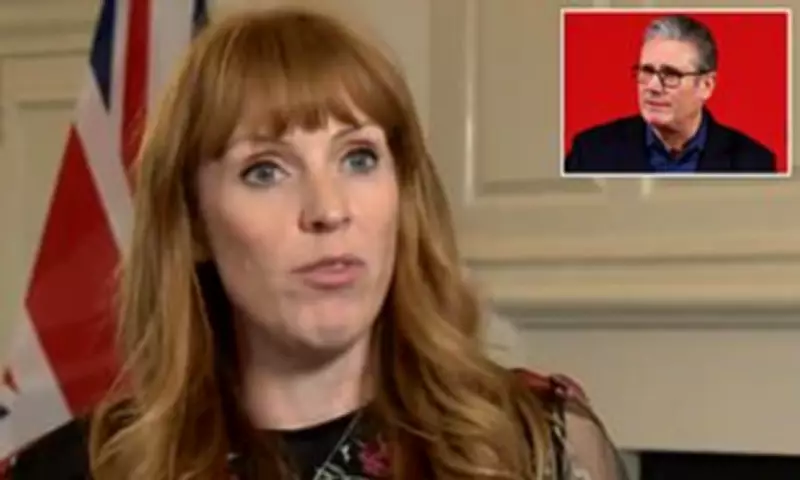
Starmer's Premiership Hangs in Balance Following Mandelson Ambassador Controversy
The political stability of Sir Keir Starmer's government has been thrown into severe jeopardy following the explosive Peter Mandelson diplomatic appointment scandal. With his chief of staff Morgan McSweeney resigning over the weekend, the Prime Minister finds himself increasingly isolated and vulnerable to internal party challenges.
Leadership Crisis Deepens as Key Ally Departs
Morgan McSweeney's dramatic exit from Downing Street on Sunday has created a significant power vacuum at the heart of government. As Sir Keir's closest political confidant, McSweeney's departure over his involvement in Lord Mandelson's controversial appointment as Britain's ambassador to the United States has left the Prime Minister dangerously exposed.
Westminster insiders report that Labour leadership rivals are already "on manoeuvres," with several backbenchers openly suggesting Sir Keir should consider following his chief of staff out of Number 10. This development comes just nineteen months into his premiership, creating the very real possibility that Sir Keir could be replaced by another Labour Prime Minister before completing a full term.

Historical Precedents Fuel Election Demands
The current constitutional crisis echoes recent political history, where Labour figures now occupying senior government positions made forceful arguments for immediate general elections when Conservative Prime Ministers were replaced. When Rishi Sunak succeeded Liz Truss in October 2022, multiple current cabinet members demanded the British public be given their say.
Angela Rayner, then deputy Labour leader and now frontrunner to replace Sir Keir, declared at the time that Mr. Sunak had "no mandate and the British people have had no say," criticizing what she termed a "coronation" for the incoming Prime Minister. David Lammy, now Deputy Prime Minister, called the situation "unacceptable" and demanded: "We need a general election NOW."
Consistency Questions Emerge Over Election Demands
The historical positions of current government ministers create significant political pressure should Sir Keir be replaced. Home Secretary Shabana Mahmood argued in November 2022 that Mr. Sunak had "no mandate" and "no platform," while Culture Secretary Lisa Nandy stated Britons "don't need a new Tory leader, we need an election" just before Mr. Sunak's appointment.
Chancellor Rachel Reeves and Health Secretary Wes Streeting both shared Sir Keir's own October 2022 message attacking a "revolving door of chaos" in Conservative leadership, with both ministers declaring: "The British public deserve a say on the country's direction. We need a general election - now."
Constitutional Implications and Democratic Mandates
Should Sir Keir be replaced by another Labour Prime Minister, these historical positions would create immense pressure for an immediate general election to allow a new leader to secure their own democratic mandate. David Lammy's previous criticism of the Conservatives treating Britain's democracy as "a game of pass the parcel" and the role of Prime Minister as "a game of musical chairs" would apply equally to any Labour leadership transition without public consultation.
Sir Keir himself set this precedent during Mr. Sunak's first Prime Minister's Questions in October 2022, when he challenged the new Conservative leader: "The only time he ran in a competitive election, he got trounced by the former Prime Minister (Ms Truss), who herself got beaten by a lettuce. So why does he not put it to the test, let working people have their say and call a general election?"
The political landscape now finds Labour ministers potentially facing the same constitutional questions they previously posed to their Conservative counterparts, creating a perfect storm of internal party pressure and democratic principle that threatens to force an early general election regardless of which party leader occupies Downing Street.