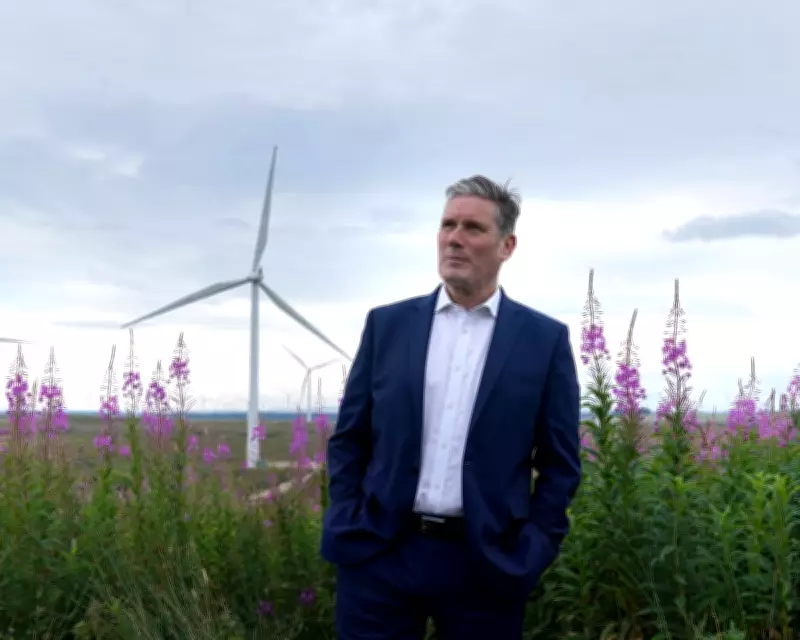
Starmer's Climate Commitment Questioned Amid Labour's Internal Strife
Keir Starmer, whose early premiership rhetoric championed net zero, has been accused of softening his stance due to internal party pressure. This shift comes after a significant byelection defeat, where the safe Labour seat of Gorton and Denton swung decisively to the Green party.
Lancaster House Speech: A High Point for Green Ambitions
Less than a year ago, Starmer delivered a powerful speech at Lancaster House, declaring climate action was "in the DNA of my government." He vowed to accelerate net zero efforts, arguing that homegrown clean energy could shield the UK from volatile fossil fuel markets. For many, this reflected his genuine belief in the economic benefits of climate action.
Internal Opposition and Policy Dilution
Throughout his tenure, Downing Street has housed senior advisers sceptical of green issues. This faction, including the recently departed chief of staff Morgan McSweeney, sought to stifle pro-climate interventions and steer Labour towards anti-net-zero stances aligned with Reform and the Conservatives. Their influence led to the downgrading of Labour's key £28bn annual green investment pledge to roughly half that amount.

Byelection Fallout and Leadership Scrutiny
The loss of Gorton and Denton to the Greens has sparked renewed questions over Starmer's leadership. With the Greens securing their first byelection seat, Starmer faces stark choices: reassert his pro-climate instincts or continue with anti-green advice. Ami McCarthy of Greenpeace UK urged Labour to reset, emphasizing that voters are hungry for bold solutions on cost of living and climate.
Public Sentiment and Political Realities
Research indicates strong public support for net zero, with roughly two-thirds of Britons wanting the government to achieve it by 2050 or earlier. However, Labour's messaging has been confused, leaving it vulnerable to Green and Liberal Democrat gains. Asad Rehman of Friends of the Earth noted that voters see cost-of-living policies through a pro-net-zero lens, prioritizing warmer homes and better public transport.
Path Forward: Embracing Labour's DNA
With McSweeney gone, Starmer must decide whether to follow his instincts or other interests. Robbie MacPherson, a former parliamentary climate group head, advised that delivering on Labour's 2024 manifesto ambitions is crucial for retaining power and countering Reform. The prime minister's record includes positive steps like a clean power 2030 target, but criticisms persist on nature conservation and planning policies.
As Labour grapples with this internal conflict, the byelection serves as a wake-up call: embracing net zero could be key to regaining voter trust and addressing pressing economic and environmental challenges.