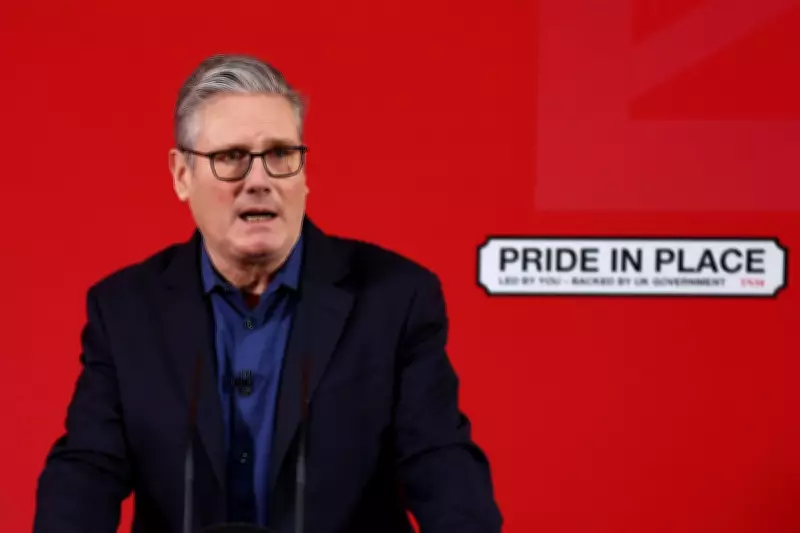
For all the political chatter and anonymous briefings circulating in Westminster corridors, a serious leadership challenge to Prime Minister Keir Starmer remains unlikely according to political observers. The fundamental reason appears to be a stark lack of consensus around any obvious successor who could convincingly take the reins.
The Unsettled Mood Among Labour Ranks
When Conservative MPs ultimately lost faith in Boris Johnson's leadership, they had a clear and popular alternative waiting in the wings. Rishi Sunak presented himself as a competent escape route from the Johnson era, though the subsequent Liz Truss premiership proved disastrous for the Tory party.
The current mood among Labour MPs bears some superficial resemblance to that pre-rebellion Conservative atmosphere. There is palpable frustration, particularly over what many see as Starmer's poor judgement in appointing Peter Mandelson as ambassador to the United States. Anonymous cabinet ministers have described the move as "very hard to defend" and "yet another self-inflicted wound."

Public and Private Criticism Mounts
Even traditionally loyal figures have expressed concern. Barry Gardiner, not a member of the left-wing Socialist Campaign Group, pointedly suggested on Newsnight that the prime minister "needs to think very hard about what is in the country's best interest," leaving a telling pause when asked if Starmer should resign.
John McDonnell, former shadow chancellor under Jeremy Corbyn, has been more direct, stating publicly that Starmer must "consider his position." The prime minister's own defence during Prime Minister's Questions – that he is not a good judge of character – did little to reassure his parliamentary party.
The Succession Stalemate
Despite this growing discontent, there appears to be no coordinated move to unseat the Labour leader. The critical difference from the Tory experience is the absence of a ready alternative commanding widespread support.
Angela Rayner remains the frontrunner among party members, having demonstrated political skill with a well-timed intervention in the Commons that forced government concessions on the Mandelson documents. However, many MPs privately express reservations about her unresolved tax affairs with HMRC, providing them with convenient justification to withhold support.
Wes Streeting has been accused of plotting by Downing Street sources, but there's no evidence he has begun the serious work of securing the 81 MP nominations required to trigger a contest. He faces significant hurdles with party members who regard him as too right-wing.
Other Contenders Face Similar Hurdles
Shabana Mahmood is perceived as even further to the right than Streeting, and according to YouGov polling, 41% of the public don't recognise her name. Ed Miliband, despite claiming his previous leadership experience cured him of ambition, is believed to be prepared to overcome his reluctance if circumstances demanded.
Andy Burnham's recent public criticism of Starmer failed to gain traction, described by one observer as "a rocket that blew up on the launch pad."
The Nomination Hurdle and Phoney War
What's particularly striking is the complete absence of any candidate actively assembling the necessary parliamentary support. Organising 81 MPs to publicly declare against a sitting prime minister represents a monumental undertaking, and any such efforts would quickly become known to political journalists.
All potential challengers are likely compiling private lists of sympathetic MPs, but without moving to the formal nomination stage, this remains a political phoney war. They hesitate because their chances of success currently appear insufficient to justify the enormous risk involved.
Even Rayner, best positioned to win a membership vote, cannot be certain of securing the required parliamentary nominations. Streeting needs both Rayner to falter and stronger evidence of his own popularity with the wider electorate before considering a challenge.

A Leadership in Limbo
Keir Starmer's position has undoubtedly weakened since the publication of the Epstein files, compounding existing troubles. Yet he survives primarily because Labour MPs lack a safe alternative to rally behind.
The haunting memory of the Conservative Party's experience with Liz Truss serves as a powerful deterrent. Even if a Sunak-like figure emerged within Labour ranks, many MPs would fear the membership ultimately selecting their own version of Truss.
For now, Starmer's leadership continues not through overwhelming support, but through the absence of a credible challenger who can unite the parliamentary party and convince members they represent a better option. The prime minister remains in place by default rather than design, as Labour's succession crisis leaves the party in a state of frustrated paralysis.