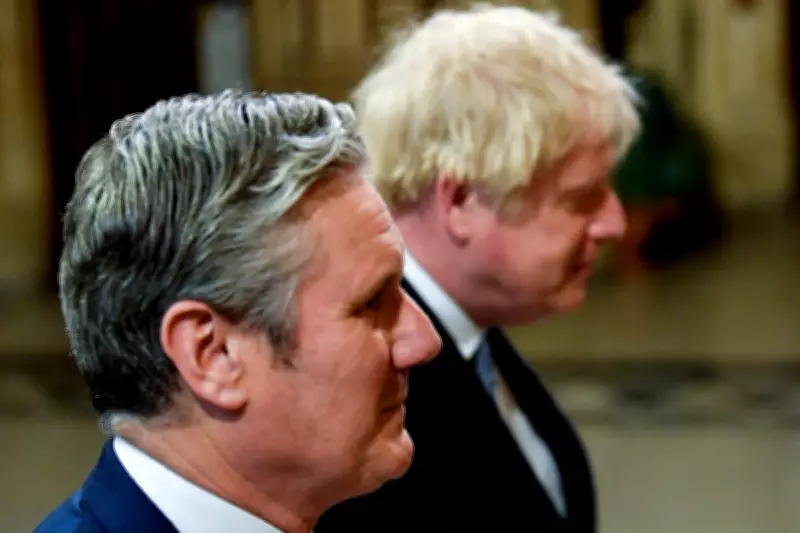
Starmer's Worst Nightmare: Being Compared to Boris Johnson
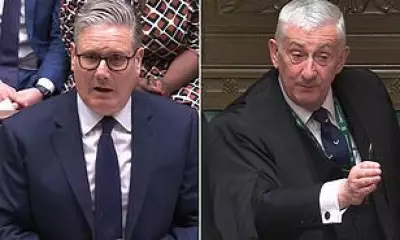
Who could have imagined that Prime Minister Keir Starmer, a figure renowned for his rectitude, would find himself in a predicament so strikingly similar to his 'Partygate' predecessor Boris Johnson? The Labour leader is now accused of misleading the House of Commons, losing control of his own administration, and demonstrating poor judgment in character assessments.
The Mandelson Affair's Partygate Echoes
In shape if not entirely in substance, Keir Starmer's involvement in the Mandelson affair is beginning to carry distinct 'Partygate' undertones. Recall the central issue with former Prime Minister Boris Johnson: did he deliberately mislead—or lie—to Parliament? In 2023, Johnson was compelled to appear before the Commons to correct the official parliamentary record after an investigation found he had made inaccurate statements to MPs regarding gatherings at 10 Downing Street during Covid-19 lockdowns.
Similarly, Starmer asserted that 'due process' was followed when his appointee as British ambassador to Washington, Peter Mandelson, had actually failed essential vetting checks. Johnson consistently relied on bureaucratic defences, claiming 'all rules were followed' and that he had no personal knowledge of rule-breaking, assurances mirrored in Starmer's current stance.

Eerie Parallels in Defence and Criticism
Starmer's defenders now unsettlingly echo a line popular with Boris supporters during the Partygate scandal—that 'Keir has got the big calls right,' paralleling Johnson's Ukraine stance with Starmer's Iran policy. Critics of Johnson at the time made the same ironic remarks now heard about Starmer: if Johnson was truly ignorant about events in No 10 during lockdown, he had no grip on his administration, displaying a curious incuriosity about activities under his nose. Today, Starmer appears as the hapless passenger in his own government.
Ultimately, a cross-party parliamentary committee on standards concluded Johnson had knowingly committed 'repeated contempts of parliament,' effectively ending his political career. He had already lost the premiership but resigned from the Commons to avoid a 90-day suspension, his reputation irreparably damaged. A major factor in his downfall was the skill of the then opposition leader—Keir Starmer—in identifying these shortcomings and making him squirm. Politically, Starmer emerged as the 'anti-Boris,' a figure of contrasting integrity.
Poor Judgment in High Office Appointments
Who could imagine Starmer would ever face accusations of misleading the Commons, losing administrative control, and displaying such poor character judgment that he would give a known wrong-'un another chance at high office? In Johnson's case, it was Tory MP Chris Pincher, whom he indulgently appointed deputy chief whip despite allegations of personal misconduct, prompting mass resignations before Johnson's own departure.
For Starmer, gambling on Mandelson as ambassador to Washington, granting him access to state secrets, may yet prove a fatal move. For the supposedly cautious and forensic former lawyer to risk appointing a close friend of late paedophile financier Jeffrey Epstein to placate Donald Trump is the original sin from which little good has emerged. Perhaps former Foreign Office chief Olly Robbins and his team should have been more insistent about the dangers, but trouble was inevitable.
The Galling Comparison and Its Corrosive Impact
It will be particularly galling for Starmer that his behaviour is being compared to Johnson's, an unfair comparison on the whole. Johnson has a long track record of disputes over fact and truth with editors, party leaders, wives, colleagues, and judges, whereas Starmer's career is built on a reputation for integrity. Colloquially, people expect flamboyant Boris to fib; the opposite is true of Starmer, making these allegations especially corrosive.

The honest, unshowy man who promised an end to Tory chaos and confusion now seems to have feet of clay. Starmer's obvious decency predisposes the public to believe he was kept in the dark by civil servants—or at least it should. Foreign Office mandarins may have decided the PM was so determined on picking Mandelson that it was best to leave matters undisturbed, or that by the time vetting failed, Mandelson was nearly in the Oval Office fawning over Trump.
Awkward Subsidiary Questions and Accountability
Many awkward subsidiary questions remain for Starmer. Why didn't he wait a few more days for the vetting report before confirming Mandelson? What happened after The Independent's David Maddox put allegations about MI6 concerns to Starmer's press secretary, Tim Allan, last September? This Maddox story—a potential smoking gun—was subsequently raised in the Commons by Lib Dem MP Rachel Gilmour. Did Allan mention MI6 allegations to Starmer? Did Starmer become aware and insist on answers? No 10 now says there was no legal impediment to demanding such information from civil servants.
Nonetheless, the original error of judgment was Starmer's. He has apologised, and it is only fair to note that few at the time suggested Mandelson was a disastrous appointment. Many thought it inspired, assuming the Epstein-infested past was over and done with. With honourable exceptions like national security advisor Jonathan Powell, it is mostly those armed with hindsight who say Starmer should have known. If Starmer wasn't told—which many find hard to credit—then he wasn't told.
Provided it can be proven Starmer didn't deliberately lie to parliament, grievous blunder though it is, there should be no question of him 'doing a Boris' and resigning. We shall see how this unfolds, but the comparisons have already struck a damaging chord in Westminster.