Starmer's China Trip Sparks Controversy Over Infrastructure Praise
Starmer's China Trip Sparks Infrastructure Praise Row

Starmer's China Trip Sparks Controversy Over Infrastructure Praise

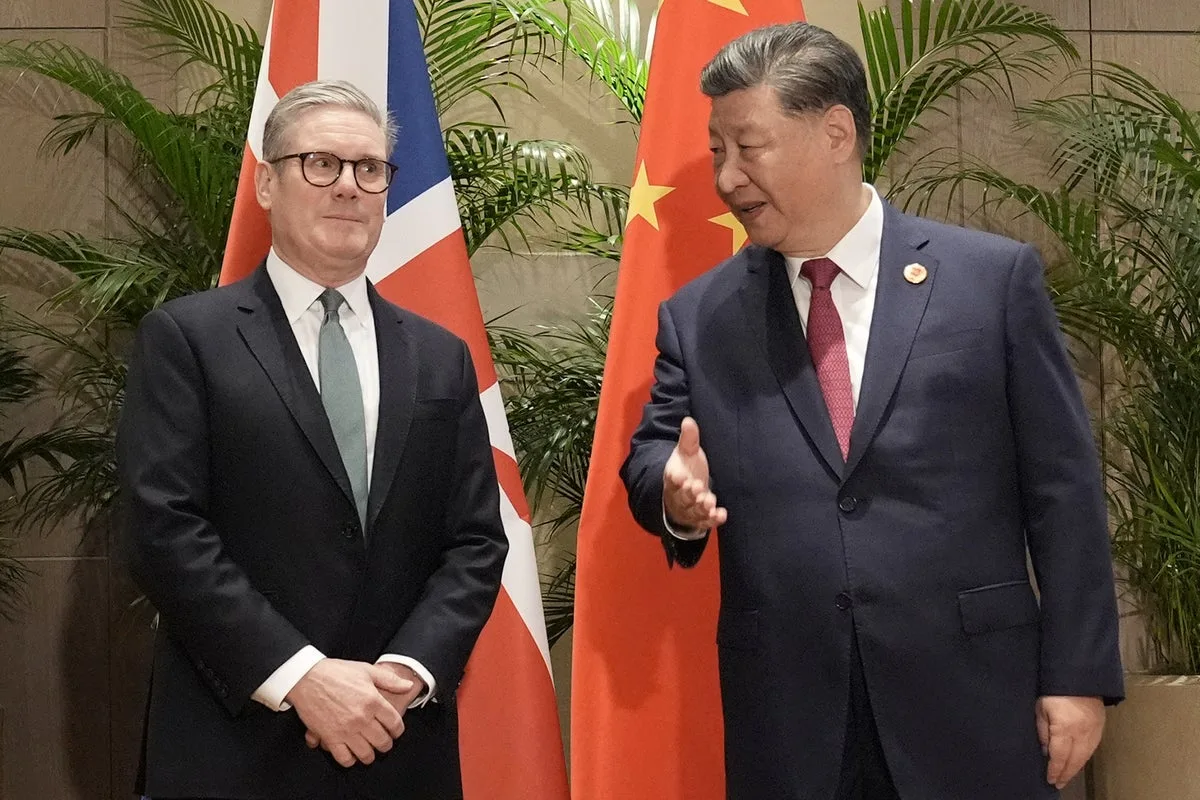
Prime Minister Sir Keir Starmer has ignited fresh political controversy by openly praising China's ability to deliver major infrastructure projects more swiftly than the United Kingdom. During his departure from a contentious diplomatic visit to Shanghai, the Labour leader remarked that the pace of technological advancement under President Xi Jinping's leadership offers important lessons for Britain's own sluggish development processes.

Infrastructure Comparison Draws Criticism

Speaking to reporters as he concluded his trip, Starmer specifically highlighted how China's rapid implementation of infrastructure projects contrasts sharply with Britain's often protracted timelines. 'On technology and on things like infrastructure, the speed at which they're acting is really important,' the Prime Minister stated. 'And I feel that on things like infrastructure we're too slow in the United Kingdom.'

These comments immediately risk accusations that the Prime Minister is 'kowtowing' to Beijing, particularly given the trip's already controversial nature. Starmer's delegation failed to secure the release of British citizen Jimmy Lai, the Hong Kong publisher who remains imprisoned despite diplomatic efforts.

Mixed Results from Diplomatic Mission

The China visit produced mixed outcomes for the British government. While Starmer successfully lobbied President Xi to lift sanctions on some MPs and peers who had criticised human rights abuses in Xinjiang province, the inability to free Jimmy Lai represents a significant diplomatic setback. The trip had already faced scrutiny over Britain's decision to allow China to construct a mega-embassy in London without securing more substantial concessions in return.

When questioned about whether Britain's scaled-back digital ID plans could learn from China's integrated systems like AliPay, Starmer offered a nuanced response. 'On digital ID, we'll do it our own way, with a UK perspective, so we'll be very UK-focused,' he clarified, attempting to balance admiration for technological efficiency with national sovereignty concerns.

Language Learning and Cultural Exchanges

During his Shanghai visit, Starmer also commented on language acquisition after actress Rosamund Pike mentioned her children were learning Mandarin as 'the language of the future.' The Prime Minister noted that many British businesses are encouraging Mandarin learning for commercial purposes, though he stopped short of making official policy recommendations.

The cultural dimension of the trip included a visit to the Design Innovation Institute Shanghai, where Starmer met the cast of a touring Royal Shakespeare Company production of Matilda The Musical. In a lighthearted exchange, one actor wearing a green wig revealed his father was a toolmaker, prompting Starmer to respond with familiar recognition about his own background.

Transition to Japanese Diplomacy

Following the China visit, Starmer and his delegation traveled to Tokyo for meetings with Japan's first female prime minister, Sanae Takaichi. Their bilateral discussions included mutual invitations, with Starmer offering to host Takaichi at his country residence Chequers once electoral circumstances permit. The Japanese leader remarked that Starmer appears 'very fit,' while both politicians emphasized their commitment to advancing UK-Japan cooperation.

As Starmer prepares for a working dinner with his Japanese counterpart, the political fallout from his China comments continues to develop. The Prime Minister's balancing act between admiring Chinese efficiency and maintaining British sovereignty principles remains under intense scrutiny from both political opponents and international observers.




