Keir Starmer Warns World 'Has Utterly Changed' After Iran Conflict
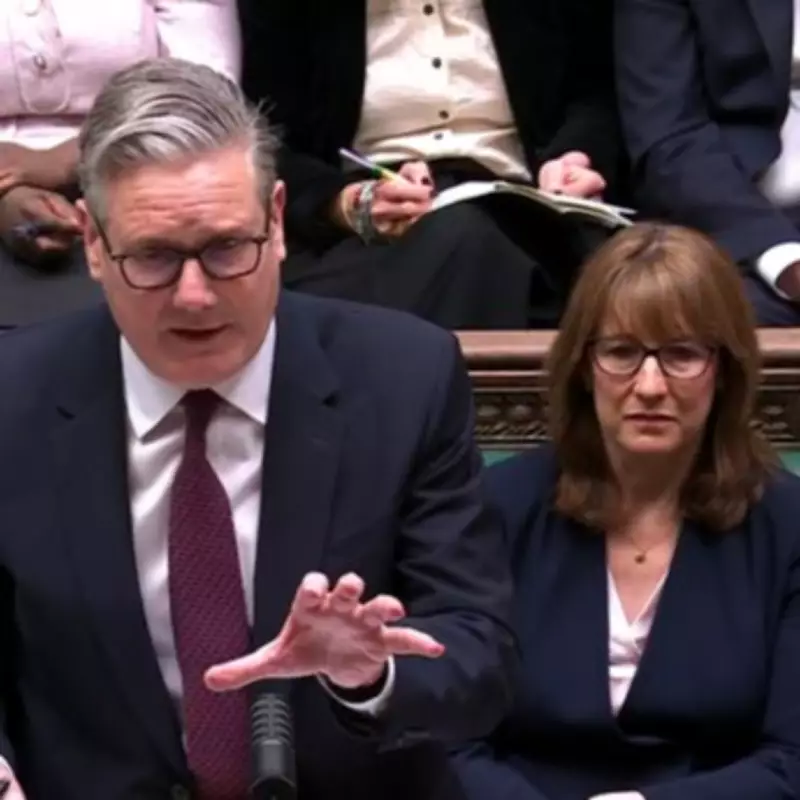
Prime Minister Keir Starmer delivered a stark warning to the House of Commons, stating that the world "has utterly changed" following escalating tensions in the Middle East. His statement came after a two-day diplomatic trip to the Gulf region, where he engaged in discussions aimed at addressing the crisis triggered by Iran's blockade of the Strait of Hormuz.
The vital shipping lane, which transports approximately one-fifth of the world's oil and gas, has become a focal point of international concern. In a dramatic development, former US President Donald Trump initiated his own blockade of Iranian ports, threatening to "eliminate" any Iranian naval ships that approach with "quick and brutal" methods. This action caused oil prices to surge above $100 per barrel, exacerbating global economic instability.
Six Key Points from Starmer's Commons Statement
1. US Blockade and UK Stance

Keir Starmer has been at the forefront of European efforts to reopen the Strait of Hormuz, which he accused Iran of "shamefully exploiting" during the conflict. He emphasized that freedom of navigation is essential and must be restored without conditions. However, the Prime Minister made it clear that the United Kingdom will not participate in the US-led blockade announced by Donald Trump. "We are focusing our efforts on opening in full the Strait of Hormuz because of the damage it's doing to economies around the world, including our own economy," Starmer told MPs.
2. Strait of Hormuz Summit
In response to the crisis, Starmer announced plans to host a summit this week with French President Emmanuel Macron. The gathering will bring together dozens of countries to coordinate diplomatic and military strategies. "The summit will be focused on two things," he explained. "First, diplomatic efforts to bring pressure to bear for a negotiated end to the conflict and for the strait to be opened. Second, military planning to provide assurance to shipping as soon as a stable environment could be established." This initiative aims to reassure businesses in energy, shipping, insurance, and finance sectors that have halted operations due to safety concerns.
3. Call for Lebanon Ceasefire Inclusion
Starmer reiterated his condemnation of Israel's strikes on Lebanon, describing them as "wrong" and calling for Lebanon to be included in any ceasefire agreement. He warned that these attacks are having "devastating humanitarian consequences" and pushing Lebanon into a deeper crisis. "Diplomacy is the right path, and I welcome the talks taking place this week," he stated, while also insisting that Hezbollah must disarm as part of any resolution.
4. King's State Visit to the US
Despite pressure from political opponents, Starmer defended the decision for King Charles's state visit to the United States next month. Liberal Democrat leader Sir Ed Davey had urged the Prime Minister to reconsider, expressing fears about potential diplomatic incidents with Donald Trump. Starmer responded by emphasizing the importance of the UK-US relationship, noting that the visit marks the 250th anniversary of bilateral ties and that the monarchy plays a crucial role in building enduring bonds.
5. Closer Relations with Europe
The Prime Minister vowed that Britain's response to the Middle East conflict would involve strengthening economic ties with European allies. He argued that Brexit had inflicted "deep damage" on the UK economy and that current opportunities to enhance security and reduce living costs are too significant to ignore. "This time, Britain's response must and will be different to reflect the changing world that we live in," Starmer asserted, highlighting a shift from previous approaches to crises.
6. Energy Independence Pledge

Starmer doubled down on his commitment to achieve energy independence for Britain, criticizing how international events beyond public control drive up energy bills. "Households across the country are fed up with international events beyond their control pushing up their energy bills, and I stand with them on that," he declared. While acknowledging that oil and gas will remain part of the energy mix for decades, he pledged to accelerate efforts to transition away from fossil fuel dependency and stabilize energy costs.
In his concluding remarks, Starmer underscored the heightened volatility and insecurity of the current global landscape, urging a response that combines calmness with strength. His comprehensive address outlined a multifaceted strategy aimed at navigating the profound changes reshaping international relations and economic stability.