Prime Minister Keir Starmer has emphatically declared his intention to lead the Labour Party into the next general election, firmly dismissing a wave of speculation suggesting he could soon be ousted from his position. The Prime Minister stated he would 'absolutely' remain at the helm when the nation next heads to the polls, an event currently anticipated for 2029. This assertion comes as Sir Keir confronts mounting scrutiny over his leadership, driven by persistently poor poll ratings, factional manoeuvring within Labour ranks, and ongoing questions about his judgement linked to the Peter Mandelson scandal.
Internal Challenges and Leadership Speculation
Defence Secretary John Healey has emerged as the latest potential successor, following reports that allies of Energy Secretary Ed Miliband are advocating for a 'unite the left' ticket with Green Party leader Zack Polanski. Meanwhile, hard-left MPs on Labour's backbenches have issued demands to end what they describe as a 'narrow, factional agenda' within the party. A letter signed by 25 MPs, leaders of several Labour-affiliated trade unions, and internal campaign groups contends that the current leadership's approach is 'increasingly unpopular with the public' and could undermine electoral prospects.
Signatories and Factional Tensions
Notable signatories include serial rebel MPs Clive Lewis and Brian Leishman, alongside figures such as John McDonnell, who served as shadow Chancellor under Jeremy Corbyn. Despite these internal pressures, Sir Keir remains defiant, telling The Sun on Sunday: 'I won the leadership of the Labour Party when people said I wouldn't. I changed the Labour Party when people said I couldn't. I won an election when people said we wouldn't. And now I intend to change the country – whatever other people say.' He added that he ended the recent week 'much stronger than I started it,' highlighting his resilience amid domestic political strife.

Brexit Unwind and EU Integration Push
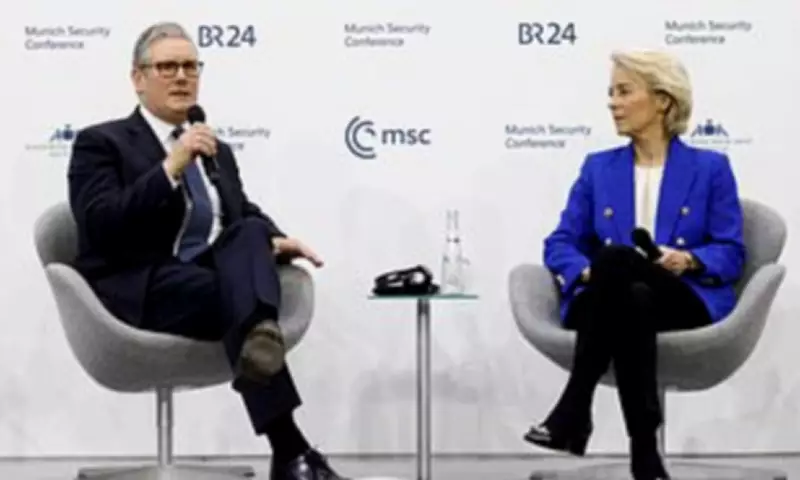
If Sir Keir maintains his leadership for the next three years, a significant portion of that time is likely to be dedicated to unwinding aspects of Brexit. In a speech delivered at the Munich Security Conference, the Prime Minister revealed that Britain will seek 'deeper economic integration' with the European Union and aims to 'move closer to the single market,' a decade after the seismic vote to leave. He appeared alongside Ursula von der Leyen, President of the European Commission, emphasising that the current EU-UK 'status quo is not fit for purpose.'
Policy Shifts and Economic Alignment
Sir Keir elaborated on this vision, stating: 'So we must look at where we could move closer to the single market in other sectors as well, where that would work for both sides.' He framed the potential benefits as 'greater security, stronger growth for the United Kingdom and the EU, which will fuel increased defence spending, and the chance to place the UK at the centre of a wave of European industrial renewal.' However, he acknowledged that this move would involve 'trade-offs,' yet insisted he would 'always fight for what's best for my country.'
This push for closer alignment extends beyond economic realms. The Prime Minister has already endorsed enhanced defence ties with the 27-nation bloc in response to threats from Russia. Furthermore, reports indicate that the UK plans to ramp up its net zero targets and potentially cede control over energy policy. A Cabinet Office memorandum published earlier this month advocates for a 'dynamic alignment' of British law with EU regulations concerning 'the promotion of renewable energy,' signalling a broader shift towards regulatory harmonisation.
Strategic Implications and Future Outlook
The confluence of internal Labour challenges and a bold policy agenda focusing on EU reintegration sets a complex backdrop for Sir Keir's leadership. As speculation about potential successors like John Healey persists, the Prime Minister's steadfast commitment to remaining in the 'driving seat' underscores his determination to navigate these turbulent waters. The coming years will likely test his ability to unify a fractious party while advancing a contentious platform of closer European ties, all amid public scrutiny and political headwinds.