Starmer Pledges to Uphold British Values Amid Mounting Labour Discontent
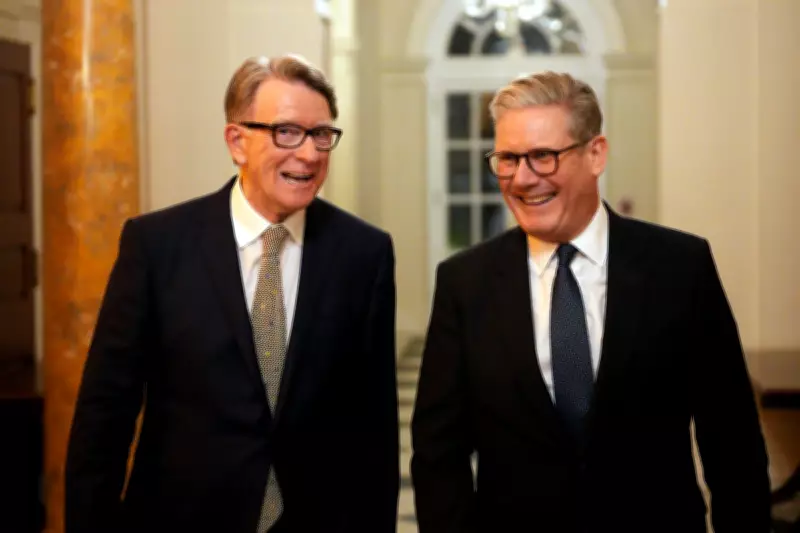
Sir Keir Starmer has vowed to defend what he describes as a "decent and tolerant Britain," even as he faces significant internal party fury over his controversial appointment of Peter Mandelson as US ambassador. The Prime Minister's attempt to position himself as a champion of national values comes just hours after he was forced into a notable climbdown by his own MPs regarding the release of documents related to Mandelson's selection.
Security Vetting Revealed Epstein Connections
In a tense Prime Minister's Questions session, Starmer confirmed that official security vetting had highlighted Lord Mandelson's ongoing relationship with convicted sex offender Jeffrey Epstein. When questioned by Conservative MP Kemi Badenoch about whether this connection was known before the appointment, Starmer admitted: "Yes, it did. As a result, various questions were put to him." The Prime Minister expressed regret over the appointment, stating that Mandelson had "lied repeatedly" during the vetting process.
This revelation has intensified scrutiny of Starmer's judgement, with Badenoch asserting that the decision "goes to the very heart of this prime minister's judgement." The controversy stems from recently released US Department of Justice files that appear to show Mandelson leaked sensitive government information to Epstein while serving as Business Secretary during Gordon Brown's administration.

Forced Climbdown on Document Release
The Prime Minister initially promised to publish documents related to the vetting process but sparked outrage among Labour backbenchers when he tabled an amendment to withhold certain information on national security grounds. Former deputy leader Angela Rayner was among those who criticised this move, leading to Starmer's subsequent retreat.
In a significant concession, Starmer later proposed a manuscript amendment that would grant parliamentarians on the Intelligence and Security Committee the authority to determine what material should be made public. This climbdown represents another blow to the Prime Minister's authority within his own party.
Attempt to Refocus on National Unity
Amid the growing controversy, Starmer will deliver a speech in East Sussex attempting to shift attention toward Labour's plans to revitalise British communities. He is expected to position himself against those he claims seek to sow "division and decline," stating: "I believe in our values. I believe in rules that protect those in need. I believe in the freedom to live and let live in decency and tolerance."
The Prime Minister will frame his address around the concept of national security being intrinsically linked to social strength, arguing: "Any country that cannot keep its high streets alive, its bills down and its people feeling respected, will struggle to meet the test of our times." He will announce plans to provide an additional £800 million to support forty new communities as part of this vision.
Internal Labour Rebellion Intensifies
The Mandelson appointment has triggered substantial internal dissent, with the centre-left grouping Mainstream - backed by Manchester Mayor Andy Burnham - issuing a strongly-worded statement calling for a "clean break" from what they describe as "an old politics of elite privilege, spin and toxic factionalism."
The group's interim council declared: "This is a fundamental betrayal of the people we are meant to serve. It shows a party culture that too often rewards connections over character and factional loyalty over basic integrity." This sentiment reflects broader concerns among Labour members about the party's direction and leadership judgement.
Political Context and Future Challenges
The controversy emerges at a politically sensitive moment, with a crucial by-election approaching in Manchester and local and devolved parliamentary elections scheduled for May. Speculation persists about potential leadership challenges should Labour perform poorly in these contests.

Starmer has previously framed the February 26 contest in Gorton and Denton as a battle between Labour and Reform UK, attempting to position his party as the defender of traditional British values against what he perceives as divisive forces. However, the Mandelson controversy threatens to undermine this narrative and distract from his policy agenda.
In response to the growing scandal, Lord Mandelson has resigned from the House of Lords, though Starmer has indicated that legislation is being drafted to prevent him from continuing to use his title. The Conservative Party has seized upon the revelations, with a spokesman stating: "This is the first time the Prime Minister has admitted this and it raises very serious questions over Keir Starmer's shocking judgement."
As the Prime Minister attempts to navigate this crisis while maintaining focus on his vision for national renewal, the coming weeks will prove crucial for both his leadership and Labour's political fortunes.