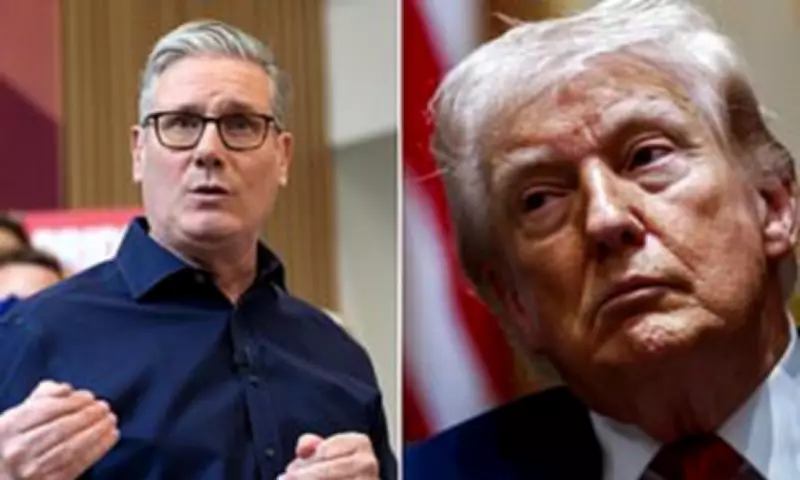
Prime Minister Keir Starmer has declared that the escalating conflict between the United States and Iran is "not our war," as he launched Labour's local election campaign in Wolverhampton. This firm position appears strategically designed to rescue his party's faltering electoral prospects ahead of crucial votes on May 7.
Starmer's Defiant Stance on Middle East Involvement
Speaking to supporters, Sir Keir doubled down on his commitment to keep Britain out of the fighting initiated by former US President Donald Trump. "This is not our war and we are not going to be dragged into it," he asserted. "Yes, of course, we will defend British lives and British interests in the region, and will stand by our allies in the Gulf region, but we're not going to get dragged in."
Strategic Calculations Amid Election Pressure
This declaration comes as Labour faces what experts describe as a potential "bloodbath" at the ballot box. The party is expected to lose hundreds of English council seats and possibly control of the Welsh Senedd for the first time. By emphasizing non-involvement in the Middle East conflict, Starmer aims to contrast his leadership with what he portrays as Trump's haphazard foreign policy, which has contributed to rising global energy prices affecting British households.

The UK's refusal to participate militarily has already strained the "special relationship" with the US. Trump has recently leveled personal criticism at Sir Keir and belittled British military capabilities while seeking international help to secure the strategically vital Straits of Hormuz for oil and gas shipments.
Internal Support and External Challenges
Labour's deputy leader, Lucy Powell, elected last year on a platform that included criticism of Starmer's leadership, praised his "good judgement" in refusing to "follow blindly" calls to join the war. This internal backing is crucial as Labour navigates challenges from both Reform UK on the right and a resurgent Green Party on the left.
Pollster Lord Robert Hayward warned in March that Labour faces a "very substantial" threat, particularly after a series of "absolutely horrendous" council by-election results. Starmer's campaign focus on domestic issues and cautious foreign policy reflects an attempt to mitigate these electoral risks.
Broader Implications for UK-US Relations
The Prime Minister's stance limits UK assistance to defensive measures only, a decision that further deepens the diplomatic freeze with the US. This approach underscores Starmer's prioritization of British interests amid global tensions, even as it risks alienating the nation's closest ally during a volatile period in Middle Eastern geopolitics.