Starmer Rejects Trump's Hormuz Blockade Amid Fears of Soaring Oil Prices
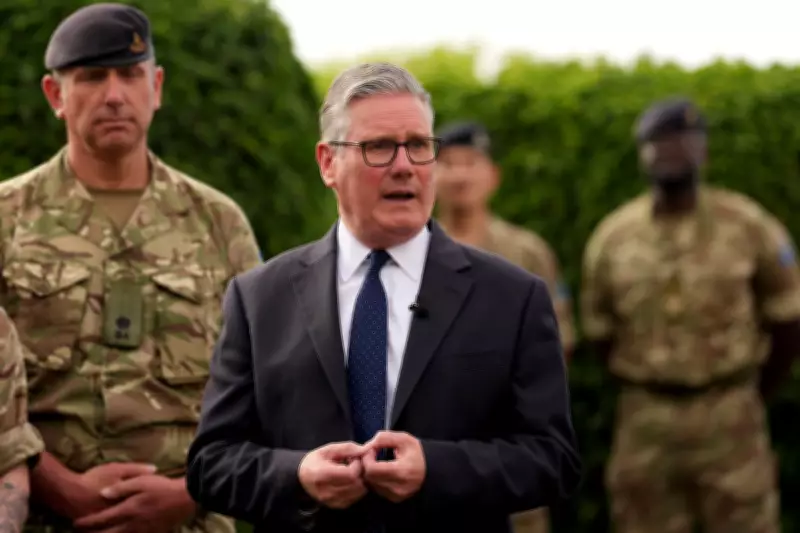
Prime Minister Sir Keir Starmer has firmly refused to join former US President Donald Trump's proposed blockade of the Strait of Hormuz, a move that threatens to compound economic hardship for British households through significantly higher petrol costs. On Monday morning, Starmer stated unequivocally, "we are not supporting the blockade" and emphasised that the UK is "not getting dragged in" to the escalating conflict with Iran.
Economic Impact and Government Response
The US president has threatened to halt tankers from entering or leaving this critical global oil and gas shipping lane. This action is expected to drive oil prices even higher when markets open, following previous increases triggered by Iran's control of the strait in retaliation for the US-Israel military campaign. The developments coincide with MPs returning to Westminster after the Easter recess, with no resolution to the Middle East crisis in sight and an uncertain fate for a fragile two-week ceasefire.
Education Minister Olivia Bailey repeatedly refused to state whether the UK government agrees with Trump's blockade during a Sky News interview. When asked directly about support for the action, Bailey responded, "We won't be taking any part in it, and we want to see free navigation of the Strait of Hormuz. That's a really important principle. We're working with our international allies to do that." Pressed further, she reiterated, "We are not going to be taking part in it, and we want to see free navigation of the Strait of Hormuz."

International Diplomacy and Coalition Building
Regarding concerns that the blockade could send oil prices soaring, Bailey acknowledged the impact on personal finances as a "huge concern." She explained, "We're working very hard to see the Strait of Hormuz open, because we want to ensure that we are really mitigating the damage on people's pockets which we're seeing. That's a huge concern for us, and so we're working very hard to do that."
Over the weekend, Starmer held discussions with French President Emmanuel Macron, with both leaders agreeing on the necessity of collaborating with a broad coalition of partners to "protect freedom of navigation," according to a government spokesperson. Britain is set to host further talks this week with a coalition of nations focused on reopening this crucial maritime pinch-point.
Military Posture and Conflicting Statements
The third such meeting convened by the UK is expected to explore ways to support a sustainable resolution to the conflict and increase international diplomatic pressure on Iran to reopen the strait, potentially through sanctions. Starmer's call with Macron occurred before Trump's social media announcement about the blockade.
Trump claimed on Fox News that "the UK and a couple of other countries are sending mine sweepers" to the strait, adding "it won't take long to clean it out." While Starmer previously noted that UK mine hunting systems were already deployed in the region, this is understood to refer to minesweeping drones that could be activated once the situation stabilises, distinct from Trump's blockade proposal.
Contradictory Military Communications
US Central Command, responsible for American military operations in the Middle East, announced that its blockade of Iranian ports would commence on Monday. However, in a statement that appeared to contradict Trump's threat to stop all ships, the military clarified that US forces "will not impede freedom of navigation for vessels transiting the Strait of Hormuz to and from non-Iranian ports."
The president attributed the failure of negotiations to Iran's refusal to reopen the channel and abandon its nuclear ambitions. Iran's Foreign Minister Abbas Araghchi accused Washington of "maximalism, shifting goalposts, and blockade," warning that "enmity begets enmity."
Meanwhile, Trump reignited his war-of-words with Pope Leo XIV, who had previously criticised the president's rhetoric regarding the conflict. In a Truth Social post early on Monday, Trump declared, "Pope Leo is WEAK on Crime, and terrible for Foreign Policy... I don't want a Pope who thinks it's OK for Iran to have a Nuclear Weapon."

As Chancellor Rachel Reeves travels to Washington for International Monetary Fund meetings this week, having warned that "the war in Iran will come at a cost to British families and business," Starmer will discuss cost-of-living pressures with local residents during a visit to Greater Manchester on Monday.