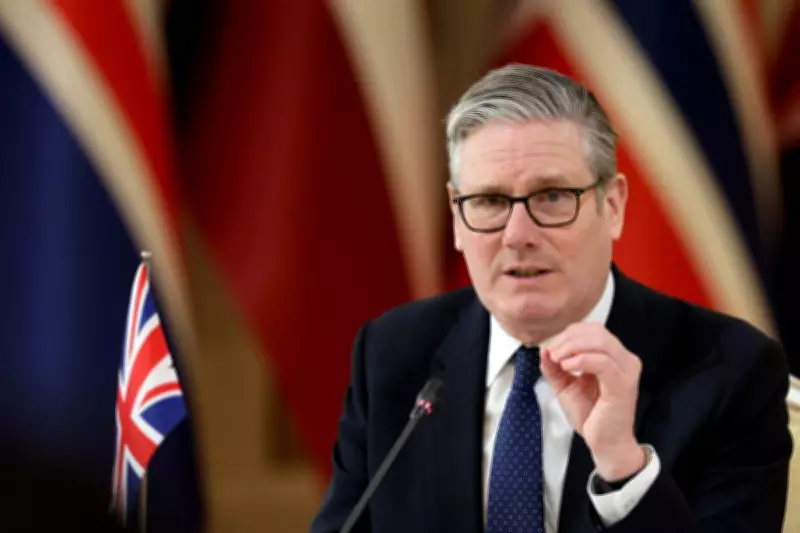
Prime Minister Sir Keir Starmer is set to hold a crucial meeting with top business leaders from sectors including energy, shipping, and banking. This gathering comes at a tense moment as former US President Donald Trump has publicly indicated he is considering a military operation to seize Iran's Kharg Island, a vital hub for the country's oil exports.
Escalating Tensions and Market Volatility
Oil prices experienced a sharp spike following Trump's comments, with benchmark Brent crude surging more than 3% to reach 117 US dollars per barrel during Monday morning trading. This level had not been seen since 2022, highlighting the immediate economic impact of the geopolitical uncertainty.
The discussions at Downing Street are expected to focus heavily on Iran's ongoing blockade of the Strait of Hormuz. This strategic waterway is a critical shipping route for the global oil and gas industry, and its disruption has also affected supplies of other essential products like fertiliser.

Key Attendees and Regional Updates
The meeting will include high-profile representatives from major corporations. Energy giants Shell and BP will be present, alongside shipping conglomerate Maersk, maritime insurance specialist Lloyd's of London, and financial institutions HSBC and Goldman Sachs.
Attendees will also receive a briefing on the regional situation from Major General Richard Cantrill, the UK's maritime operations commander. This update follows the Royal Navy's announcement that it is equipping the transport ship RFA Lyme Bay with minehunting drones. This move is understood to be part of contingency planning to help secure the Strait of Hormuz once conditions allow.
Political Reactions and Campaign Trail Comments
Ahead of the business meeting, Sir Keir Starmer launched Labour's campaign for the upcoming local elections in May. Speaking at an event in Wolverhampton, he addressed public concerns about the conflict.
"People look at their screens and they're worried when they see explosions, infrastructure blown up, the rhetoric that goes with it, worried about whether this is going to escalate even further," Starmer said. He emphasised, "This is not our war and we are not going to get dragged into it."
Meanwhile, Conservative leader Kemi Badenoch, campaigning in Scotland, criticised the potential for escalation. "Sending troops to Kharg Island is an escalation. What I want to see is a de-escalation of this war," she stated.
Economic Concerns and Policy Proposals
The conflict poses significant risks to the UK economy, including the threat of higher inflation and reduced growth. In response, Kemi Badenoch called for policy measures such as expanding North Sea oil drilling to enhance energy security and scrapping VAT on household energy bills to alleviate consumer costs.
"The Government has a choice and they are making bad choices," Badenoch told the Press Association.
The disruption has already led to sharply rising petrol prices. Analysis by the RAC Foundation shows the average price gap between diesel and petrol at UK forecourts has reached a record high of 26 pence per litre. UK refineries are more geared towards petrol production, making diesel supply more dependent on imports, which are now under strain.
Broader International and Financial Context
The situation in the Strait of Hormuz has been further complicated by Iran-backed Houthi forces in Yemen launching strikes against Israel, raising fears of potential attacks on Red Sea shipping lanes.
Despite the turmoil, London's FTSE 100 Index opened the week with modest gains, edging 0.2% higher to 9989.56 points. Most UK household energy users remain protected by the price cap until the end of June, but motorists are already feeling the pinch from high fuel costs.
On the international stage, Chancellor Rachel Reeves and Energy Secretary Ed Miliband are scheduled to join a virtual meeting of G7 finance and energy ministers, along with central bank governors. The group, comprising the UK, US, Germany, France, Italy, Canada, Japan, and the European Union, will discuss coordinated responses to the war's economic impacts.

The Downing Street meeting aims to foster dialogue between the government and the private sector on navigating the crisis. A government spokesperson stated the goal is to hear directly from businesses and explore collaborative ways to respond to the ongoing conflict and its repercussions.