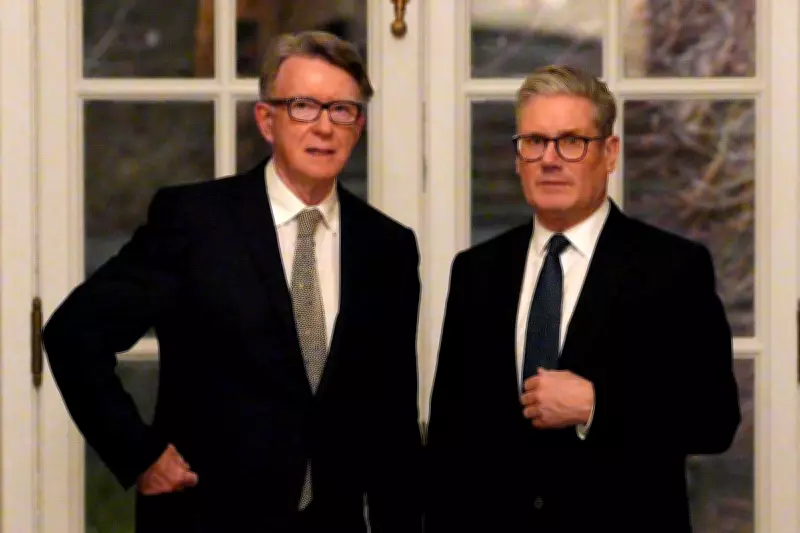
Prime Minister Sir Keir Starmer's Leadership Under Intense Scrutiny
Sir Keir Starmer is currently fighting for his political life amidst a perfect storm of controversy and internal party dissent. The resignation of his closest adviser, Morgan McSweeney, combined with fury over his appointment of Peter Mandelson as US ambassador, has plunged the prime minister into the most serious crisis of his 16-month tenure.
The Epstein Connection and Political Fallout
The prime minister admitted he was aware of former peer Peter Mandelson's relationship with convicted sex offender Jeffrey Epstein even after his conviction for child sex offences. This revelation has triggered widespread condemnation across the political spectrum, with MPs from his own Labour Party openly questioning Starmer's judgement. Some senior figures within the party have declared that "it's over" for the prime minister, signaling a dramatic erosion of confidence in his leadership.
Morgan McSweeney's departure represents a particularly devastating blow to Starmer's authority. As the architect of Sir Keir's rise to Labour leadership, the subsequent election victory, and a central figure in running the government, McSweeney's resignation leaves the prime minister dangerously exposed. Although the former chief of staff attempted to take "full responsibility" for the advice to hire Mandelson, his resignation has failed to quell the growing questions about whether Starmer can continue in his role.

The Mechanics of a Leadership Challenge
The parliamentary arithmetic presents a clear danger for Sir Keir. Under Labour Party rules, it only takes one candidate to secure twenty percent of MPs' support to trigger a leadership contest. With terrible polling ratings that have progressively worsened during his time in power, and with the clock ticking on his premiership, Starmer finds himself in serious political trouble.
Potential Successors Emerge as Party Divisions Deepen
Months of speculation about Sir Keir's leadership have intensified, with several senior Labour figures positioning themselves as potential successors. The question now dominating Westminster corridors is not just whether Starmer will survive, but who could replace him and unite a deeply divided party.
Angela Rayner: The Former Deputy Prime Minister
Angela Rayner, who resigned less than six months ago over personal tax payment issues, is now being openly discussed as a replacement for Sir Keir. The MP for Ashton-under-Lyne raised eyebrows in the Commons when she declared she would vote against the government regarding the release of full vetting documents related to Mandelson's appointment. Many trade unionists have been eager to see her secure the top job and were reportedly plotting her return days after her resignation. Rayner herself declared last month: "I'm not dead yet," suggesting she is preparing for a potential contest.
Andy Burnham: The Greater Manchester Mayor
Andy Burnham has emerged as the most talked-about threat to Sir Keir Starmer's leadership in recent months. Speculation about a potential challenge has grown steadily since mid-2025, with Burnham repeatedly failing to rule out a Labour leadership bid. At the Labour Party conference in September, he revealed that MPs were privately urging him to challenge Sir Keir. Tensions peaked earlier this month when Burnham was blocked by the party's National Executive Committee from running for a parliamentary seat in the historically safe constituency of Gorton and Denton. Critics accuse Starmer and his allies of preventing Burnham's candidacy for factional reasons, fearing a leadership challenge from the popular mayor.
Wes Streeting: The Health Secretary
Widespread speculation suggests that supporters of Health Secretary Wes Streeting will launch a bid to replace Sir Keir following months of uncertainty and poor polling. The 42-year-old former National Union of Students president has been talked about as a possible leadership candidate for years. A briefing war within Downing Street has recently targeted Streeting over his perceived ambitions to succeed Starmer. The health secretary has voiced concerns about the government's direction and criticized what he called a "toxic culture" in Number 10. While charismatic and able to connect with the public, Streeting is seen as too far to the right of the party by some members.

Shabana Mahmood: The Home Secretary
Home Secretary Shabana Mahmood has also been tipped for the top job, having received effective endorsement from former prime minister Tony Blair last year. Like Streeting, she is perceived as being on the right of the party, making it unlikely that both could run simultaneously in any leadership contest. Her emergence as a frontrunner reflects the ongoing struggle for direction within the Labour Party.
Ed Miliband: The Green Energy Evangelist
The left wing of the Labour Party is searching for a candidate, and there is significant speculation they may turn to former leader Ed Miliband. The 55-year-old has found new purpose as an evangelist for green energy and net zero policies since his defeat in the 2015 general election. While a hate figure for the right-wing press due to his environmental policies, this only enhances his appeal with many party members. Miliband has transformed from the "cowed and shrunken" figure of 2015 into a serious contender who could lead the party with renewed vigour.
A Party at War with Itself
The leadership crisis exposes deep divisions within the Labour Party that extend beyond personal rivalries. Fundamental questions about the party's direction, ideological positioning, and relationship with its traditional base remain unresolved. As Sir Keir Starmer battles to maintain his grip on power, the broader struggle for Labour's soul continues to play out in public view, with potentially profound consequences for British politics.