Prime Minister Keir Starmer Demands Joint Action with Business Chiefs Over Iran War Fallout
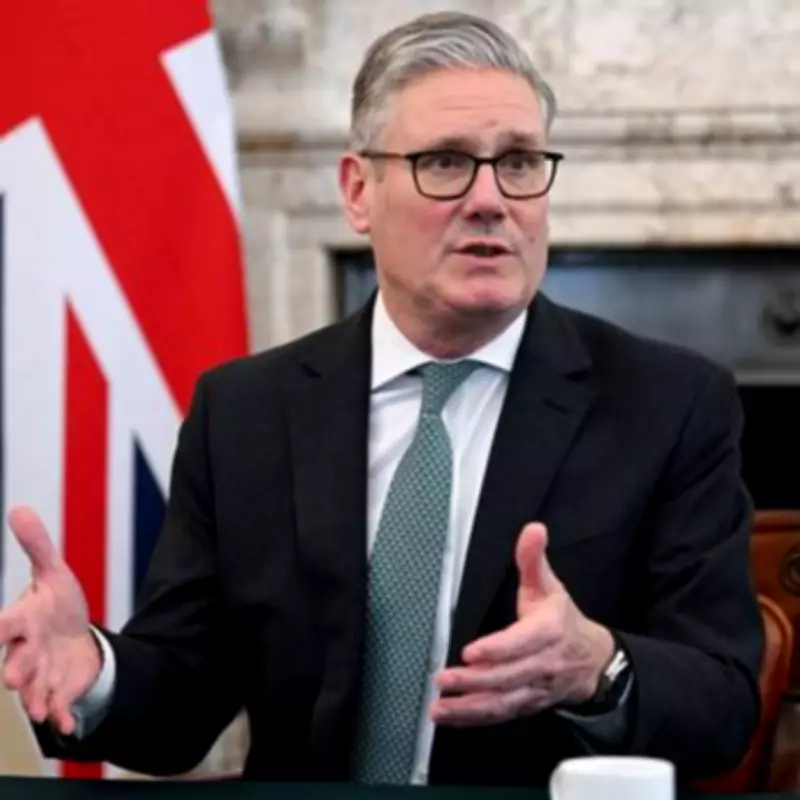
Prime Minister Keir Starmer has issued a stark warning to business leaders, declaring that tackling the economic impact of the Iran war must be a "joint effort" to shield British citizens from escalating costs. In an urgent meeting at Downing Street, Starmer emphasized the government's "duty to protect British citizens" as energy and food prices surge due to the conflict.
Downing Street Summit with Energy and Shipping Executives
On Monday, Starmer convened a high-stakes gathering with top executives from major corporations, including Shell, BP, shipping giant Maersk, maritime insurance specialist Lloyd's of London, and banks HSBC and Goldman Sachs. The Prime Minister outlined his priority: addressing the fears of British families over skyrocketing bills, particularly for energy, petrol, and food.
He stated, "This is going to have to be a joint effort. The Government can't do it on its own. You can't do it on your own. We're going to have to work together on this." Starmer highlighted that while the conflict is "not our war," there is a clear responsibility to mitigate its effects on households across the UK.

Strait of Hormuz Blockade and Global Energy Crisis
The crisis stems from Tehran's blockade of the Strait of Hormuz, a critical shipping route that transports approximately one-fifth of the world's oil and gas. This action has sent global energy prices spiralling, with Brent crude oil prices jumping over 3% to $117 a barrel, levels not seen since 2022. Diesel prices in the UK have also hit their highest point since December 2022, averaging 181.2p per litre.
Starmer revealed that the government is exploring multiple strategies to address the blockade:
- A military plan to ensure security in the region.
- A 35-country coalition, including key European nations like Germany, Italy, and France, focused on de-escalation and finding a diplomatic path forward.
He noted, "We are also working on a sort of military level of what a viable plan would actually look like."
Immediate Relief for Households and Broader Economic Concerns
In response to the crisis, the government has already taken steps to provide temporary relief. Starmer announced that household energy bills will decrease by just over £100 on average starting Wednesday and remain lower until the end of June, regardless of developments in the conflict. However, he warned that the blockade could further disrupt food supplies due to impacts on fertiliser shipments from Gulf countries.
The Prime Minister criticized opposition figures, such as Kemi Badenoch and Nigel Farage, for advocating immediate military involvement without considering the consequences. He remarked, "They wanted to go straight in with both feet into the war without thinking through the consequences."
International Coordination and Escalating Tensions
Defence Secretary John Healey is currently in the Middle East engaging with UK allies in the Gulf, while Chancellor Rachel Reeves and Energy Secretary Ed Miliband participated in a virtual G7 meeting to discuss economic responses to the war. The G7, comprising the UK, US, Germany, France, Italy, Canada, Japan, and the European Union, is evaluating measures to cushion the economic blow.
Meanwhile, US President Donald Trump has threatened to destroy Iran's energy infrastructure and water desalination plants unless the Strait of Hormuz is reopened. Trump has deployed additional US troops and raised the possibility of military action to seize Iran's Kharg Island, a key oil export facility. Starmer has urged de-escalation, but tensions continue to mount, with a Cobra meeting scheduled for Tuesday to assess the cost-of-living impact.
As the situation evolves, Starmer's call for collaboration underscores the severe economic pressures facing the UK and the need for a unified approach to safeguard citizens from the far-reaching effects of the Iran war.