Prime Minister Issues Public Apology to Epstein Victims
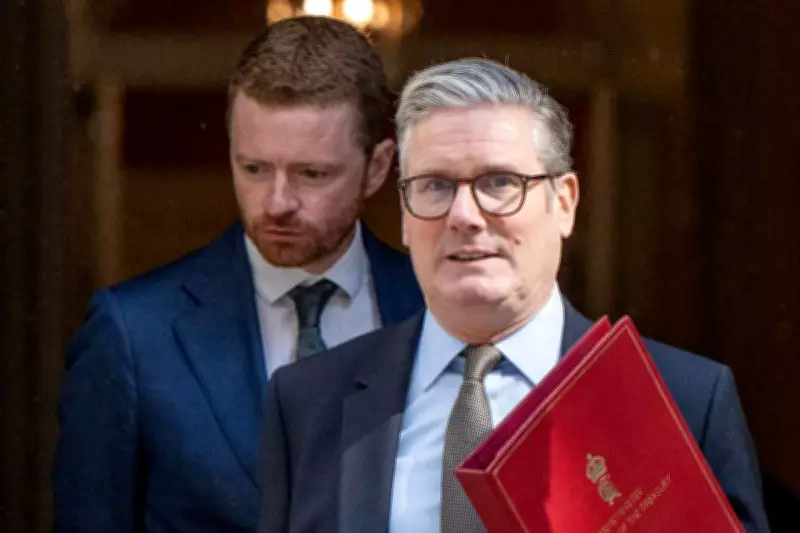
Prime Minister Sir Keir Starmer has delivered a comprehensive public apology to the victims of convicted sex offender Jeffrey Epstein, expressing profound regret for having believed what he now describes as "Lord Mandelson's lies" when appointing him as British ambassador to Washington. The Labour leader made the emotional statement during a speech in Hastings on Thursday, attempting to weather what has become the most significant political crisis of his premiership.
"None of Us Knew the Depth of the Darkness"
Sir Keir insisted that "none of us knew the depth of the darkness" surrounding Lord Peter Mandelson's relationship with Epstein when he selected the peer for the prestigious diplomatic role. The Prime Minister revealed that Mandelson had been "asked directly" about the nature of his association with the convicted paedophile, including whether he had stayed with Epstein after his conviction or accepted gifts from the financier.
"The information now available makes clear that the answers he gave were lies," Sir Keir stated firmly. "He portrayed Epstein as someone he barely knew. And when that became clear and it was not true, I sacked him. Such deceit is incompatible with public service."

Defiant Tone Amid Growing Political Pressure
Despite facing mounting calls from within his own party for a "total overhaul of personnel" in Downing Street, Sir Keir struck a defiant tone. "I was elected on a mandate in 2024 to change the country for the better," he declared, "and that's what I intend to do." The Prime Minister acknowledged sharing the "anger and frustration" of colleagues about the unfolding saga but vowed to continue leading the government.
The apology came during what has been described as a torrid week for the Labour administration, with fresh revelations about Lord Mandelson emerging in the latest tranche of so-called Epstein files released by US authorities. Sir Keir expressed frustration that "tomorrow's front pages are unlikely to be about the pride in place project" his government had been promoting, but emphasised his commitment to focusing on policy initiatives that "will affect millions of lives."
Security Vetting Process Under Scrutiny
The Prime Minister pointed to potential failures in the security vetting process, which is carried out independently by security services. "I think we need to look at the security vetting," he said, "because it now transpires that what was being said was not true. And had I known then what I know now, I'd never have appointed him in the first place." Downing Street officials have been tasked with examining this process as an urgent priority.
Internal Labour Unrest and External Pressure
Within Labour ranks, discontent has been growing significantly. Backbencher Jonathan Hinder told the BBC that Sir Keir "took the right tone this morning, but what needs to be acknowledged is that this was a catastrophic error of political and moral judgment." The Labour pressure group Mainstream called for comprehensive changes, demanding "a total overhaul of personnel, of process and of the rotten priorities that brought us here."
Opposition parties have seized upon the crisis, with Conservative leader Kemi Badenoch offering to discuss a no-confidence vote with Labour MPs. "He will have to be dragged out of Number 10," she stated at a Westminster press conference. Liberal Democrat leader Sir Ed Davey echoed this sentiment, calling for "a confidence vote now to see whether Labour MPs have any confidence in the Prime Minister."

Document Release Controversy and Police Investigation
Further complicating matters, the Metropolitan Police has requested that the government refrain from publishing documents that might "undermine" an ongoing investigation into allegations that Lord Mandelson passed confidential government information to Epstein in 2009 while serving as business secretary. The government has consequently ceded control of document release to Parliament's Intelligence and Security Committee, a move welcomed by Labour MP Simon Opher who noted his party had "promised to put trust back into politics after years of Tory sleaze – not perpetuate it."
Reform UK leader Nigel Farage described the Prime Minister's apology as "very weak" and "not quite believable," characterising the scandal as "the biggest for 100 years" involving "sex, money, corruption, the use of confidential information." As the political storm continues to gather intensity, Sir Keir Starmer faces perhaps the most challenging period of his leadership while attempting to maintain government stability and public confidence.