Starmer Issues Public Apology Over Mandelson Appointment Amid Epstein Scandal
Prime Minister Sir Keir Starmer has publicly apologised for appointing Peter Mandelson as Britain's ambassador to the United States and for believing what he now describes as "lies" regarding Mandelson's relationship with convicted sex offender Jeffrey Epstein. The apology comes during one of the most turbulent periods of Starmer's leadership, with growing calls from within his own party for significant personnel changes in Downing Street.
Addressing Victims and Colleagues
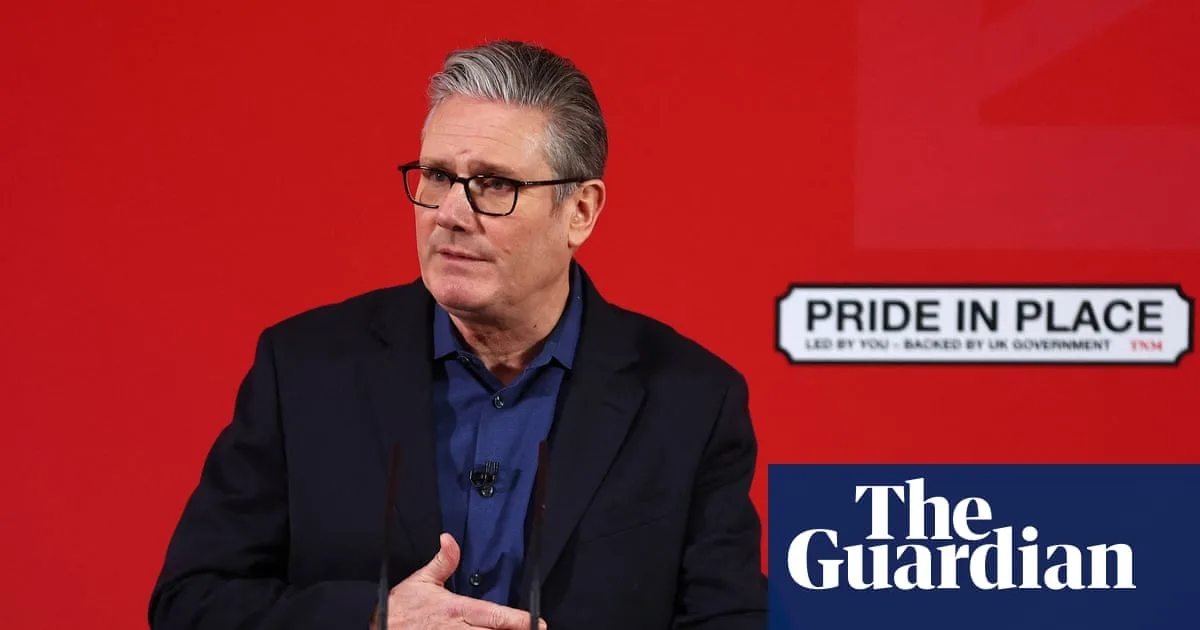
During a speech in St Leonards, East Sussex, originally planned to focus on community cohesion, Starmer began with a frank apology to the victims of Jeffrey Epstein. "None of us knew the depths and the darkness of that relationship," the Prime Minister stated, referencing his earlier admission during Prime Minister's Questions that he was aware of some connection between Mandelson and Epstein.
Starmer expressed that he shared the "anger and frustration" of his colleagues regarding the ongoing saga but vowed to continue as Prime Minister while maintaining support for his chief of staff, Morgan McSweeney. McSweeney has faced criticism from Labour MPs for reportedly pushing for Mandelson's appointment and bringing him back into the heart of Labour government operations.
Internal Labour Criticism and Calls for Change
The controversy has sparked significant unrest within Labour ranks, with several MPs openly calling for McSweeney's dismissal. Paula Barker, Labour deputy chairwoman of the Standards Committee and Privileges Committee, criticised Starmer's "questionable" judgment, stating: "When your chief of staff becomes the story, then often it's time for them to go."
Fellow Labour backbencher Karl Turner added: "If McSweeney is still in 10 Downing Street, the PM is up against it." Another Labour MP, speaking anonymously, suggested that removing McSweeney would be insufficient, comparing the situation to cutting off the "head of the hydra" and calling for "root and branch" change throughout the government.
The anonymous MP was particularly scathing about Starmer's apology, stating: "Take your apology and stick it where the sun don't shine. It makes me sick to my stomach to hear them defend that." They questioned the decision-making process that led to Mandelson's appointment despite his connections to Epstein, asking: "What part of Mandelson staying at the home of a paedophile did you not understand?"
Vetting Process Under Scrutiny
In his address, Starmer sought to shift some responsibility to the security vetting process conducted independently by security services. "I think we need to look at the security vetting, because it now transpires that what was being said was not true," he explained. "And had I known then, what I know now, I'd never have appointed him in the first place."
According to Downing Street, officials have been tasked with examining the vetting process as a priority. Starmer revealed that Mandelson was "asked directly" about whether he had stayed with Epstein after his conviction and whether he had accepted gifts from the financier. "The information now available makes clear that the answers he gave were lies," Starmer stated. "He portrayed Epstein as someone he barely knew. And when that became clear and it was not true, I sacked him. Such deceit is incompatible with public service."
Parliamentary Pressure and Document Release
The Prime Minister's apology followed a humiliating climbdown on Wednesday, when Labour MPs led by former deputy prime minister Angela Rayner forced Starmer to reverse his position on releasing full vetting documents related to Mandelson's appointment. Starmer had initially attempted to restrict publication, arguing that some details required redaction on national security grounds, prompting accusations of a "cover-up."
Rayner made clear in the Commons that she would support a Conservative proposal for the independent Intelligence and Security Committee (ISC) to determine which documents could be published. Downing Street has since confirmed it is discussing the release process with the ISC and will update Parliament once an agreement is reached.
However, the ISC has indicated it cannot commit to a timetable for reviewing the documents. In a letter to the Prime Minister, the committee stated it would act "as it always does, entirely independently of government" in determining whether certain documents should be withheld for national security reasons. "That must be a matter for the committee alone – and it is clearly not possible for the committee to determine this until it sees the papers, or indeed to commit to any timetable until we know the size of the task at hand," the letter added.
Opposition Calls for No-Confidence Vote
Meanwhile, opposition parties have seized on the scandal, with calls for a no-confidence vote in the Prime Minister gaining momentum. Reform UK leader Nigel Farage described the issue as the biggest political scandal in Britain "for 100 years" and characterised Starmer's apology as "very weak" and "not quite believable."
Tory leader Kemi Badenoch told a Westminster press conference: "He will have to be dragged out of Number 10, so I am making them an offer. If they want the change they know the country needs, come and speak to my whips and let's talk seriously about a vote of no confidence to force the moment." Liberal Democrat leader Ed Davey echoed these calls for a no-confidence vote.
As the controversy continues to unfold, a growing number of Labour MPs remain unconvinced by Starmer's handling of the situation, with some urging Angela Rayner and Wes Streeting to consider launching a leadership challenge over the scandal. One Labour MP told The Independent: "Someone needs to go for it. This cannot go on."




