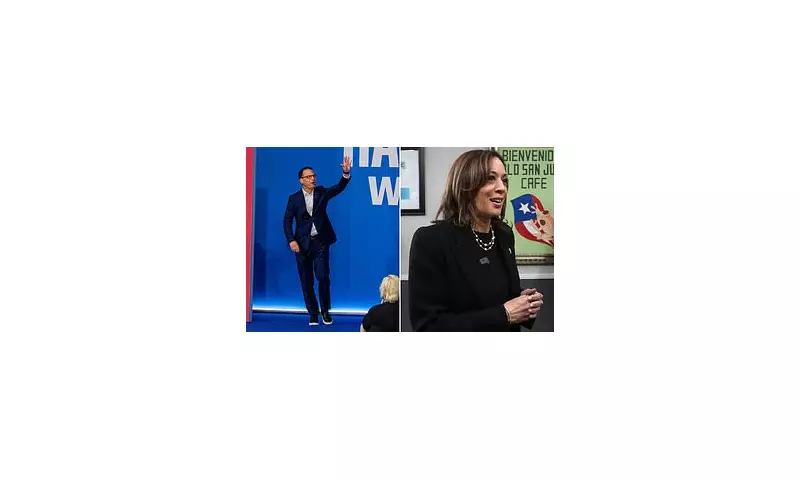
Pennsylvania Governor's Memoir Unveils Veepstakes Friction Over Pandemic Policies
Pennsylvania Governor Josh Shapiro has ignited fresh political discussion with revelations in his newly published memoir, Where We Keep the Light: Stories from a Life of Service. The book provides an unprecedented behind-the-scenes look at the tumultuous vice presidential selection process that followed President Joe Biden's unexpected withdrawal from the 2024 race, which abruptly elevated Kamala Harris to the Democratic nomination.
COVID-19 Stance Creates Immediate Tension
Shapiro, who was among the contenders considered to join Harris' ticket, writes that his positions on pandemic management immediately created friction with the vice president's vetting team. During his 2022 gubernatorial campaign, Shapiro had publicly argued that prolonged school and business closures represented excessive measures, a stance that put him at odds with policies implemented under both the Trump and Biden administrations.
The Pennsylvania governor further clarified his position on mask and vaccine mandates, describing them as governmental overreach. 'I believed that when I said it, and I believe it still today,' Shapiro writes in his memoir. 'It became clear that the people vetting me viewed that as something that could be used against Kamala, that I was somehow criticizing her.'

Uncomfortable Interview Process Revealed
The book details a series of uncomfortable exchanges during the vetting process, which Shapiro describes as rushed due to Biden's late-July departure from the race. Former White House counsel Dana Remus, serving on the vice presidential selection committee, reportedly asked Shapiro if he had ever acted as 'an agent of Israel,' a question the Jewish governor found deeply offensive.
Shapiro expresses particular frustration that policy differences were treated as potential liabilities rather than assets. 'The questions kept coming: Did I think it would get awkward if my positions were at odds with the Vice President's? Are you going to have a hard time supporting her views?' he recounts. 'All I kept saying was this is what I believe, and these positions have been widely accepted here in Pennsylvania.'
Harris' Candid Assessment of Vice Presidential Role
During their private interview at the vice president's residence, Shapiro writes that Harris presented a surprisingly bleak picture of her position. 'She explained that her time as Vice President had been tough,' Shapiro recalls. 'That she answered to President Biden's senior staff, and her schedule and priorities weren't her own.'
The governor was taken aback by Harris' characterization of the role, which she described not as a partnership but as service to the president. 'I was surprised by how much she seemed to dislike the role,' Shapiro writes, noting her complaints about lacking a private bathroom in her office and having limited influence on decision-making.
Strange Aftermath and Financial Concerns
Following the interview, Shapiro was instructed to remain in Washington D.C. and was taken to former Attorney General Eric Holder's apartment, where he waited for several hours. 'I was growing less and less patient and more and more sure that this was not what I wanted to sign up for,' he writes.
When Remus finally arrived, she bluntly suggested Shapiro didn't truly want the position and raised concerns about his financial capacity to handle vice presidential expenses. 'From the financial vetting, she said that she knew we didn't have a lot of money,' Shapiro recounts, referring to comments about his wife needing new clothes and covering residence entertainment costs. 'The comments were unkind to me. They were nasty to Lori.'
Withdrawal and Aftermath
Shapiro ultimately withdrew from consideration before Harris selected Minnesota Governor Tim Walz as her running mate. According to the memoir, Remus advised against informing Harris directly, suggesting 'the VP would not handle bad news well.' Shapiro writes that he remains uncertain whether Harris ever learned of his decision to bow out.

When Harris called to announce Walz as her choice, Shapiro offered genuine support. 'I told her how excited I was by her choice,' he writes. 'I meant it.' The Pennsylvania governor, widely expected to pursue a presidential bid in 2028, concludes that the experience provided valuable clarity about political processes and personal boundaries.