Liberal Party's Secret Review Blames Dutton's Leadership for 2025 Election Debacle
Secret Liberal Review Blames Dutton for 2025 Election Loss

Secret Liberal Party Review Exposes Catastrophic 2025 Election Failures

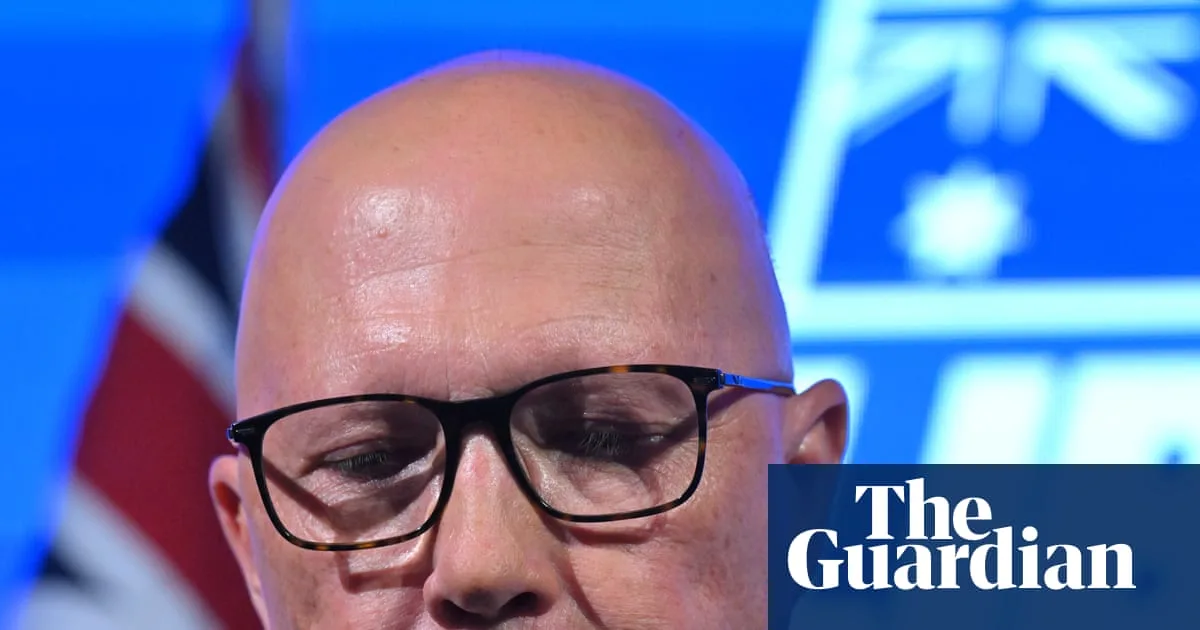
A confidential Liberal party review into its devastating 2025 federal election defeat, which has now been tabled in parliament, delivers a scathing assessment of former leader Peter Dutton's leadership and campaign management. The 64-page document, authored by party elders Pru Goward and Nick Minchin, was leaked after the party's federal executive attempted to suppress its release, with Prime Minister Anthony Albanese subsequently tabling a copy during question time.

'Grim and Introverted' Leadership Fatal to Campaign

The review identifies Dutton's personal leadership style as fundamentally flawed for modern Australian elections, which it describes as increasingly presidential in nature. "The electorate expects to see and hear an upbeat and inspiring leader," the document states, noting that "all of that was lacking" in Dutton's approach.

The former opposition leader was characterized as having a "grim and introverted demeanour" that failed to change throughout the campaign, potentially reflecting what the review called "the heavy and additional burden he imposed on himself." Dutton's ubiquitous suit-wearing regardless of occasion was specifically noted as contributing to this perception.

Perhaps most damagingly, the review described Dutton as "unattractive to women" to such an extent that some female Liberal candidates reportedly asked for him not to visit their electorates. The former leader was also viewed as "lacking connection" with younger voters, creating multiple demographic challenges for the campaign.

Broken Relationships and Campaign Chaos

The review lays bare what it calls a "broken" and "unworkable" relationship between Dutton, his office, and the party's federal director Andrew Hirst, who had masterminded Scott Morrison's 2019 election victory. Dutton reportedly had "little confidence" in Hirst from the beginning of the term, while the campaign director felt "shut out" of crucial decisions.

This dysfunction led to Dutton effectively seizing control of campaign management, sidelining the party's Parramatta-based campaign team and creating what the review describes as a lack of coordinated strategy and "chaotic travel and policy announcements." In some instances, Dutton's team only shared details of announcements on the afternoon before their planned launch, leaving campaign headquarters scrambling to produce materials.

"Peter Dutton made himself captain, coach and ballboy," one unnamed Liberal state director told the review authors, encapsulating the problematic centralization of campaign control.

Nuclear Policy and Trump Comparisons Proved Damaging

The Coalition's proposal to build government-owned nuclear reactors at seven sites across Australia emerged as one of Dutton's most contentious policies. The review reveals that internal research dating back to Scott Morrison's prime ministership had confirmed that shifting public opinion on nuclear power, particularly among female voters, would require a long awareness campaign.

This research was shared with Dutton's office but wasn't properly acted upon, allowing Labor to successfully highlight potential costs and safety concerns. A post-election survey referenced in the review found nuclear power was "deeply unpopular" among female voters, who "considered it weird."

Dutton was also successfully painted as "Trump-like" by Labor, according to the review, with the former leader unkindly referred to by one candidate as 'Temu Trump.' The election of Donald Trump in November 2024 was initially welcomed by some Liberals, but announcements about the establishment of the Department of Government Efficiency (DOGE), opposition to diversity targets, and mass public sackings in the US "quickly soured" Australian voters' view of Trump and, by association, Dutton.

Faulty Polling Misled Campaign Strategy

The review identifies "faulty" research from polling firm Freshwater Strategy as having "disastrously misled" the party by significantly overstating support for the Coalition. Part of this miscalculation stemmed from what the review calls "faulty weighting" of the 2023 voice to parliament results, essentially assuming that Labor supporters who voted against the proposition would be more likely to abandon Anthony Albanese.

In one striking example, Freshwater polling a week before election day put the Liberal party ahead 62-38 in the Sydney seat of Banks, but Labor ultimately won the seat 52.3-47.6. This misleading data contributed to resource misallocation, with at least one candidate reportedly losing booth workers to other seats because their polling appeared favorable.

The review also highlights an unusual "direct relationship" between Dutton and Freshwater's principal pollster Mike Turner, with Dutton often seeking Turner's advice despite him being a pollster rather than a political strategist and working for other clients during the campaign.

Chronic Failure to Address Female Vote Concerns

Recommendation 14 of the review contains what it calls "a statement of the obvious" to followers of Australian politics: "the female vote is clearly a problem for the Liberal Party." Yet the report makes the striking observation that despite at least a decade of declining female support, the party has failed to perform "a deep-dive into its causes."

The review highlights the absence of senior female staff in the party's head office and a lack of engagement with organizations such as Hilma's Network and Women for Election Australia, both of which have successfully identified and trained election candidates. These organizations "described a lack of interest in their work from MPs and some Women's Councils, even distrust and hostility, including from the former leader's office."

The 55-year-old Dutton, who lost his seat of Dickson in the election rout ending his 24-year parliamentary career, described the review as a "unprofessional attempt at a hit job" in comments to media. The review's first recommendation insists the party must never again allow the parliamentary leader and office to effectively run the campaign, marking a fundamental reassessment of Liberal election strategy following what the document calls "the worst campaign the Party has ever fought."