
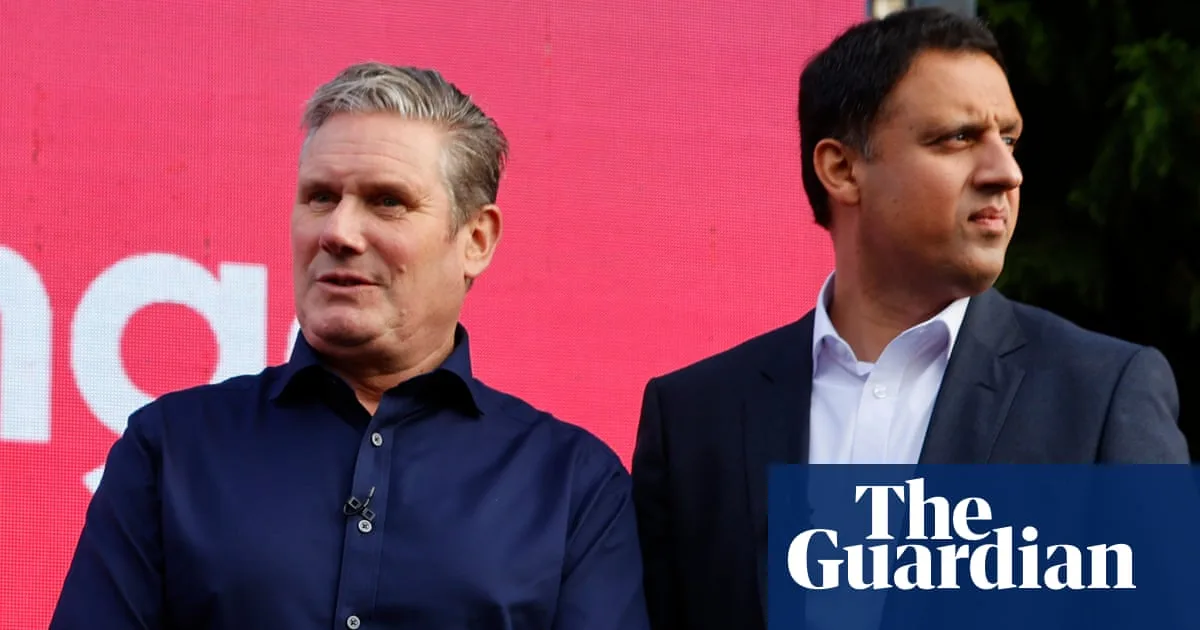
Anas Sarwar, the Scottish Labour leader, has called on Prime Minister Keir Starmer to stand down, throwing his leadership into serious peril. At a hastily arranged press conference in Glasgow, Sarwar said: 'The distraction needs to end, and the leadership in Downing Street has to change.' He argued that there had been 'too many mistakes' by No 10 since Starmer came to power, and that the prime minister was undermining Labour's ability to win the Scottish parliament elections in May.
Sarwar highlighted that recent opinion polls show Labour trailing in third place behind the Scottish National Party and Reform UK, and that it would be impossible for Starmer to recover after the scandal over Peter Mandelson's links to Jeffrey Epstein. 'We cannot allow the failures at the heart of Downing Street to mean the failures continue here in Scotland,' he said, adding that his first priority was to Scotland and he did not want to 'sacrifice' the country to a third decade of an SNP government.
Sarwar revealed that he had informed the prime minister earlier in the day of his plan to call for his resignation, and 'it's fair to say, we didn't agree'. The call came as a serious blow to Starmer, who is already fighting to reassert control after accepting the resignation of his closest adviser, Morgan McSweeney, amid anger over the Mandelson appointment.
Deputy Prime Minister David Lammy was the first cabinet minister to publicly back Starmer, posting on social media that the prime minister had won a 'massive mandate' and that the party should 'let nothing distract us'. Scotland Secretary Douglas Alexander said he respected Sarwar's decision but that his own focus remained on ensuring Scotland's voice was heard in cabinet. However, there was an immediate backlash among some Scottish Labour MPs, with one telling the Guardian: 'Anas does not speak for us all.'
Cabinet ministers including Rachel Reeves, Yvette Cooper, and John Healey rallied round the prime minister, though some support was more muted. Health Secretary Wes Streeting, known to have leadership ambitions, told Sky News that although the atmosphere was febrile, 'Keir Starmer doesn't need to resign.'




