Schumer Announces War Powers Vote to Curb Trump's 'Unchecked' Authority on Iran
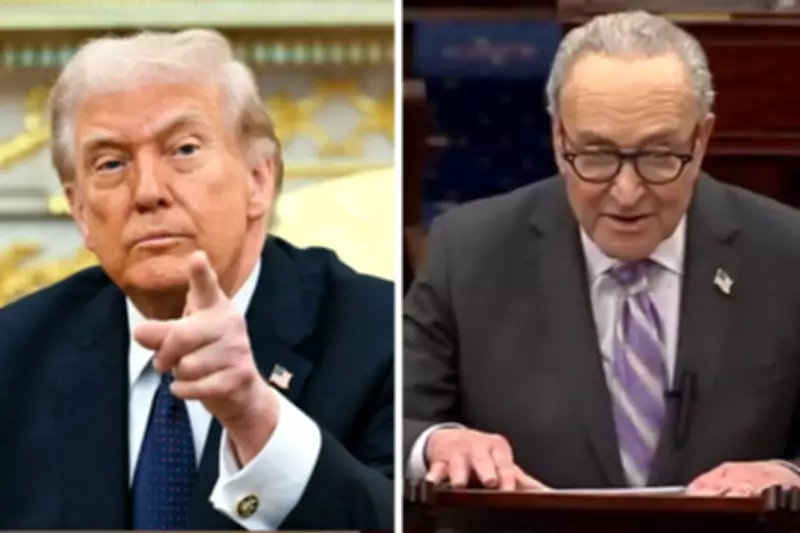
Senate Minority Leader Chuck Schumer has declared that Democrats will force a vote on a War Powers Act resolution aimed at restraining President Donald Trump's military actions concerning Iran. The New York Democrat made the announcement as the Senate prepares to reconvene next week, following Trump's declaration of a fragile two-week ceasefire.
'Unhinged' Leadership and Global Anxiety
Schumer delivered a scathing critique of the president, stating, "All of this happens when one man, especially a man acting as unhinged as Donald Trump, has unchecked power to wage war." He accused Trump of backing himself "into a corner with dangerous, escalating rhetoric" that has left the international community on edge.
"The entire world holds its breath, wondering what's next going to come out of his mouth," Schumer told reporters. "And can he ever find a way out? A commander-in-chief who is truly in control would never have gotten into this colossal mess to begin with."

Trump's Provocative Threats and War Crime Concerns
The announcement comes in the wake of Trump's inflammatory statements, including a threat that "A whole civilization will die tonight, never to be brought back again." He has also menaced to bomb energy infrastructure and bridges—actions many experts classify as war crimes—while taunting Iran with crude language.
Schumer condemned this rhetoric, emphasizing the need for constitutional safeguards. "Trump chose this war," he asserted. "He owns the consequences and next week Congress will act, has the opportunity to act, to make sure it cannot happen again."
War Powers Act: A Legislative Check
If passed, the War Powers Act resolution would require the president to notify Congress within 48 hours of deploying troops and mandate withdrawal within 60 to 90 days unless Congress authorizes military force. Schumer argued that the conflict has exacerbated multiple crises, from control of the Strait of Hormuz to soaring gas prices and unchecked Iranian nuclear ambitions.
"The war made us worse because American credibility is down the drain," he lamented, highlighting the erosion of U.S. global standing.
Republican Resistance and Internal Unease
Thus far, the Republican-controlled House and Senate have rebuffed efforts to invoke the War Powers Act, with House Speaker Johnson insisting the United States is "not at war right now." However, Schumer remains undeterred, stating, "No president, Democrat or Republican, should take this country to war alone. Not now, not ever."
Despite partisan barriers, some Republicans have shown openness to the resolution. Senator John Curtis of Utah expressed support for Trump's defensive actions but noted he "will not support ongoing military action beyond a 60-day window without congressional approval." Similarly, Senator Lisa Murkowski of Alaska voiced alarm over Trump's rhetoric, calling it "an affront to the ideals our nation has sought to uphold."
Broader Political Fallout and Calls for Action
Trump's aggressive posturing has spurred calls from some Democrats for impeachment or invocation of the 25th Amendment to remove him from office. Schumer, however, focused on legislative measures, urging Republicans to "join Democrats and end this reckless war of choice."
In the House, Representative Nancy Mace of South Carolina praised Trump's performance but expressed concern about "the Washington war machine" dragging the U.S. into a prolonged conflict with Iran. This sentiment underscores the growing unease even among Trump's allies regarding unchecked executive power.
As the Senate vote looms, the debate over war powers and presidential authority intensifies, with Schumer framing it as a critical moment to restore congressional oversight and prevent further escalation.