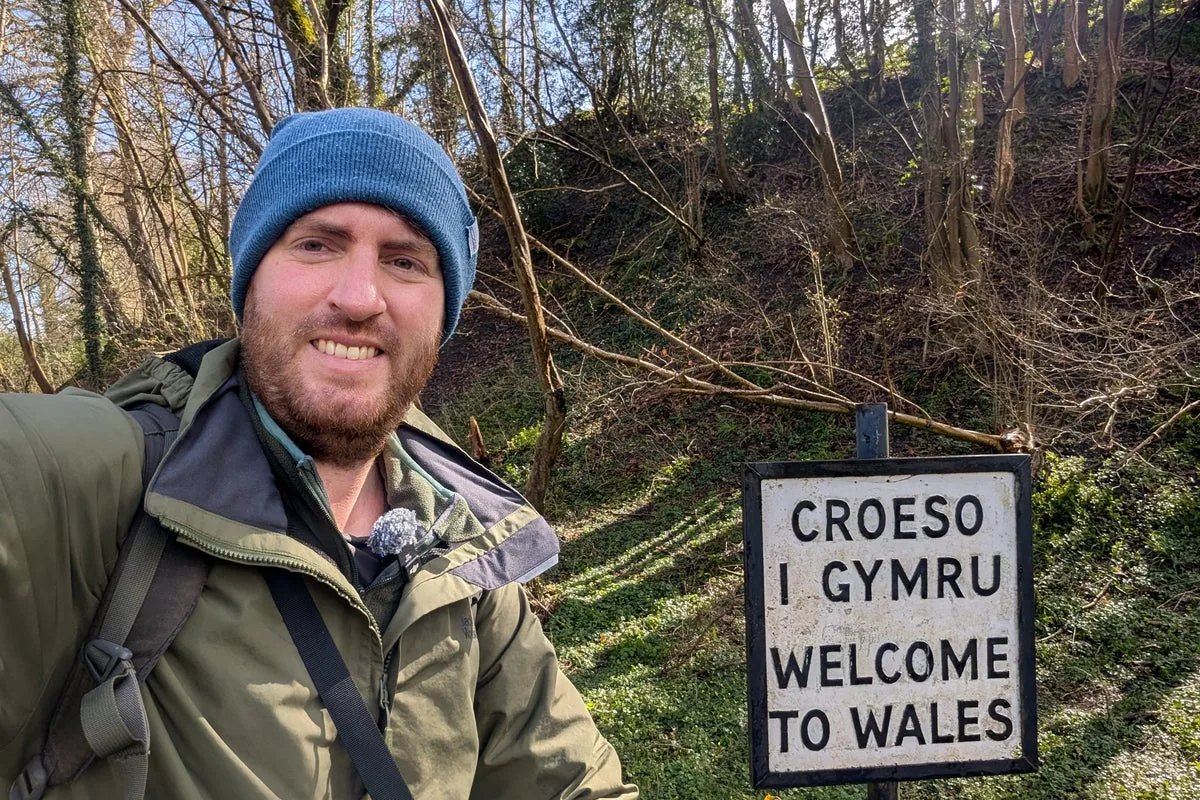
The 'Welcome to Wales' sign flashed past as I crossed the Severn Estuary, greeted by brooding clouds. Despite the weather, I was eager to begin my three-day road trip along the 160-mile border between England and Wales, following the route of Offa's Dyke, an 8th-century earthwork that is arguably Britain's oldest border.
Starting in Chepstow, where an 11th-century Norman castle guards the southern gateway, I took the A466 along the Welsh bank of the River Wye. Cliffs rose on one side and tall trees on the other before Tintern Abbey's stone arches appeared. The abbey has stood in ruins since the Reformation but became famous in the late 18th century when Romantic poets like William Wordsworth sparked the Wye Valley's first tourism boom.
I parked at The Old Station, a two-mile stroll from the abbey, for half the cost of the abbey's £5 parking fee. The Wye Valley's first tourists enjoyed river views from paddle steamers and the Wye Valley Railway, which opened in 1876. Although these are long gone, a miniature train now runs at Tintern's Old Station in summer.
From Tintern, the A466 weaved between Wales and England until Monmouth, 12 miles away. This border town is home to the last fortified medieval bridge in Britain and was the birthplace of Henry V. I spent the night at the Cross Keys Inn, a 14th-century coaching inn in the Wye Valley, for £50. The bartender claimed it could be the most haunted pub in the valley, noting the cellars once served as a village mortuary.
The next day, I planned to cross the Black Mountains via Gospel Pass, the highest paved road in Wales at 549 metres, but mountain roads were closed due to landslides. Instead, I took B-roads to Hay-on-Wye, famed for its literary festival and as the world's first 'Book Town', with second-hand bookshops lining the high street and an 'Honesty Bookshop' in the castle moat.