Netanyahu's Putin-Style Tactics in Iran Energy War Risk Catastrophic Backfire
The Israeli military's targeted bombing of Iran's crucial South Pars gas field has drawn alarming parallels to Russia's systematic destruction of Ukrainian energy infrastructure, a strategy widely condemned as potential war crimes. World affairs editor Sam Kiley analyses this dangerous escalation, warning that such tactics will inflict needless suffering while failing to achieve strategic objectives against the Iranian regime.
Mirroring Moscow's Controversial Playbook
Prime Minister Benjamin Netanyahu, currently facing indictment for alleged crimes against humanity related to Gaza operations, appears to have adopted the very tactics employed by Vladimir Putin in Ukraine. Both leaders now confront international legal scrutiny for their approaches to conflict, with their targeting strategies raising profound humanitarian concerns.
On December 5th last year, the British government joined forty-two other nations in condemning Russia's deliberate targeting of civilian infrastructure as potential war crimes. Neil Holland, the UK's representative to the OSCE, stated unequivocally in Vienna that such actions violate international humanitarian law, specifically the Geneva Conventions' principle of distinction between military and civilian targets.
"Russia's deliberate missile and drone strikes against Ukraine's civilian energy infrastructure constitute a clear pattern that has intensified during the fourth year of conflict," Holland declared. "These actions have caused significant civilian casualties, massive damage to residential and energy infrastructure, and emergency power outages affecting most regions."
Iran's Critical Energy Infrastructure Under Attack
Israel has now implemented an identical strategy against Iran, attempting to provoke regime change by crippling the nation's industrial capacity and destroying its energy backbone. The South Pars gas field represents Iran's economic lifeline, providing approximately seventy-five percent of the country's natural gas supply and generating around eighty percent of its electricity.
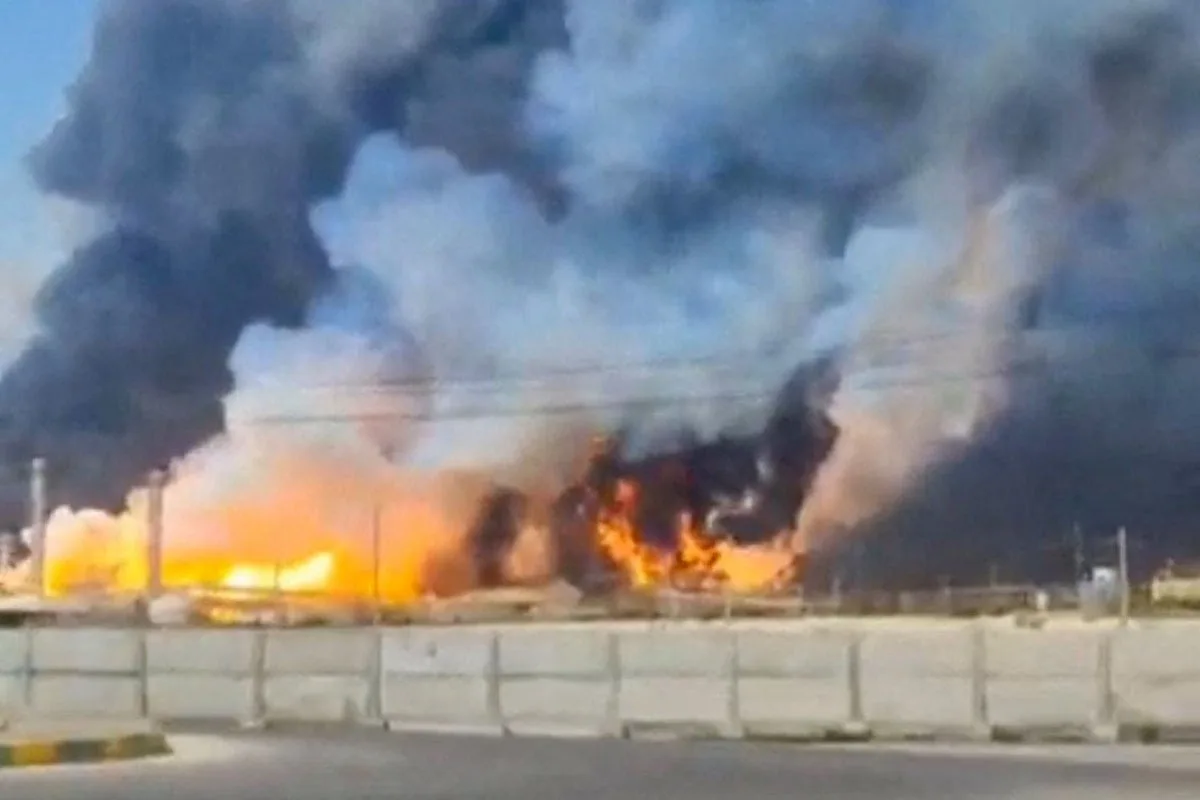
Wednesday's Israeli bombardment set storage tanks ablaze at South Pars, prompting immediate Iranian retaliation against Qatar's Ras Laffan industrial city, the world's largest liquefied natural gas export hub. This complex geopolitical situation involves multiple stakeholders, as South Pars is jointly owned by Iran and Qatar, representing the planet's largest gas field and the foundation of Qatar's wealth.
The strategic implications are profound, given Qatar hosts the United States' Al Udeid airbase, America's largest military installation in the Middle East and the coordination center for operations against Iran.
Trump's Unusual Intervention and Global Economic Fallout
Former President Donald Trump, typically indifferent to human rights concerns and consistently supportive of both Putin and Netanyahu, has surprisingly intervened in this escalating conflict. His concern stems not from humanitarian considerations but from practical economic realities, particularly the impact on American petrol prices and global gas markets.
European natural gas prices surged by twenty percent following Iran's retaliatory strike on Ras Laffan, demonstrating the immediate economic consequences of this energy warfare. Trump's response on his Truth Social platform approached an apology to Iran while admonishing Israel for its escalation.
"Israel, out of anger for what has taken place in the Middle East, has violently lashed out at a major facility known as South Pars Gas Field in Iran," Trump wrote. "The United States knew nothing about this particular attack, and Qatar was in no way involved."
The former president issued a stark warning that further Iranian attacks on Qatari facilities would trigger overwhelming American retaliation against the entire South Pars complex. "I do not want to authorize this level of violence and destruction because of long-term implications for Iran's future," he cautioned, "but if Qatar's LNG is again attacked, I will not hesitate to do so."
Global Energy Markets and Putin's Unexpected Windfall
The United States clearly received no consultation regarding Israel's initial attack on Iran's energy infrastructure. Given the Trump administration's undefined victory parameters and lack of coherent strategy for Iran, this communication breakdown may prove inconsequential in immediate military terms but carries enormous economic implications.
Global fossil fuel price volatility threatens economies from Asia to the Americas, while offering Vladimir Putin an unanticipated financial windfall. According to Ukrainian President Volodymyr Zelensky, Moscow's oil sales have already generated up to ten billion dollars in additional revenue for Russia's war effort.
Current pricing suggests Russia could gain between two and four billion euros annually from gas exports to the European Union alone. Globally, analysis from the Centre for Research on Energy and Clean Air indicates the Kremlin might secure an extra eight to sixteen billion euros over twelve months from these market disruptions.
European Calculations and Strategic Miscalculations
European nations have thus far refrained from condemning Israel's attacks on Iranian energy systems, despite having previously defined similar actions as potential war crimes when committed by Russia. Their strategic calculation appears to view the broader conflict as inherently illegal, while observing the outcomes of Putin's four-year campaign against Ukrainian infrastructure.
Netanyahu seems to have overlooked crucial lessons from the Ukrainian experience, where population solidarity strengthened rather than fractured under Russian pressure. Ukrainian citizens hardened their resistance against all things Russian, and Russia now faces significant battlefield setbacks in the Donbas region.
There is no evidence that bullying Ukrainians broke their national spirit, and similarly, there are no indications that Iranians will revolt against their theocratic government while Israel disrupts the fuel supplies essential for daily survival. This strategic miscalculation risks prolonging conflict while inflicting unnecessary humanitarian suffering and economic disruption across global markets.