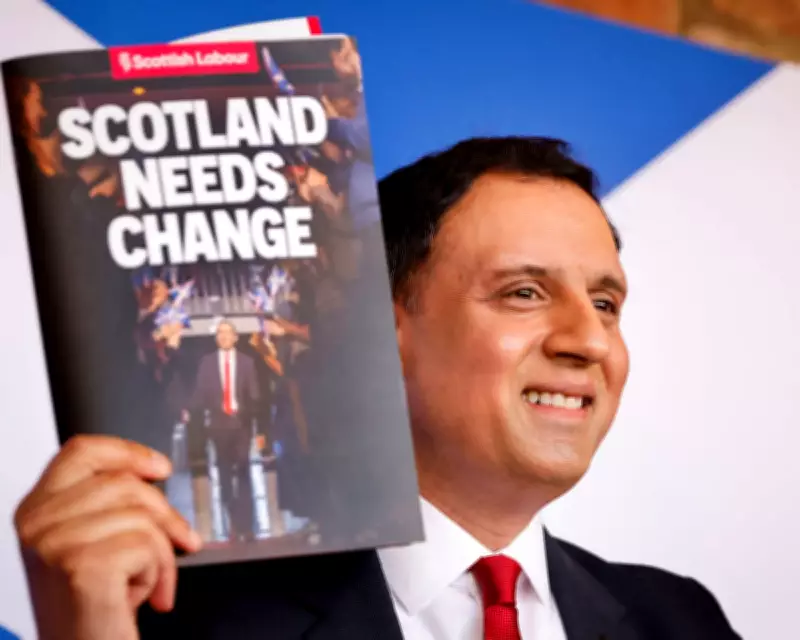
Scottish Labour Leader Appeals for Five-Year Mandate to Address SNP's Record
Anas Sarwar, the Scottish Labour leader, has directly appealed to voters to grant his party a five-year term to "fix the Scottish National party's mess" during a major campaign rally in Edinburgh. Sarwar positioned Labour as the vehicle for change ahead of the 7 May Holyrood election, criticising the SNP government under John Swinney as "tired, full of excuses and out of ideas."
Election Pledges Focus on Economic and Social Reforms
In a significant move, Sarwar made no reference to UK Labour leader Keir Starmer or broader UK policies while unveiling a series of Scottish-specific pledges. The manifesto includes ambitious commitments such as providing families with a £3,000 childcare tax break, lifting property taxes for first-time buyers, and building 52,300 affordable homes. Additionally, Labour plans to hire 2,000 extra teachers to improve literacy and numeracy standards across Scotland.
Sarwar emphasised: "After 20 years of the SNP they have lost their way. They have been given 20 years. I am asking you to give me five; five years to fix the SNP's mess. The people who created the mess cannot be the ones to fix it."

Strategic Shift Amid Polling Challenges and Political Competition
Scottish Labour is fighting to reverse a steep slump in support, with recent polls placing the party third or even fourth behind the SNP, Reform UK, and the Scottish Greens. This decline is partly attributed to the UK government's unpopularity. With less than 25 days until the election, Labour aims to capitalise on widespread criticism of public services under the SNP, positioning itself as the alternative for discontented voters.
The party has shifted its economic policies firmly toward the centre, abandoning previous calls for a more progressive income tax regime in favour of aspiring to reduce tax rates, particularly for middle earners facing higher marginal rates. Sarwar also pledged to cut business rates and streamline NHS bureaucracy, alongside reducing the country's quangos by a third.
Infrastructure and Innovation Proposals Gain Business Support
Labour's manifesto includes plans to build new nuclear power stations, scrapping the SNP's longstanding ban on the technology, and significantly streamlining the planning system to accelerate developments. These proposals have won plaudits from business lobby groups, including CBI Scotland, which praised the focus on economic growth and investment.
The party claims that public sector cuts, strengthened investment agencies, and greater investment in new technologies—such as Scotland's first NHS appointments app and AI-driven diagnostics—will free up hundreds of millions of pounds for reinvestment in schools, hospitals, and local services.
Fiscal Restraint and Tactical Voting Dynamics
The Institute for Fiscal Studies offered cautious approval of Labour's manifesto, describing its "relatively restrained" proposals and lack of expensive, uncosted promises as sensible and less risky than those of rivals. David Phillips, head of devolved and local government finances at the thinktank, noted: "Particularly given the fiscal situation, the lack of big unfunded new commitments is welcome." However, he acknowledged that Labour would still need to cut some services due to unavoidable spending increases in core areas.
Despite Sarwar's confidence, the anti-independence campaign group Scotland in Union published a tactical voting guide urging Labour, Conservative, and Liberal Democrat voters to back whichever party stands the best chance of blocking an SNP candidate in local constituencies. This reflects the complex political landscape in Scotland, where competition for centre-left votes is intense.
SNP Response and Campaign Tensions
Angus Robertson, the SNP's campaign director, dismissed Labour's promises, stating: "We've heard it all before from Labour – but we know exactly what we get with them. Broken promise after broken promise – energy bills up, Grangemouth closed and the winter fuel payment debacle. We already have one disastrous Labour government and we don't need another one."

Sarwar remains optimistic, asserting that as voters become more engaged with the election campaign, they will choose change on 7 May. He referenced the first televised leaders' debate on Sunday, where he believes the SNP's shortcomings were clearly visible to the public.