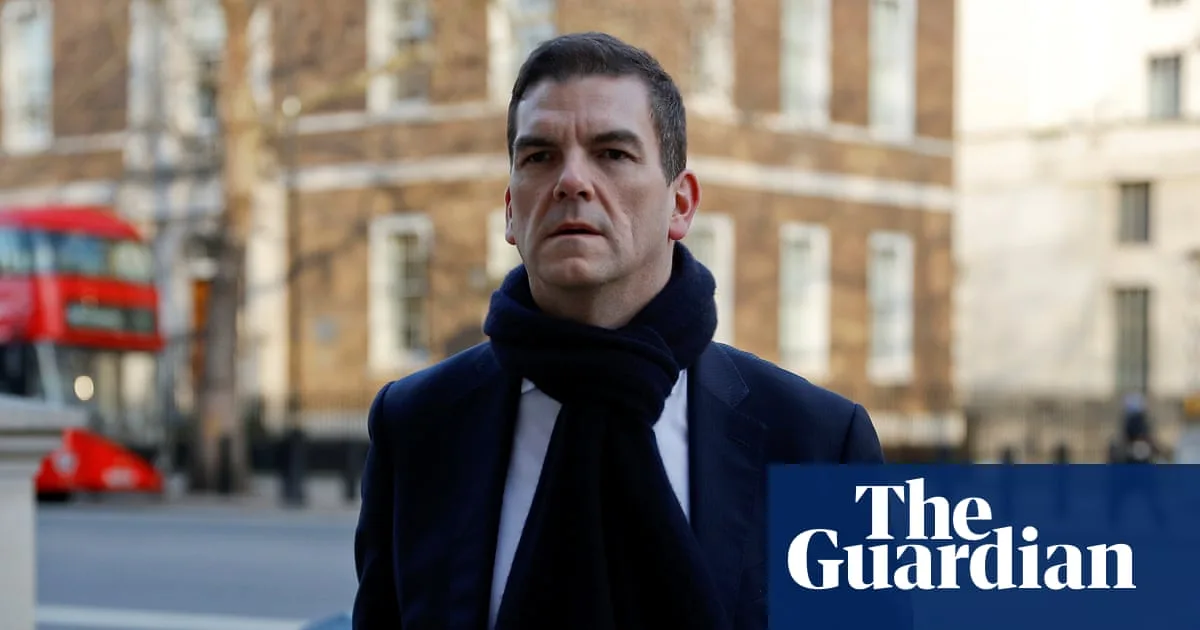
Make no mistake: when Sir Olly Robbins appears before a parliamentary committee next week, he carries with him both the means and the opportunity to detonate what remains of Sir Keir Starmer's already battered premiership. Robbins is no stranger to political wreckage, having served as chief Brexit negotiator for Theresa May during a period that culminated in her tearful departure from Downing Street in 2019.
The Inconvenient Sacrificial Lamb
Standing at 6ft 3in, Robbins is certainly the tallest – and perhaps the most inconvenient – sacrificial lamb yet in Starmer's growing flock. The Prime Minister knows only too well that this notoriously ruthless civil servant could yet unleash everything he knows about Peter Mandelson's controversial appointment to the most prestigious post in the British diplomatic service.
Even Robbins' fiercest critics – who have long accused him of sabotaging Brexit – are struggling to swallow Downing Street's official line that he deliberately kept Starmer and other ministers in the dark about the vetting process. The timeline of his appointment alone raises serious questions about governmental oversight and procedure.
A Troubled Appointment Timeline
Robbins, now 50, became the Foreign Office's top mandarin in January 2025 – precisely three weeks after Peter Mandelson had been appointed to the ambassadorial position, but before comprehensive security vetting had been properly conducted. What followed has become the center of a major political storm.
We know what happened next: Mandelson was initially denied clearance by the official vetting team, a decision that was dramatically overruled by the Foreign Office just two days later. Mandelson was subsequently removed from the post in September last year over his troubling links to the convicted paedophile Jeffrey Epstein, creating a cascade of political consequences.
The Vetting Controversy Deepens
When a committee of MPs asked in November whether the Foreign Office held a 'different view' from Number 10 regarding Mandelson's appointment, Robbins was notably careful in his response. He stated clearly that 'the Prime Minister wanted to make this appointment himself,' while simultaneously insisting he operated strictly by the letter of the law regarding vetting procedures.
The Constitutional Reform and Governance Act 2010 specifically allows final decisions on difficult vetting cases to rest with permanent secretaries. Robbins – fully aware that Starmer had personally decided Mandelson was the ideal candidate for the crucial United States diplomatic role – used that precise authority to overrule significant security concerns about the appointment.
Political Pressure or Independent Decision?
Was this an independent professional decision or was Robbins subjected to political pressure? One theory circulating among Starmer's diminishing band of supporters suggests Robbins was politically aligned with the Prime Minister regarding the appointment. Both men apparently believed only Mandelson possessed the necessary guile and diplomatic heft to strong-arm Donald Trump into accepting the contentious Chagos Islands deal, which would have seen Britain hand sovereignty to Mauritius at an estimated taxpayer cost of £35 billion.
By the time the security clearance fiasco leaked publicly on Thursday, Robbins understood the political game was effectively over. That same night, he received multiple telephone calls from concerned colleagues warning him to resist when Starmer inevitably attempted to throw him under the proverbial bus. Despite these warnings, Robbins ultimately chose to fall on his sword.
The Unanswered Questions
Could a seasoned political operator like Robbins truly have made such a seismic decision without informing any government ministers? Even Labour ministers and MPs find this difficult to believe. 'He is a professional civil servant through and through. I think he was forced into this position,' revealed an impeccable Whitehall source, highlighting the deep skepticism surrounding official explanations.
Whatever the ultimate truth, Olly Robbins is certainly no stranger to finding himself in the political firing line. As Brexit negotiator from 2017 to 2019, he was widely blamed for a string of concessions to Brussels. On Conservative benches, he earned the enduring moniker 'the Brexit Betrayer,' reflecting deep-seated Tory resentment toward his negotiating approach.
Europhile Background and Political Instincts
Robbins' Europhile instincts run remarkably deep. During his time at Oxford University – where he studied politics, philosophy and economics – he served as secretary of the institution's fledgling Oxford Reform Club, an organization specifically established to oppose the growing Eurosceptic movement. While Robbins has previously stated that 'no part of my personal views will ever play a role in how I serve the Government of the day,' few committed Brexiteers genuinely believe this declaration.
The Crucial Committee Appearance
This brings us directly to his imminent appearance at Tuesday's foreign affairs committee hearing. Robbins will testify alongside Sir Chris Wormald, the former Cabinet Secretary ousted by Starmer in February. Both men will face forensic questioning about the security vetting process and their respective roles in the Mandelson appointment debacle.
The diplomat's answers to those carefully crafted questions could ultimately decide Starmer's political fate. With the Prime Minister's authority already significantly weakened, Robbins' testimony represents perhaps the most dangerous remaining threat to a premiership that appears increasingly fragile with each passing political crisis.