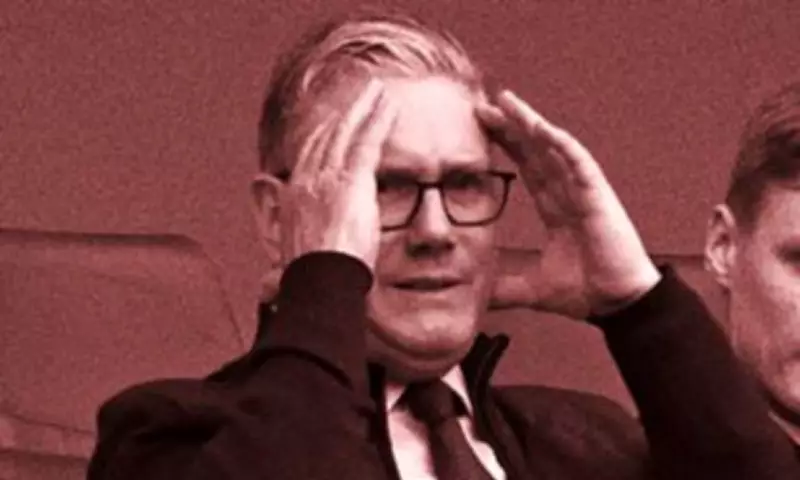
The role of a defence lawyer is to secure acquittals for clients, leveraging legal loopholes, technical errors, or shifting blame, irrespective of guilt or innocence. In politics, however, such tactics are untenable, especially when the prime minister stands accused. Sir Keir Starmer cannot merely deflect blame for his government's shortcomings or plead ignorance when scandals erupt. As head of government, he bears ultimate responsibility, not as a passive observer. His lawyerly handling of the Mandelson fiasco exposes a profound lack of political judgment that has marred his tenure.
Court of Public Opinion Renders Its Verdict
In the court of public opinion, and among significant factions within his own party, Sir Keir has already been found guilty—of incompetence at best, deception at worst. While he may cling to power until after next month's local elections, his political future appears increasingly precarious. The facts of the case are damning and paint a picture of systemic failure.
A Controversial Appointment and Vetting Failures
In December 2024, Sir Keir appointed Lord Mandelson as ambassador to the United States, ostensibly believing he could navigate relations with Donald Trump. The government has insisted that neither Starmer nor his ministers were aware that Mandelson had failed vetting procedures prior to his installation. Given Mandelson's history—including associations with disgraced financier Jeffrey Epstein, ties to dubious oligarchs, and a reputation for dishonesty—the choice was ill-advised from the outset.

Despite early warnings, such as an initial assessment flagging 'reputational risk,' the prime minister proceeded with the appointment before rigorous 'developed vetting' (DV) was completed. This move was astonishing, considering Mandelson's checkered past. It has since emerged that Mandelson failed the DV procedure in January of last year, yet he was still cleared to assume the prestigious diplomatic role.
Misleading Parliament and Leadership Questions
Sir Keir's central problem lies in his repeated assurances to the Commons that 'full due process' was followed. This assertion is demonstrably false, meaning the prime minister has misled Parliament on multiple occasions, including twice in a single day. The critical issue now is whether this was done knowingly; if so, resignation becomes inevitable.
Starmer has claimed that Sir Olly Robbins, the chief Foreign Office mandarin, knew of the vetting failure but withheld the information. 'I'm absolutely furious I wasn't told,' Starmer stated. However, this defence raises serious credibility issues. Is it plausible that a senior civil servant like Robbins would act unilaterally on such a vital matter? In government, civil servants advise, but ministers decide. Moreover, given Starmer's reputed obsession with process, his alleged lack of curiosity about the DV results before appointing Mandelson to a key diplomatic post is baffling.
This incident calls into question Starmer's leadership style—he is meant to steer the government, not merely ride along as a passenger. Sir Olly Robbins has since resigned, becoming the latest in a series of senior advisers sacrificed to protect the prime minister. Yet, Robbins' full account remains untold, and his supporters maintain he acted correctly, suggesting more revelations may follow.
A Last-Ditch Effort and Inevitable Fallout
On Monday, Sir Keir will attempt a final bid to retain power, delivering a Commons statement promising 'full transparency' on this debacle. Despite his bluster, the reality is stark: his position is increasingly untenable. The Mandelson scandal has not only highlighted vetting lapses but also exposed a pattern of evasion and poor judgment that undermines public trust. As the political pressure mounts, Starmer's days in office appear numbered, with the fallout likely to resonate beyond the upcoming elections.