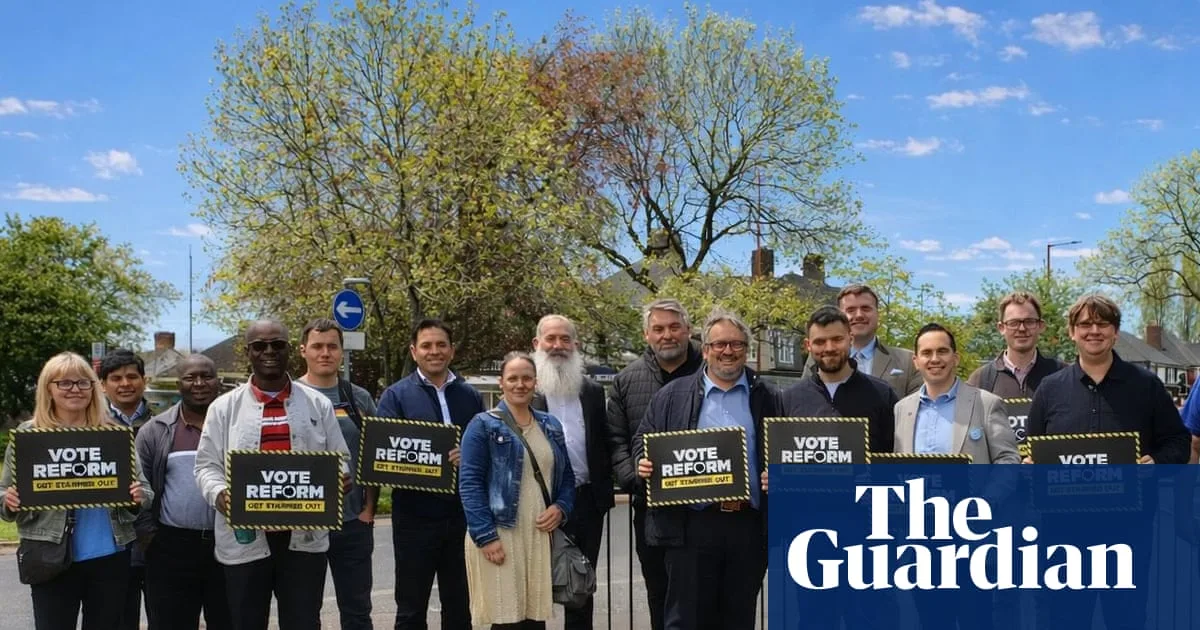
Richard Tice, the deputy leader of Reform UK, has faced accusations of posting an AI-manipulated image of campaigners on social media. The photo, shared on X (formerly Twitter), showed a group of supporters holding placards in Birmingham, with Tice praising their resilience and belief in the party.
However, digital intelligence firm Peryton Intelligence analysed the image and found multiple signs of AI generation or alteration. These included smeared faces, elongated fingers, and a woman appearing to have six fingers on one hand. The signs in the photo also showed inconsistencies, such as the Reform arrow in the 'O' of 'Get Starmer Out' being irregularly circular, and a road sign with a blank white box underneath.
A Reform spokesperson defended the image, stating: 'The photograph is real, however the version Richard Tice posted was slightly edited using AI, mainly to increase the brightness.' But critics, including Green Party leader Zack Polanski, dismissed the explanation, saying: 'There's nothing real about the Reform party. Their supposed policies for working people are fake, they spin stories that are fake and now we know even their campaigners are fake.'

This is not the first time Reform politicians have faced scrutiny over AI use. Matt Goodwin, a failed candidate for the party, was nicknamed 'MattGPT' after allegedly using AI to write his book, which contained misquoted historical figures and ChatGPT-generated footnotes. The controversy also echoes a similar incident involving the Princess of Wales, who was accused of using AI to edit a Mother's Day photo in 2024.